


Bombay High Court Mandates Minimum Wages for Municipal Health Volunteers
 Copy Link
 Share
 Save
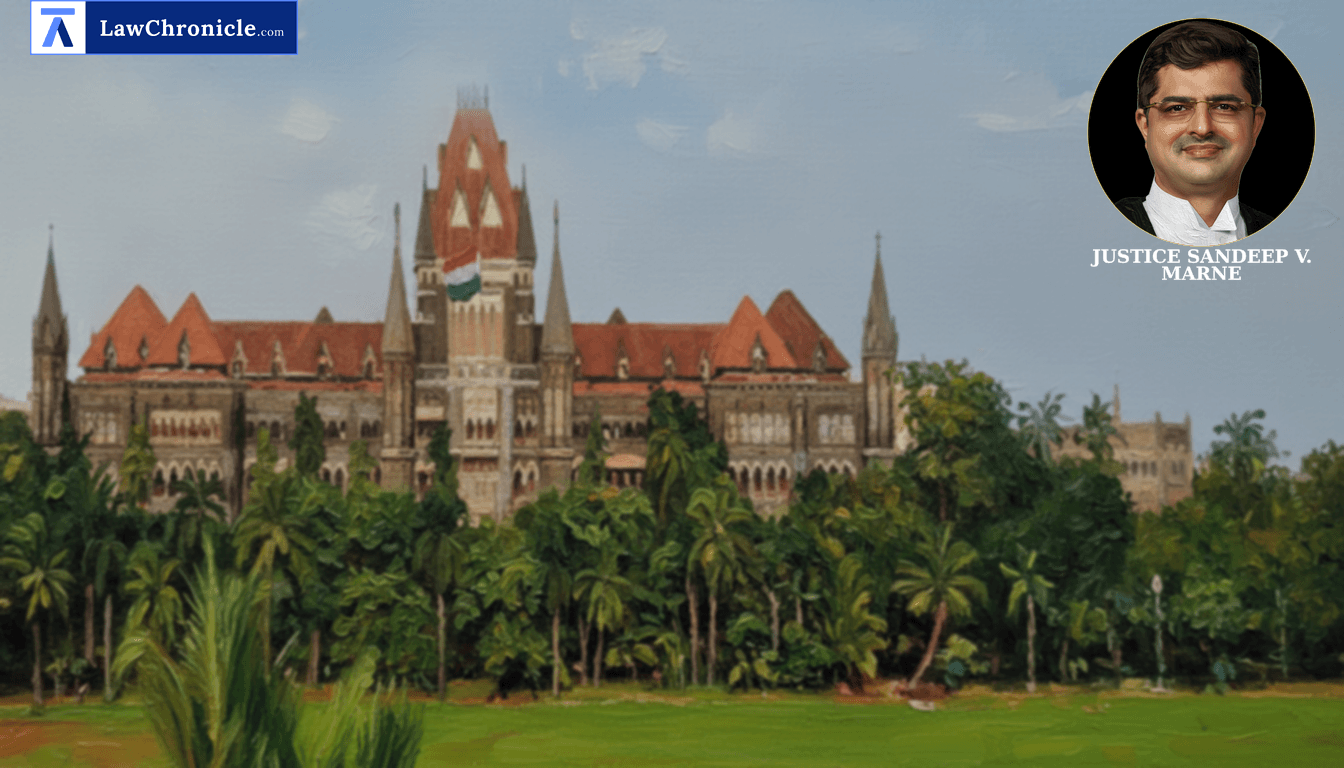
In a decisive blow against state-sanctioned wage exploitation, the Bombay High Court ruled that long-serving Community Health Volunteers cannot be denied statutory minimum wages under the guise of paying mere 'honorarium'.
A single-judge bench of Justice Sandeep V. Marne dismissed a cluster of writ petitions filed by the Municipal Corporation of Greater Mumbai challenging an order of the Authority under the Minimum Wages Act, 1948 that upheld the entitlement of Community Health Volunteers (CHVs) to receive minimum wages.
Key Takeaways
Honorarium Does Not Exclude Minimum Wage Protections
Labelling remuneration paid for scheduled work as an honorarium cannot strip workers of their statutory rights under labour laws.
Broader Definition of Employee Applied
Anyone engaged for hire or reward to perform work in a scheduled employment falls within the scope of an 'employee', regardless of appointment nomenclatures.
No Automatic Right to Regularization
Enforcing the right to dignified minimum wages does not grant temporary or volunteer workers an automatic claim for permanent absorption or regular municipal service.
Financial Burden Cannot Override Statutory Obligations
Civic bodies and state entities cannot plead financial strain to avoid paying mandatory minimum wages for ongoing essential public services.
The High Court affirmed the directions issued by the Assistant Commissioner of Labour and Authority under the Minimum Wages Act, 1948, holding that CHVs are entitled to minimum wages corresponding to their daily working hours.
The Court, in its reasoning, observed:
"...merely branding of wages paid to the CHVs as 'honorarium' would not deny them the status of 'employees' for the purpose of payment of minimum wages. If the nomenclature of reward paid for hire becomes the decisive factor, it would be easy for the employer to treat the wages as honorarium to escape the liability under the Minimum Wages Act, 1948... So long as they are utilized, they must be paid wages prescribed under the Notification issued under the Minimum Wages Act, 1948. Therefore, for the limited purpose of payment of dignified wages, they will have to be treated as 'employees'."
Ratio
Workers engaged by state instrumentalities for continuous public health schemes for a monthly reward qualify as 'employees' under Section 2(i) of the Minimum Wages Act, 1948, entitling them to statutory minimum wages irrespective of whether their engagement is termed 'voluntary' or paid via an 'honorarium'.
Background
The dispute originated from the implementation of the World Bank-assisted 'India Population Project V' in 1988 by the Municipal Corporation of Greater Mumbai under the Mumbai Municipal Corporation Act, 1888. Though World Bank assistance ceased in 1996, the municipal body continued operating 176 Health Posts across Mumbai, utilizing part-time Community Health Volunteers primarily local women to execute grassroot healthcare and disease control programs.
In 2000, the Mahapalika Aarogya-Seva Karmachari Sanghatana raised an industrial dispute seeking regular absorption and wage enhancement under Section 2(s) of the Industrial Disputes Act, 1947. While the Industrial Tribunal rejected the demand for absorption in 2004, it recognized CHVs as 'workmen' and ordered an increase in honorarium, a finding upheld by the Bombay High Court in 2017 and currently pending in appeal before the Supreme Court.
Subsequently, CHVs filed applications under Section 20(2) of the Minimum Wages Act, 1948 seeking the differential sum between the notified minimum wages and the honorarium actually paid. The Municipal Corporation resisted the claims, contending that CHVs were voluntary workers without an employer-employee relationship, hired on a need basis without formal recruitment.
Rejecting the municipal body's contentions, the High Court emphasized that the definition of 'employee' under Section 2(i) of the Minimum Wages Act, 1948 is wider than 'workman' under Section 2(s) of the Industrial Disputes Act, 1947. The Court relied on principles laid down by the Supreme Court in State of Punjab and Ors. vs. Jagjit Singh and Ors. ( "(2017) 1 SCC 148": 2016 CaseBase(SC) 490) and Sabha Shanker Dube vs. Divisional Forest Officer and Ors. ( "(2019) 12 SCC 297": 2018 CaseBase(SC) 781) regarding dignified wages for temporary staff, while also referring to statutory duties towards contract labour under Section 21 of the Contract Labour (Regulation And Abolition) Act, 1970. The petitions were accordingly dismissed.
Case Details:
Case No.: WRIT PETITION NO.1156 OF 2021
Case Title: Municipal Corporation of Greater Mumbai v. Sangeeta Devdas Salvi and others
Appearances:
For the Petitioner(s): Mr. A. S. Peerzada with Mr. Santosh Mali for MCGM
For the Respondent(s): Mr. P.V. Devdas with Ms. Vidula S. Patil and Ms. Manasi Kanitkar
Source: 2026 CaseBase(BOM) 3896
Similar Articles
 Breaking News


