


Supreme Court Refines 'Triple Test' to Re-Incorporate Commercial Character Under ID Act
 Copy Link
 Share
 Save
In a monumental verdict reshaping Indian labor jurisprudence, a Nine-Judge Bench of the Supreme Court has calibrated the historic Bangalore Water Supply precedent, ruling that an enterprise's commercial character must be restored as an essential parameter when defining an 'industry' under the Industrial Disputes Act, 1947.
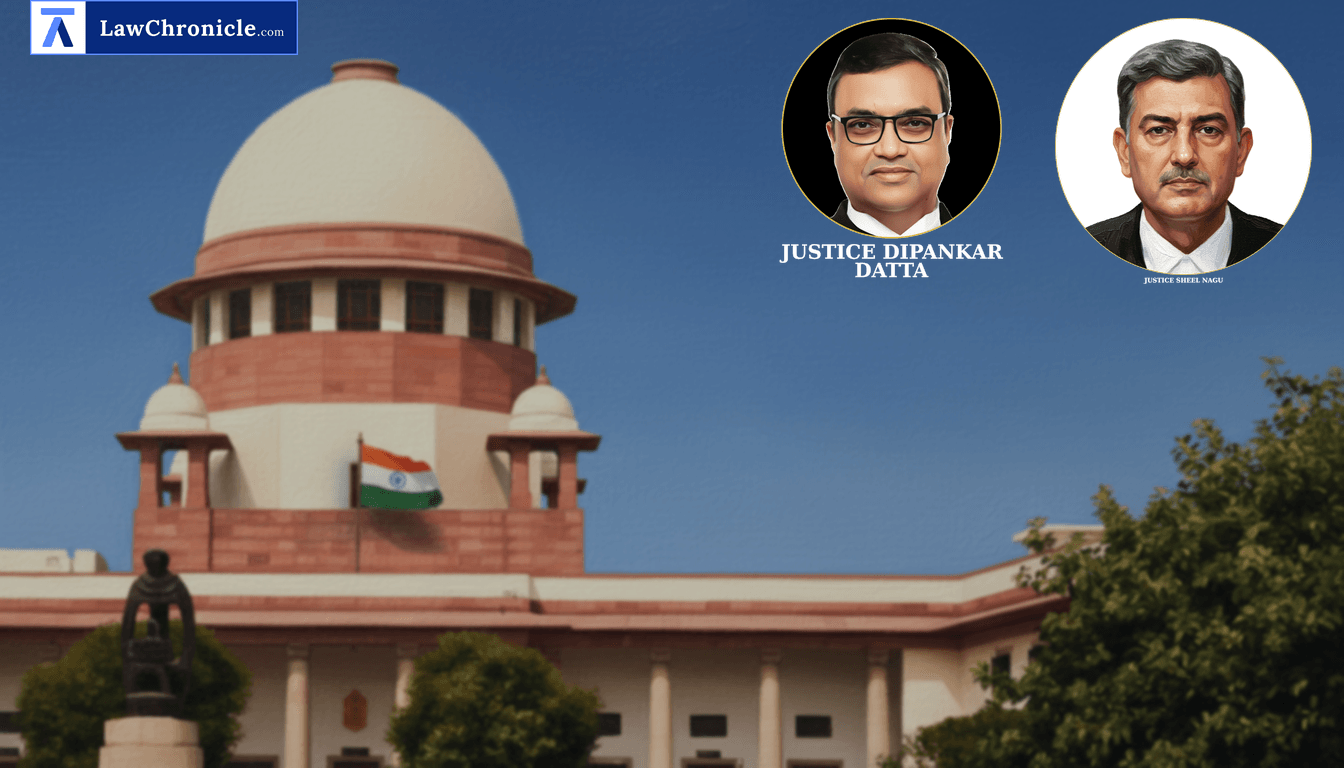
A Nine-Judge Bench comprising Chief Justice Surya Kant, Justice Satish Chandra Sharma, Justice Alok Aradhe, Justice Vipul M. Pancholi, Justice B.V. Nagarathna, Justice Pamidighantam Sri Narasimha, Justice Dipankar Datta, Justice Ujjal Bhuyan, and Justice Joymalya Bagchi delivered the long-awaited decision resolving decades of doctrinal ambiguity surrounding Section 2(j) of the Industrial Disputes Act, 1947.
Key Takeaways
- Restoration of Commercial Character: The Supreme Court modified the 'Triple Test' to explicitly require a 'discernible commercial character' in the production, distribution, or provision of goods and services.
- Prospective Application: To prevent chaos in pending litigation and avoid creating artificial classes of litigants, the modified 'Triple Test' will apply purely prospectively.
- Protection of Sovereign Core: Narrow, inalienable sovereign functions remain strictly exempt from Section 2(j), while routine governmental welfare schemes lacking commercial character are also excluded.
- Decoupling from the IR Code: The Court clarified that this interpretation under Section 2(j) of the repealed Industrial Disputes Act, 1947 will not bind or dictate the interpretation of Section 2(p) under the Industrial Relations Code, 2020.
Writing on behalf of himself and Justices Satish Chandra Sharma, Alok Aradhe, and Vipul M. Pancholi, Chief Justice Surya Kant recalibrated the guidelines laid down in Bangalore Water Supply and Sewerage Board v. A. Rajappa. The Court clarified that while the core framework of Bangalore Water Supply and Sewerage Board v. A. Rajappa remains intact, an over-expansive interpretation focusing exclusively on the employer-employee relationship without regard to the nature of the activity risked pulling purely non-industrial, charitable, and sovereign welfare ventures into the statutory fold.
The Court issued the following directions:
"i. The present reference has been validly made and rightly entertained. No legitimate doubt can be cast upon its maintainability, and the reference is accordingly answered on the merits.
ii. In our considered view, certain aspects of the Triple Test and the accompanying guidelines formulated in Bangalore Water Supply (supra) were susceptible to further refinement. While the essential framework laid down therein has stood the test of time, we are of the opinion that some of its constituent elements could have been articulated differently in that judgment so as to better reflect the scope and contours of Section 2(j).
iii. In view of the foregoing, the reformulated Triple Test articulated in this judgment is to be understood as no more than our considered opinion on the proper interpretation of Section 2(j) of the Industrial Disputes Act, 1947. It is not intended to displace the governing legal position in respect of pending proceedings. Consequently, all matters presently pending before courts, tribunals, labour authorities, or other fora under the Industrial Disputes Act may be adjudicated in accordance with the Triple Test laid down in Bangalore Water Supply (supra).
iv. The present clarification shall operate prospectively in that sense and shall not reopen, disturb, or otherwise affect proceedings that have attained finality. Judgments, awards, settlements, and determinations that are no longer subject to challenge shall remain undisturbed, notwithstanding the reformulation of the test set out in this judgment. The same also applies to proceedings, appeals and other hearings that are presently in the process of being adjudicated by various fora;
v. We refrain from entering into an examination of the definition of 'industry' as it presently exists under the IR Code or the Industrial Disputes (Amendment) Act, 1982; and
vi. In view of the opinion expressed herein and the hypothetical reformulation of the principles laid down in Bangalore Water Supply (supra), the said decision shall not be regarded as the sheet anchor for the interpretation of the IR Code or any of its provisions, should such a question arise in the future."
In its reasoning regarding the inclusion of commercial character, the Court observed:
"An activity may possess a commercial character without necessarily being animated by the pursuit of profit. The inquiry, therefore, is not whether the undertaking seeks to maximise gain, but whether the nature of the activity undertaken bears the indicia of an organised economic or commercial enterprise. If commercial character is to be recognised as a relevant consideration in determining what constitutes an 'industry', the converse must necessarily follow. Activities that lack any discernible commercial or economic character, and which are neither undertaken in pursuit of commercial objectives nor bear any meaningful analogy to trade, business, or economic enterprise, would ordinarily fall outside the ambit of the definition contained in Section 2(j)."
Ratio
Under Section 2(j) of the Industrial Disputes Act, 1947, a systematic activity organised through cooperation between employer and employee constitutes an 'industry' provided the goods or services rendered possess a discernible commercial character analogous to trade or business. Profit motive remains irrelevant, but activities wholly lacking economic or commercial character, as well as strict sovereign functions of the State, fall outside the statutory definition.
Background
The long-standing legal dispute originated from conflicting decisions of smaller Benches on whether governmental departments specifically Social Forestry Schemes constitute an 'industry'. In Chief Conservator of Forests v. Jagannath Maruti Kondhare ( "(1996) 8 SCC 489": 1995 CaseBase(SC) 993), a Three-Judge Bench held that the Social Forestry Department was an industry, whereas a Two-Judge Bench in State of Gujarat v. Pratamsingh Narsinh Parmar ( "(2001) 9 SCC 713": 2001 CaseBase(SC) 3066) arrived at a contrary conclusion. Seeking to resolve this divergence, a Three-Judge Bench referred the dispute in 2002. Later, a Five-Judge Bench in State of Uttar Pradesh v. Jai Bir Singh ( "(2005) 5 SCC 1": 2005 CaseBase(SC) 392) questioned the correctness of the Seven-Judge Bench judgment in Bangalore Water Supply and Sewerage Board v. A. Rajappa, referring the matter to a larger bench, which culminated in the present Nine-Judge Bench hearing.
The Appellants argued that Bangalore Water Supply and Sewerage Board v. A. Rajappa relied on an over-expansive, worker-centric approach that led to unreasonable burdens on non-commercial sectors, charities, and state welfare schemes. They urged a return to the commerciality standard enunciated in Safdarjung Hospital v. Kuldip Singh Sethi. Per contra, the Respondent-workmen contended that Bangalore Water Supply and Sewerage Board v. A. Rajappa had established a stable precedent for nearly five decades, protecting vulnerable workmen and ensuring access to specialized labor tribunals under Industrial Disputes Act, 1947.
While evaluating older precedents, the Court noted that initial expansive decisions like D.N. Banerji v. P.R. Mukherjee ( "AIR 1953 SC 58": 1952 CaseBase(SC) 25), State of Bombay v. Hospital Mazdoor Sabha ( "AIR 1960 SC 610": 1960 CaseBase(SC) 156), and Corporation of the City of Nagpur v. Its Employees ( "AIR 1960 SC 675": 1960 CaseBase(SC) 195) were later checked by restrictive rulings in National Union of Commercial Employees v. M.R. Meher, University of Delhi v. Ram Nath ( "AIR 1963 SC 1873": 1963 CaseBase(SC) 340), Madras Gymkhana Club Employees’ Union v. Madras Gymkhana Club ( "AIR 1968 SC 554": 1967 CaseBase(SC) 246), Cricket Club of India v. Bombay Labour Union ( "AIR 1969 SC 276": 1968 CaseBase(SC) 328), and Safdarjung Hospital v. Kuldip Singh Sethi, before Bangalore Water Supply and Sewerage Board v. A. Rajappa attempted a broad synthesis.
Subsequent references in Sub Divisional Inspector of Post, Vaikam v. Theyyam Joseph ( "(1996) 2 SCC 293": 1995 CaseBase(SC) 993) and Bombay Telephone Canteen Employees’ Association v. Union of India highlighted the ongoing friction in applying Bangalore Water Supply and Sewerage Board v. A. Rajappa, particularly regarding sovereign functions. Addressing these issues, the Court clarified that although the Industrial Disputes (Amendment) Act, 1982 introduced restrictive exemptions, it was never brought into force. Meanwhile, the Industrial Relations Code, 2020 repealed the Industrial Disputes Act, 1947 with effect from November 21, 2025. The Court ruled that its recalibrated test under Industrial Disputes Act, 1947 will apply only prospectively and will not affect pending proceedings, which will continue to be governed by Bangalore Water Supply and Sewerage Board v. A. Rajappa.
Justice B.V. Nagarathna, Justice Dipankar Datta (for himself and Justice Ujjal Bhuyan), Justice Pamidighantam Sri Narasimha, and Justice Joymalya Bagchi authored separate opinions, affirming that Bangalore Water Supply and Sewerage Board v. A. Rajappa remains sound law for legacy matters and does not require overruling or modification.
Case Details:
Case No.: Civil Appeal No. 897 / 2002
Neutral Citation: 2026 INSC 897
Case Title: State of Uttar Pradesh v. Jai Bir Singh
Appearances:
For the Petitioner(s): R. Venkataramani (Attorney General for India), K.M. Nataraj (Additional Solicitor General of India), Shadan Farasat (AAG), Sridhar Potaraju (AAG), Shekhar Naphade (Sr. Adv.), Sanjay Hegde (Sr. Adv.), Jaideep Gupta (Sr. Adv.), Alok Sangwan (Sr. AAG)
For the Respondent(s): Indira Jaising (Sr. Adv.), Bharat Sangal (Sr. Adv.), C.U. Singh (Sr. Adv.), Vijay Hansaria (Sr. Adv.), Gopal Sankaranarayanan (Sr. Adv.), PV Surendranath (Sr. Adv.), Jayana Kothari (Sr. Adv.), K.S. Chauhan (Sr. Adv.)
Source: 2026 CaseBase(SC) 812
Similar Articles
 Breaking News


