Bombay High Court Quashes Post-Probation Termination of Compassionate Appointees
 Copy Link
 Share
 Save
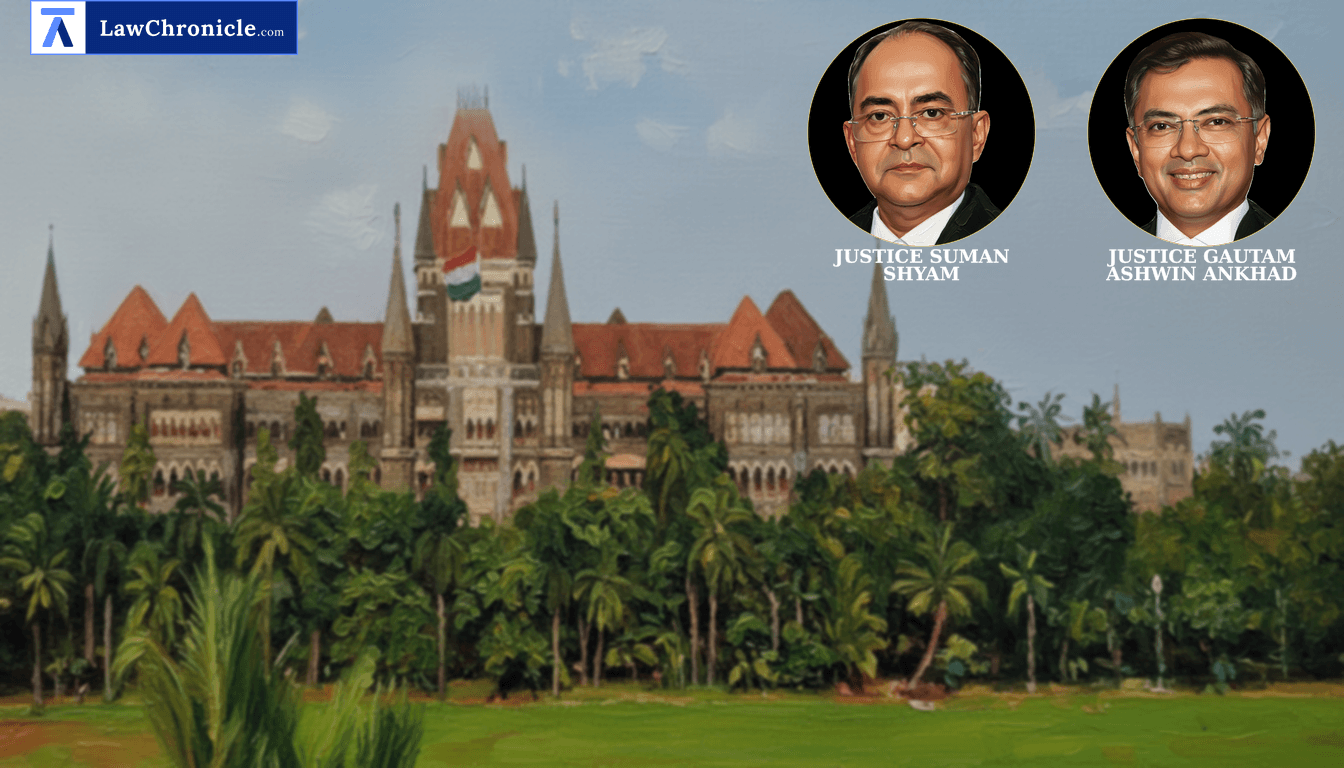
The Bombay High Court has shielded long-serving employees from arbitrary termination, ruling that the State cannot invoke technical pay-scale classifications to void compassionate appointments after decades of blemishless service. In a stinging rebuke to administrative inconsistency, the Bench held that the State is estopped from exploiting its own alleged errors to unsettling the lives of confirmed employees who have served for nearly twenty years.
A division bench comprising Justice Suman Shyam and Justice Gautam A. Ankhad adjudicated upon two writ petitions challenging a common judgment of the Maharashtra Administrative Tribunal. The Bombay High Court examined whether the State could retrospectively reclassify posts from Group C to Group B based solely on pay-scales to declare compassionate appointments as impermissible.
Key Takeaways
Confirmed Employment Rights
Once an employee completes probation and is confirmed, they acquire a legal right to service that cannot be extinguished by retroactive administrative reclassifications.
Administrative Consistency
Government Resolutions identifying specific posts as Group C (Technical) prevail over general pay-scale-based classifications used by departments to terminate staff.
Principle of Equity and Fairness
Long-term service of nearly two decades creates an equitable right that prevents the State from 'waking up' at a late stage to correct alleged initial appointment mistakes.
Welfare State Responsibility
Compassionate appointment is a beneficial measure to alleviate financial crisis; technicalities should not be used to defeat its purpose, especially when no fraud is alleged.
Court Observations on Post Classification
The Bombay High Court scrutinized multiple Government Resolutions and found that the State's attempt to label the posts as Group B was legally flawed. The bench noted that despite the pay-scale of Rs. 6,500–10,500/-, subsequent specific resolutions had explicitly categorized the posts as Group C (Technical). The Bench, in its reasoning, observed that "In our view, the Government Resolution dated 2nd July 2002 and the confidential letter dated 19th May 2010, on which the Respondents rely, cannot be read in isolation from the subsequent Government Resolutions, which specifically addresses the post of Group Instructor and the staffing pattern of the Department."
Regarding the long passage of time, the Bombay High Court relied on the precedent set in Md. Zamil Ahmed v. State of Bihar ( "(2016) 12 SCC 342": 2016 CaseBase(SC) 160) to emphasize that the State cannot take advantage of its own mistakes.
Ratio
When a compassionate appointment is made by a competent authority without any fraud or misrepresentation by the applicant, and the employee has served for a significant duration (two decades) and achieved confirmation, the State is prohibited by the principles of equity and fairness from terminating such service based on a belated realization of a technical error in post-classification.
Background
The petitioners, whose fathers died in service in 2001 and 2003 respectively, were appointed on compassionate grounds in 2004 and 2008. After serving for several years and completing their probation, they were served with show-cause notices in 2010. The State contended that since their fathers' pay-scales were Rs. 6,500-10,500/-, the posts were Group B, making their dependents ineligible for compassionate appointment under the policy then in force.
The petitioners argued that multiple Government Resolutions specifically classified their fathers' roles as Group C (Technical) posts. The Bombay High Court found that the Maharashtra Administrative Tribunal failed to consider these specific resolutions. Citing Md. Zamil Ahmed v. State of Bihar ( "(2016) 12 SCC 342": 2016 CaseBase(SC) 160), the bench held that it was "too late on the part of the State" to raise grounds for cancellation after the passage of time, especially since the petitioners were not responsible for any false declarations. The Bombay High Court further noted that the State's current policy under a 2021 Resolution now covers Groups A and B, reinforcing the expanding nature of this welfare measure.
Case Details:
Case No.: WRIT PETITION NO.10795 OF 2014 and WRIT PETITION NO.10796 OF 2014
Neutral Citation: 2026:BHC-AS:44316-DB
Case Title: Shri Avinash Kondiram Wagh vs. The In-charge Deputy Director & Ors. (along with Shri Abhay Chandrakant Khond vs. The In-charge Joint Director & Ors.)
Appearances:
For the Petitioner(s): Mr. Narendra V. Bandiwadekar, Senior Advocate, with Mr. Vinayak R. Kumbhar with Mr. Rajendra B. Khaire
For the Respondent(s): Mr. A. I. Patel, Addl. GP with Ms. Reena Salunkhe, AGP; Ms. Kavita N. Solunke, Addl. GP with Ms. Rupali Shinde, AGP
Source: 2026 CaseBase(BOM) 7143
Similar Articles



 Breaking News