Denying Compassionate Appointment On Technical Grounds Defeats Welfare Object: Chhattisgarh HC
 Copy Link
 Share
 Save
Refusing compassionate appointment to eligible dependents of deceased government employees on technical or hyper-technical grounds strikes at the core of social welfare policies meant to rescue families from financial distress. Erasing bureaucratic hurdles for grieving families, the High Court held that administrative authorities cannot mechanically reject claims by ignoring updated post nomenclature or by insisting on non-mandatory higher qualifications.
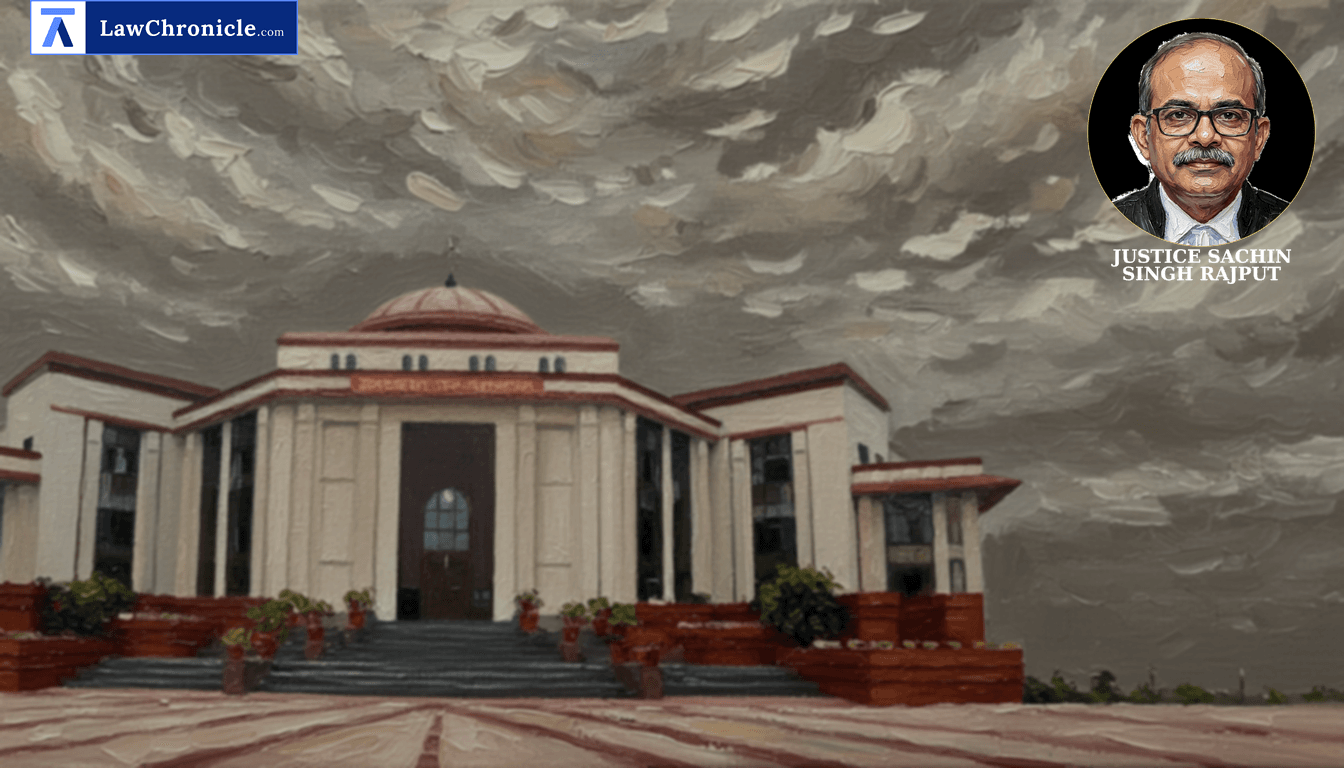
A single-judge bench of Justice Sachin Singh Rajput quashed orders issued by state authorities that denied compassionate employment to the widows of deceased school employees. The Court underscored that administrative machinery must act with a humanitarian approach to provide immediate financial succor rather than entangling applicants in bureaucratic technicalities.
Key Takeaways
Humanitarian Imperative: Administrative authorities must prioritize immediate financial relief over technical hyper-technicalities when processing compassionate appointment claims.
Duty to Assess Eligibility: Authorities are obliged to evaluate candidates for alternative available posts, including Class-IV posts, matching their existing educational qualifications.
Binding Post Nomenclature: Change in post designations mandated by government orders must be applied retrospectively to determine employee status at the time of death.
Court Observations and Directions
The High Court observed that the scheme of compassionate appointment is designed as a social welfare measure to mitigate hardship rather than to deny relief on hyper-technical grounds. Rebuking the mechanical rejection by the respondents, the Court noted that forcing an applicant into continuous administrative hurdles despite her willingness to accept a lower post defeats the very purpose of the scheme.
The Court, in its reasoning, observed: "...the object of compassionate appointment is to provide immediate financial assistance to the in-dire-strait family of a deceased employee who died in harness. The scheme is a measure of social welfare intended to mitigate hardship and not to deny relief on technical or hyper-technical grounds... Such outright rejection of her claim solely on the ground that she did not possess the qualifications prescribed for the post of Shiksha Karmi Grade-III defeats the very purpose of the compassionate appointment scheme and eventually proves as an insult to injury in such cases."
The Court has following directions:
"Needless to say, the respondents shall enable the petitioners tide over the crisis they landed in, by providing them immediate succor in the form of compassionate appointment on the post they are found to be eligible for."
Ratio
Compassionate appointment is an exception to general recruitment rules created solely to provide immediate financial relief to the dependents of an employee dying in harness. State authorities cannot reject claims arbitrarily on hyper-technical grounds or refuse consideration for Class-IV posts when candidates possess the requisite qualifications for such posts.
Background
Both writ petitions were filed by widows whose husbands died in harness while serving under respondent authorities. In WPS No. 2660 of 2015, the petitioner's husband died in 2013. Although his post was re-designated from Shiksha Karmi Grade-II to "Teacher Panchayat" vide a Government Order dated November 3, 2011, authorities rejected her application on the ground that no instructions existed for compassionate appointment of Shiksha Karmis on peon posts.
In WPS No. 131 of 2017, the petitioner’s husband died in 2013 while working as a Teacher Panchayat. The petitioner acquired Higher Secondary qualifications upon direction from the authorities. However, her claim was subsequently rejected on the ground that she lacked B.Ed./D.Ed. qualifications required for a Shiksha Karmi Grade-III post, ignoring her explicit willingness to accept a Class-IV/Peon post.
While deciding the matters, the High Court relied on the legal principles settled in State of U.P. Vs. Premlata ( "(2022) 1 SCC 30": 2021 CaseBase(SC) 1263), reiterating that compassionate appointment is intended to tide over sudden financial crises. The Court also followed its earlier decision in Sarda Thawait Vs. State of Chhattisgarh to hold that respondents must consider candidates for available posts based on their actual eligibility. Consequently, the High Court allowed both writ petitions and set aside the impugned rejection orders.
Case Details:
Case No.: WPS No. 2660 of 2015 and WPS No. 131 of 2017
Case Title: Sandhya Sidar v. State of Chhattisgarh & Ors. (with connected matter)
Appearances:
For the Petitioner(s): Shri Dhani Ram Patel and Shri Ajeet Kumar Yadav, Advocates
For the Respondent(s): Shri Anand Gupta, Dy. GA; Shri U.N.S. Deo, Advocate; Shri Shivam Mishra, Advocate
Source: 2026 CaseBase(CTH) 7418
Similar Articles
 Breaking News