


Breach of Service Rules Not Automatic Bar to Arbitrator Eligibility: Delhi HC
 Copy Link
 Share
 Save
A service-condition restriction barring a public official from undertaking private assignments cannot be equated with a statutory ineligibility under Section 12(5) of the Arbitration and Conciliation Act, 1996. The Delhi High Court has clarified that unless an arbitrator's relationship falls within the specific categories of the Seventh Schedule, the mandate does not stand automatically terminated, nor does it require an express written waiver to remain valid.
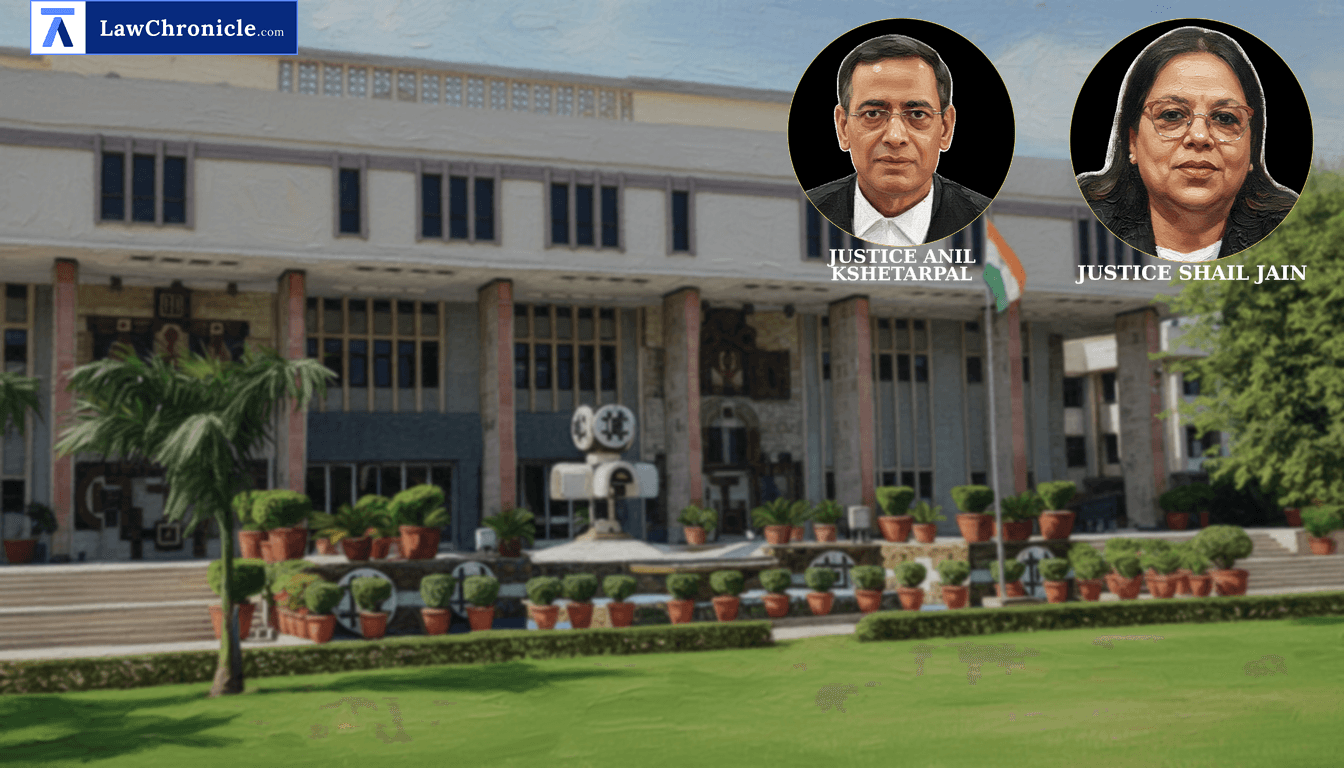
The Division Bench comprising Justice Anil Kshetarpal and Justice Shail Jain delivered this significant ruling while hearing an appeal against a District Court's decision that had set aside an arbitral award. The primary dispute centered on whether a retired judge serving as the President of a State Consumer Commission was legally disabled from acting as an arbitrator due to administrative service rules.
Key Takeaways
Service Rules vs. Statutory Ineligibility
A breach of service conditions governing a public office may lead to disciplinary consequences but does not inherently invalidate an arbitrator's mandate under the Arbitration and Conciliation Act, 1996.
Genus-Species Relationship of Inability
De jure ineligibility under Section 12(5) is a 'species' of the 'genus' de jure inability under Section 14(1)(a); not every legal disability attracts the strict waiver requirements of the Seventh Schedule.
MSME Statutory Arbitration Sanctity
Awards rendered through institutional mechanisms like the Delhi Arbitration Centre under the Micro, Small and Medium Enterprises Development Act, 2006 carry a presumption of competence that cannot be easily displaced by post-facto service rule objections.
Waiver by Participation
Active participation in arbitral proceedings without raising jurisdictional objections under Section 16(2) strengthens the validity of the final award, especially when no actual bias is alleged.
Distinguishing De Jure Inability from Ineligibility
The Court conducted an extensive analysis of the interplay between Section 12(5) and Section 14(1)(a) of the Arbitration and Conciliation Act, 1996. It noted that the Seventh Schedule identifies specific relationships that render a person statutorily ineligible. While such ineligibility results in a de jure inability, the reverse is not always true.
The Court, in its reasoning, observed: "Thus, while de jure inability refers to a legal incapacity to perform the functions of an arbitrator, which may arise under the Act, 1996 or any other existing law, de jure ineligibility specifically flows from Section 12(5) read with the Seventh Schedule. The Supreme Court has accordingly held that de jure ineligibility is a species of de jure inability, which is the genus."
The Court further highlighted that the requirement for an "express agreement in writing" under the proviso to Section 12(5), as discussed in Bharat Broadband Network Limited v. United Telecoms Ltd. ( "(2019) 5 SCC 755": 2019 CaseBase(SC) 1804), only triggers when the arbitrator falls within the Seventh Schedule's categories. Since Rule 11(3) of the Consumer Protection (Conditions of Service of President and Members of the State Commission or District Commission) Model Rules, 2020 is a condition of service and not a relationship-based disqualification, the absence of a written waiver was irrelevant.
Service Violations and Arbitral Mandate
Addressing the impact of the Consumer Protection (Conditions of Service of President and Members of the State Commission or District Commission) Model Rules, 2020, the Court relied on its earlier findings in Delhi Integrated Multi Modal Transit Systems Ltd. v. Delhi Jal Board. It maintained that the consequences of violating service terms are independent of the arbitration's validity. The Court remarked that "a service-condition restriction cannot, without more, be transposed into an ineligibility under Section 12(5)."
The Court has the following directions:
"In view of the foregoing discussion, the present Appeal is allowed. The finding of the learned District Judge that the learned Sole Arbitrator was de jure unable to act as an arbitrator on account of Rule 11(3) of the Service Rules is set aside. Consequently, the judgment dated 19.05.2026, insofar as it sets aside the Award dated 28.02.2024 on the aforesaid ground, is also set aside... the Award dated 28.02.2024 passed by the learned Sole Arbitrator stands restored."
Ratio
A restriction in service rules or conditions of employment governing an arbitrator's primary professional office does not constitute a statutory ineligibility under Section 12(5) of the Arbitration and Conciliation Act, 1996. Consequently, such a restriction does not necessitate an express written waiver under the proviso to Section 12(5) to maintain the validity of the arbitral mandate, and any breach of such service rules is a matter for the governing authority of that office rather than a ground to set aside an award under Section 34.
Background
The dispute originated from unpaid invoices related to customs clearance and freight forwarding services provided by the Appellant, an MSME, to IIT Kanpur. Following failed conciliation, the dispute was referred to the Delhi Arbitration Centre under Section 18(3) of the Micro, Small and Medium Enterprises Development Act, 2006.
The Sole Arbitrator, a retired High Court Judge then serving as President of the Delhi SCDRC, passed an award in favor of the Appellant. The Respondent challenged this award under Section 34 of the Arbitration and Conciliation Act, 1996, primarily arguing that Rule 11(3) of the Consumer Protection (Conditions of Service of President and Members of the State Commission or District Commission) Model Rules, 2020 barred the arbitrator from undertaking arbitral work. The District Judge had set aside the award solely on this ground, relying on the absence of an express written waiver.
The High Court, however, distinguished Bhadra International (India) Pvt. Ltd. v. Airports Authority of India ( "2026 SCC OnLine SC 7": 2026 CaseBase(SC) 9) and Lucknow Development Authority Through Vice Chairman v. Sudhanshu Rastogi, noting that the arbitrator had no personal or professional conflict with the parties as defined in the Seventh Schedule. It concluded that the District Judge erred by conflating service rules with statutory arbitration law. The Court restored the award, leaving other factual findings of the lower court undisturbed.
Case Details:
Case No.: FAO (COMM) 231/2026
CNR No. DLHC010368972026
Case Title: M/S Airport Handling Services V. Indian Institute Of Technology, Kanpur
Appearances:
For the Petitioner(s): Mr. Jawahar Raja, Mr. Anirudh Ramanathan, Ms. Sonali Shelar, Ms. Tamanna Pankaj, Mr. Sumit Wadhva, Ms. Priya Vats, Mr. Anoop George, Mr. Nitai Hinduja, Mr. Ishaan Goel, Advocates
For the Respondent(s): Mr. Manish Paliwal, Advocate
Source: 2026 CaseBase(DEL) 6638
Similar Articles
 Breaking News


