Burden Of Proving Indian Citizenship Rests Absolutely On The Proceedee: Gauhati High Court
 Copy Link
 Share
 Save
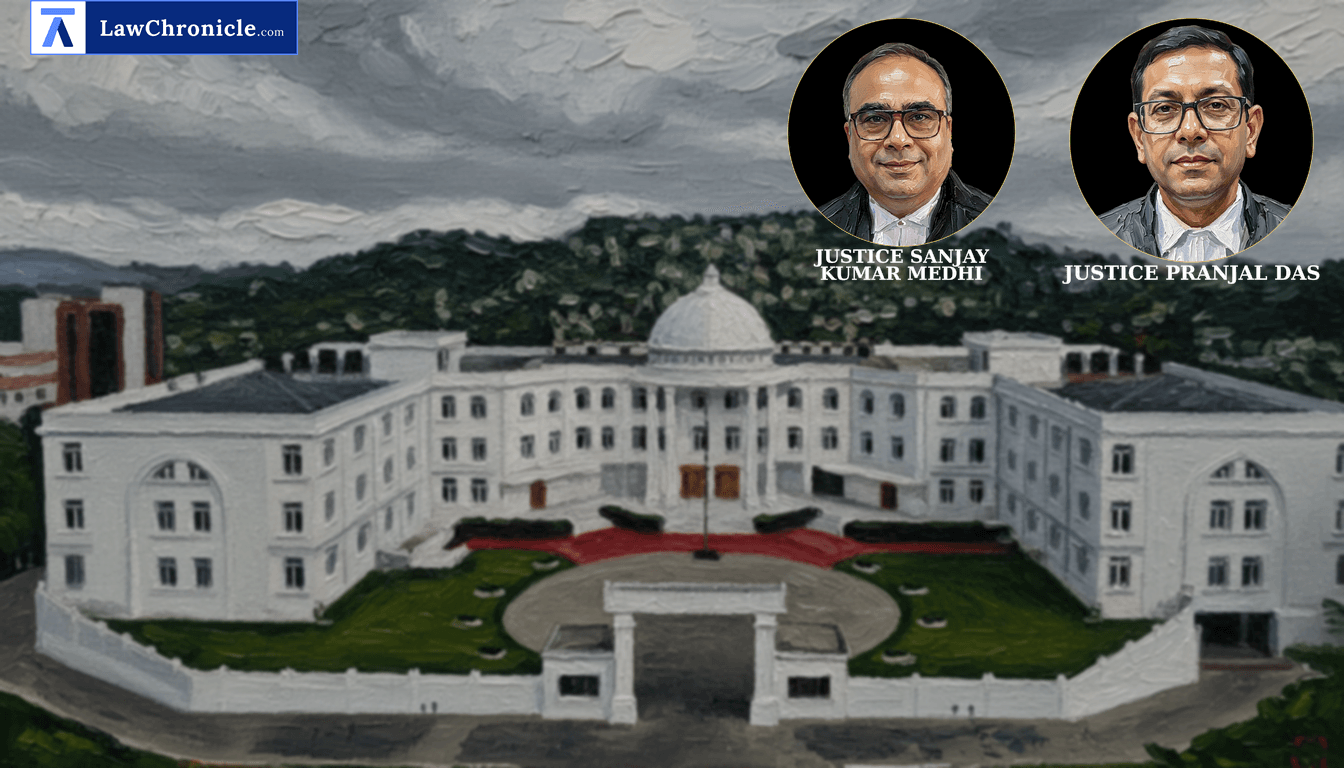
The Gauhati High Court has reaffirmed that the burden of proving Indian citizenship under Section 9 of the Foreigners Act, 1946 remains exclusively with the proceedee, ruling that self-serving affidavits and unverified certificates cannot bridge gaps in documentary evidence. The Bench clarified that failure to establish a consistent genealogical link to pre-1971 records leads to a lawful declaration of foreign national status.
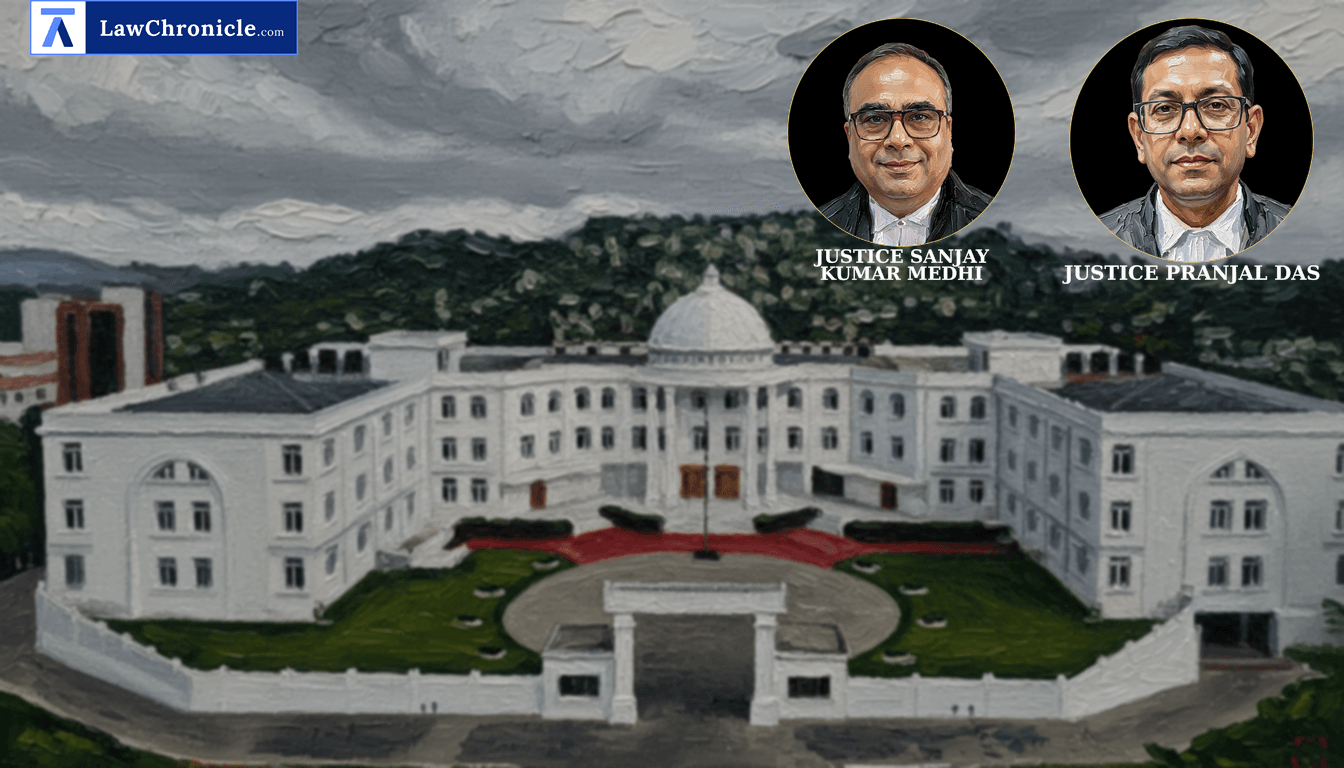
A division bench comprising Justice Sanjay Kumar Medhi and Justice Pranjal Das delivered this ruling while dismissing a writ petition challenging a Foreigners Tribunal's opinion. The Bench emphasized that in matters of citizenship, facts are within the personal knowledge of the individual, and the State is not required to lead rebuttal evidence unless the proceedee first discharges their initial burden with cogent and credible proof.
Key Takeaways
Absolute Onus on Proceedee
Section 9 of the Foreigners Act, 1946 overrides general evidence rules, placing the entire responsibility on the individual to prove they are not a foreigner.
Genealogical Linkage is Mandatory
Possession of 1965 or 1970 voter lists is insufficient unless the proceedee establishes a clear, documented link to the persons named in those lists.
Affidavits Aren't Independent Evidence
Self-serving affidavits filed to correct names or ages of deceased parents are not considered legal proof of citizenship.
Limited Scope of Writ Jurisdiction
High Courts under Constitution of India will only examine the decision-making process of Tribunals and will not re-appreciate factual findings unless they are palpably erroneous.
Strict Compliance with Section 9 of Foreigners Act
The Gauhati High Court noted that the petitioner failed to disclose vital details such as date of birth, place of birth, and specific details of siblings in his written statement. Relying on the landmark ruling in Sarbananda Sonowal vs. Union of India ( "(2005) 5 SCC 665": 2005 CaseBase(SC) 66), the bench observed that these details are essential for the State to verify citizenship claims. The Bench reasoned that "There is good and sound reason for placing the burden of proof upon the person concerned who asserts to be a citizen of a particular country... All these facts would necessarily be within the personal knowledge of the person concerned and not of the authorities of the State."
Evidentiary Value of Certificates and Affidavits
The petitioner had relied on a Gaon Burah certificate and a name correction affidavit. However, the Court rejected these, noting that the Gaon Burah did not produce contemporaneous records to substantiate the certificate. Furthermore, regarding the affidavit, the Court cited Abdul Seikh vs. Union of India to emphasize that such documents do not constitute legal proof.
Ratio
Under Section 9 of the Foreigners Act, 1946, the burden of proof that a proceedee is an Indian citizen is always on the proceedee and never shifts to the State. Documentary evidence must establish a clear link between the proceedee and the projected ancestors who were present in India prior to the cut-off date of March 25, 1971. In the absence of such a link, oral testimony and unverified certificates are insufficient to establish citizenship.
Background
The dispute arose from a reference made by the Superintendent of Police (B), Nagaon, against the petitioner, Md. Izzat Ali. The Foreigners Tribunal 4th, Nagaon, in 2020, declared him a foreigner post-1971 as he failed to prove his linkage to his father, whose name appeared in the 1965 and 1970 voter lists. The petitioner challenged this before the High Court, citing several precedents including Rahim Ali @ Abdur Rahim (MD.) Vs. State of Assam and Sirajul Hoque Vs. State of Assam ( "(2019) 5 SCC 534": 2019 CaseBase(SC) 2048) regarding minor inconsistencies in voter lists.
However, the Gauhati High Court distinguished these cases, noting that the petitioner's discrepancies were not minor and that he failed to exhibit crucial documents like the 1985 voter list before the Tribunal. The Gauhati High Court upheld the Tribunal's decision, emphasizing that Constitution of India does not permit the High Court to act as an appellate body to review evidence already weighed by a specialized tribunal. The bench followed the principles laid down in Sarbananda Sonowal vs. Union of India ( "(2005) 5 SCC 665": 2005 CaseBase(SC) 66) and Fateh Mohd. Vs. Delhi Administration to affirm that the non-obstante clause in Section 9 of the Foreigners Act, 1946 makes the Indian Evidence Act, 1872 secondary in these proceedings.
Case Details:
Case No.: WP(C)/219/2022
Case Title: MD IZZAT ALI v. THE UNION OF INDIA AND 5 ORS
Appearances:
For the Petitioner(s): Shri A. Mobaraque, Advocate
For the Respondent(s): Ms. A. Verma, SC- Home Deptt. & NRC; Shri P. Sarma, GA, Assam; Shri N. Kalita, for ECI; Ms. MM Katakey, CGC
Source: 2026 CaseBase(GAU) 1270
Similar Articles
 Breaking News