Oral Evidence Without Documentary Support Cannot Prove Citizenship: Gauhati HC
 Copy Link
 Share
 Save
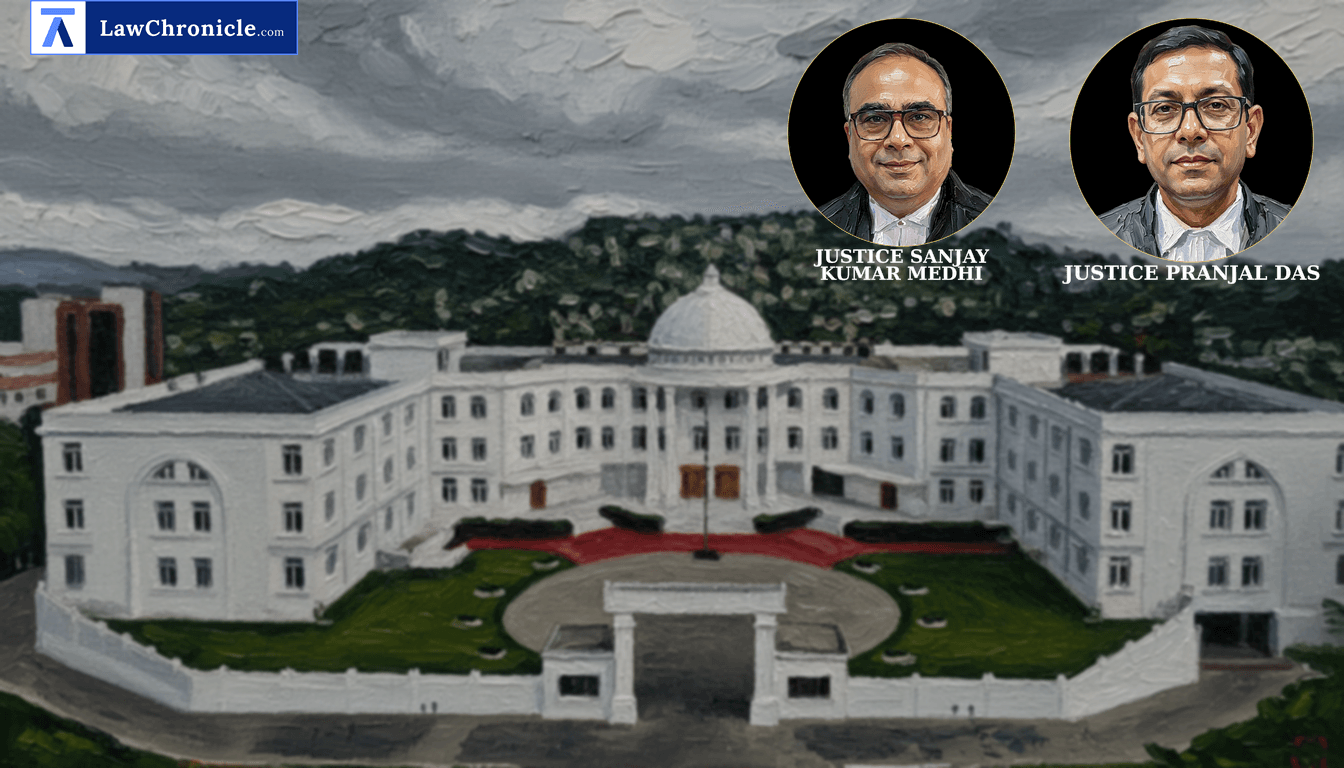
In a decisive blow to claims of Indian nationality lacking documentary backing, the Gauhati High Court affirmed that oral testimony alone is wholly insignificant to establish citizenship under the foreign national framework. Reaffirming strict compliance with statutory burdens, the Court emphasized that evidentiary standards in citizenship disputes require seamless documentary proof rather than uncorroborated family depositions.
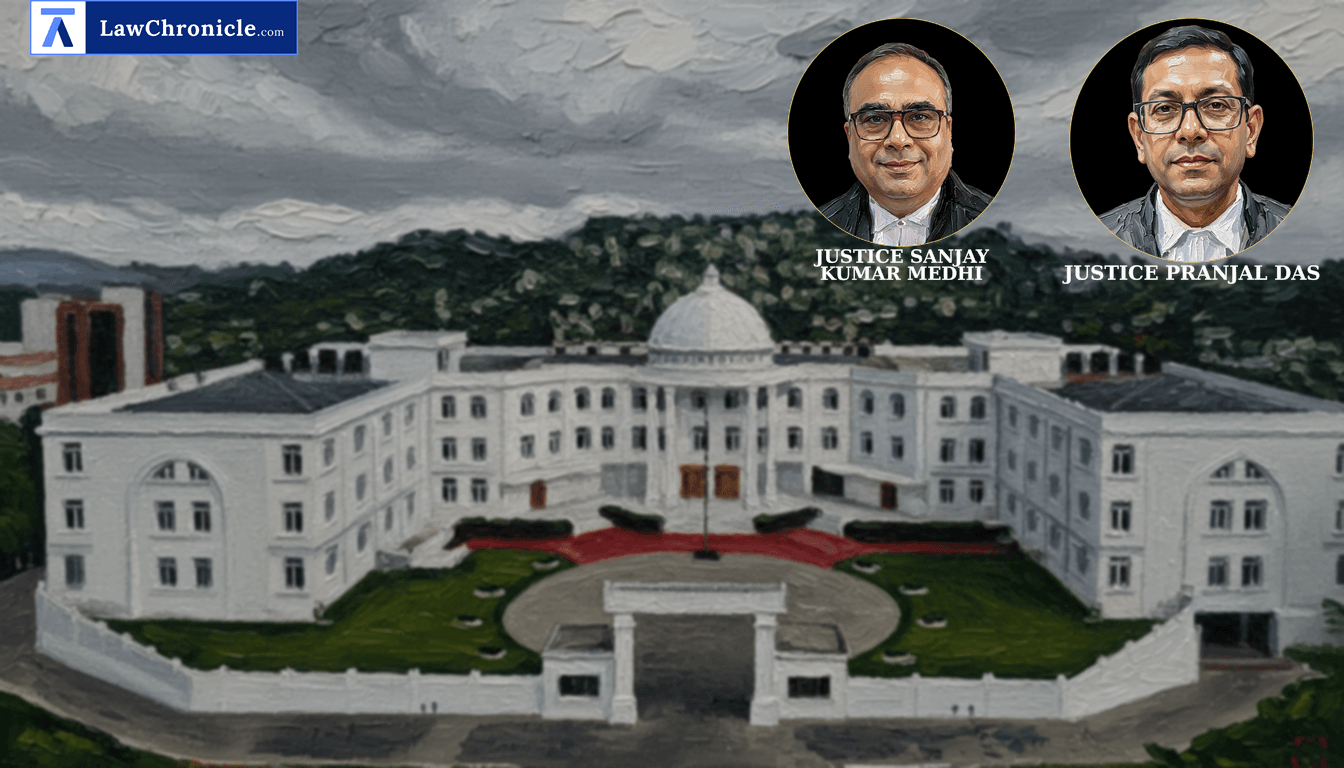
A Division Bench comprising Justice Sanjay Kumar Medhi and Justice Pranjal Das dismissed a writ petition filed under Article 226 of the Constitution of India, 1950 challenging an order of the Foreigners’ Tribunal, Nagaon Court No. 7th at Sankardev Nagar, Hojai. The petitioner had been declared a foreign national entering India post 25.03.1971.
Key Takeaways
- Strict Onus on Proceedee: Under Section 9 of the Foreigners Act, 1946, the burden of proving Indian citizenship rests entirely on the proceedee and never shifts to the State.
- Insignificance of Uncorroborated Oral Evidence: Depositions of relatives regarding family linkages carry no evidentiary weight in the absence of contemporaneous documentary records.
- Strict Scrutiny of Link Documents: School certificates issued decades after leaving the institution, without examining their authors, raise severe doubts and cannot establish nationality.
- Inquiry into Irregular Passport Issuance: The High Court ordered a departmental inquiry against police personnel for issuing a favorable verification report for a passport while a citizenship reference was actively pending.
High Court's Rationale and Directions
The High Court underscored that under Section 9 of the Foreigners Act, 1946, the legal onus is squarely on the proceedee to prove citizenship, overriding general provisions of the Indian Evidence Act, 1872. Paraphrasing established precedents, the Bench noted that facts regarding date of birth, place of birth, and parental origins are within the personal knowledge of the proceedee.
The Court observed that the petitioner failed to prove his linkage to Indian parents prior to the cut-off date of March 25, 1971. Inconsistencies across voter lists relied upon by the petitioner regarding village names, grandfather's identity, and age discrepancies severely undermined his claim. Additionally, the School Transfer Certificate produced was issued after a gap of nearly two decades and was not proved by examining the issuing authority, rendering it unreliable in light of Khudeja Khatoon Vs. Union of India & Ors..
The Court, in its reasoning, observed: "In a proceeding under the Foreigners Act, 1946 and the Foreigners (Tribunals) Order, 1964 the evidentiary value of oral testimony, without support of documentary evidence, is wholly insignificant. Oral testimony alone is no proof of citizenship."
Taking stern note of a serious procedural lapse where a passport was issued to the petitioner during the pendency of the reference, the Court issued specific directives.
The Court has the following directions:
"Considering the seriousness of the matter where a proceedee facing a citizenship issue has been granted a Passport, this Court directs the Department of Home, Assam and the Director General of Police, Assam to cause an inquiry in the matter, cast responsibility and take appropriate step against the erring personnel. Action taken in this regard be intimated to the Registry of this Court expeditiously."
Ratio
In proceedings under the Foreigners Act, 1946, the onus of proving citizenship rests continuously on the proceedee under Section 9. Oral testimony without supporting contemporaneous documentary evidence holds no legal value to establish lineage or citizenship, and High Courts exercising certiorari jurisdiction under Article 226 will not re-appreciate factual findings of Foreigners' Tribunals unless there is a fatal jurisdictional error or violation of natural justice.
Background
The case originated from a reference made by the Superintendent of Police (B), Hojai, against the petitioner, leading to F.T. Case No. F.T./L/Case No. 1296/2016. To discharge his burden under Section 9 of the Foreigners Act, 1946, the petitioner filed his written statement and produced fifteen exhibits, including electoral rolls from 1965, 1970, 1977, 2005, 2010, and 2016, an EPIC card, a school transfer certificate, a passport, and a land sale deed. He also examined three witnesses: himself, his mother, and his maternal uncle.
The Foreigners' Tribunal found the written statement vague as it omitted critical details such as date of birth, place of birth, and details of siblings. The Tribunal noted major inconsistencies in the father's name and grandfather's name across the voter lists of 1965, 1970, and 1977. Rebutting the petitioner's arguments, the State relied on Sarbananda Sonowal Vs. Union of India ( "(2005) 5 SCC 665": 2005 CaseBase(SC) 66) to highlight the essential requirements of a written statement in citizenship cases, and cited Nur Begum vs. Union of India and Ors. and Fateh Mohd. Vs. Delhi Administration regarding the supervisory nature of certiorari jurisdiction under Article 226.
The High Court held that the petitioner failed to discharge his burden of proof. Citing Central Council for Research in Ayurvedic Sciences and Anr. Vs. Bikartan Das & Ors., the Court reiterated that in certiorari proceedings, High Courts do not act as appellate tribunals to re-weigh evidence. Finding no procedural impropriety or perversity in the Tribunal's order, the High Court dismissed the writ petition and vacated all interim orders.
Case Details:
Case No.: WP(C)/1610/2020
Neutral Citation: 2026:GAU-AS:12461
Case Title: AHMED HUSSAIN v. THE UNION OF INDIA AND 6 ORS.
Appearances:
For the Petitioner(s): Shri J.M. Sulaiman, Advocate.
For the Respondent(s): Ms. D. Borpujari, CGC, Shri N. Kalita, Advocate (on behalf of A.I. Ali, SC, E.C.I.), Shri G. Sarma, SC, Home Deptt. & NRC, Shri P. Sarma, Addl. Sr. G.A., Assam.
Source: 2026 CaseBase(GAU) 1163
Similar Articles
 Breaking News