


Calcutta HC: State Cannot Arbitrarily Rescind Contracts After Committing to Foreclosure
 Copy Link
 Share
 Save
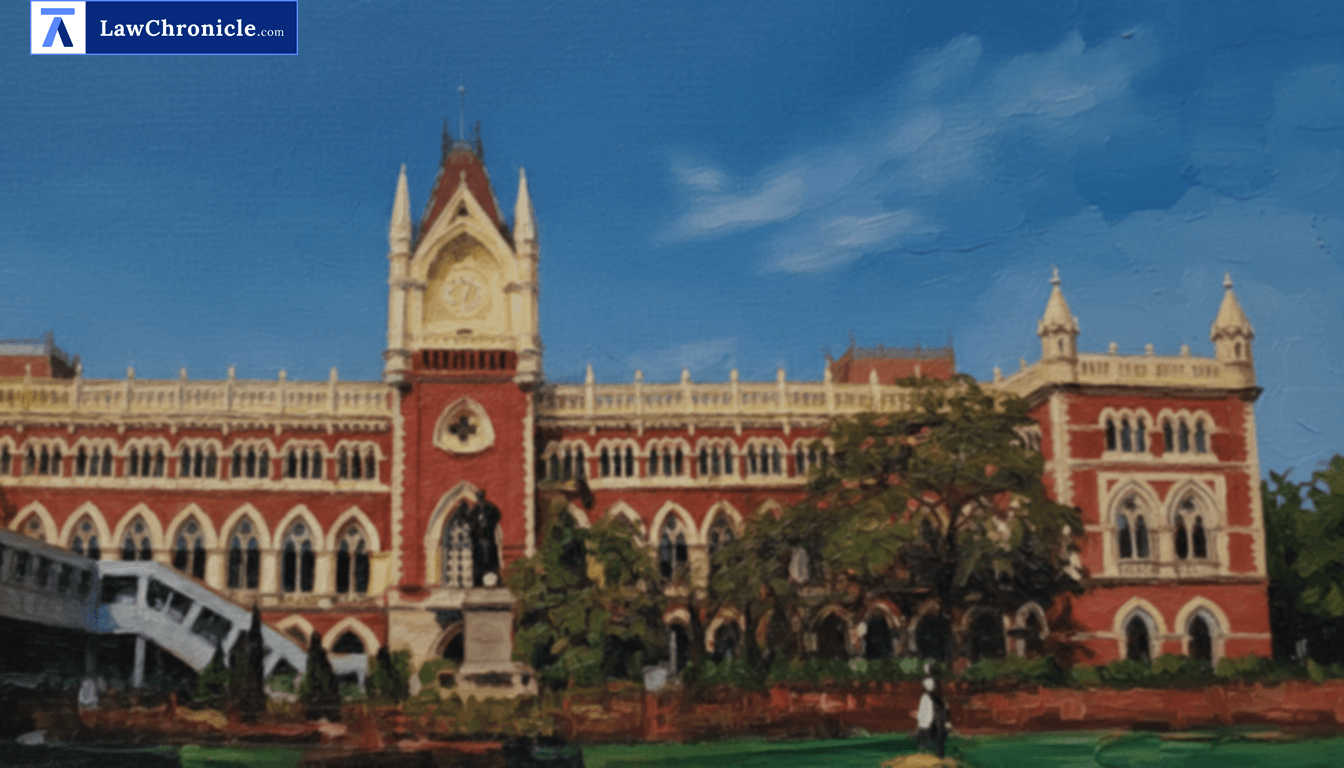
The Calcutta High Court has quashed a termination order issued by the State of West Bengal, ruling that authorities cannot unilaterally revive contract obligations through suo moto extensions after formally deciding to foreclose the agreement due to natural calamities. The court held that such executive reversals, ignoring prior consensus and technical audits that cleared the contractor of fault, constitute an arbitrary exercise of power violating constitutional mandates.
A single-judge bench of Justice Krishna Rao heard the writ petition challenging the termination of a road construction contract. The dispute emerged when heavy rains and sudden water release by the Damodar Valley Corporation (DVC) devastated a road project, leading the State to initially agree to a foreclosure before abruptly changing its stance and terminating the petitioner's contract.
The Arbitrariness of Suo Moto Extensions
The petitioner, sole proprietor of “URJA INFRA”, was awarded a contract for river side embankment protection and strengthening work. Following devastating floods in 2024, the petitioner claimed compensation for damages. A technical audit by an IIT Kharagpur professor and a government research institute confirmed the work was within acceptable limits. Despite a formal meeting on January 27, 2025, where officials decided to foreclose the contract without a defect liability period, the authorities later issued a suo moto extension and subsequently terminated the contract when the petitioner sought current rates for repairs.
In its reasoning, the Court observed: "If all the competent officials were present and have taken a decision consciously, thus the authorities after the period of more than five months without any justification cannot suo moto extend the time for rectification of the work."
Constitutional Safeguards in Contractual Matters
The Court emphasized that the High Court's jurisdiction under Constitution of India, 1950 remains a vital shield against State overreach, even in commercial disputes. Relying on Unitech Limited and Others Vs. Telangana State Industrial Infrastructure Corporation (TSIIC) and Others ( "(2021) 16 SCC 35": 2021 CaseBase(SC) 1246), the bench noted that while writ power must be used with circumspection, it is not excluded in contractual matters where the State acts unfairly.
Furthermore, the Court referred to Kailash Nath Associates Vs. Delhi Development Authority and Anr. ( "(2015) 4 SCC 136": 2015 CaseBase(SC) 937) to reiterate that when time is the essence of a contract, it cannot be waived by a unilateral act of one party without a new consensus (consensus ad idem). The Court also highlighted the principles laid down in Subodh Kumar Singh Rathore Vs. Chief Executive Officer and Others regarding the sanctity of public tenders and legitimate expectations.
Court's Final Orders
The Court found the actions of the respondent authorities to be contradictory and arbitrary, particularly noting that while one official issued a termination notice, a higher authority suggested the penalty might be reconsidered if work resumed. The Court has following directions:
"Considering the above, the impugned Memo No. 1515 dated 28th July, 2025, is set aside and quashed."
Key Takeaways:
Curbing Executive Caprice
Public authorities are bound by their conscious administrative decisions and cannot suddenly reverse their stance to the detriment of a private party without fresh justification.
Legitimate Expectation Protected
Contractors have a legitimate expectation that the State will honor its obligations and consensus reached in formal meetings, especially when technical audits confirm no fault on the contractor's part.
Judicial Review in Contracts
Article 226 remains a potent tool to challenge arbitrary terminations by State instrumentalities, ensuring they adhere to the constitutional mandate of fairness under Article 14.
Unilateral Waivers Prohibited
Where time is of the essence, a party cannot unilaterally extend or waive deadlines without the mutual agreement of both contracting parties.
Ratio Decidendi:
The State and its instrumentalities are not exempt from the duty to act fairly merely because they have entered the realm of contract. Once a public authority takes a conscious decision to foreclose a contract due to external factors like natural calamities, it cannot arbitrarily issue a suo moto extension or terminate the contract in a manner that violates the principles of consistency, transparency, and predictability. Such actions are violative of Article 14 of the Constitution of India, 1950.
Background:
The petitioner was awarded a tender for road protection work in Hooghly. In August and September 2024, floods and DVC water releases severely damaged the ongoing construction. Despite a technical audit from IIT Kharagpur clearing the petitioner of using substandard materials and a formal departmental meeting agreeing to close the tender, the respondent no. 6 issued a termination order on July 28, 2025, and forfeited the security deposit. The petitioner challenged this as arbitrary, arguing the State was bound by its decision to foreclose. The Court agreed, quashing the termination and allowing the writ petition.
Case Details:
Case No.: W.P.A. No. 17733 of 2025
Case Title: Amal Biswas Vs. The State of West Bengal & Ors.
Appearances:
For the Petitioner(s): Mr. Anirban Ray, Sr. Adv., Mr. Anujit Mukherjee, Mr. Sourav Chatterjee, Mr. Subham Saha
For the Respondent(s): Mr. Partha Chakraborty, Mr. Arghya Chatterjee
Source: 2026 CaseBase(CAL) 28
Similar Articles
 Breaking News


