


Delhi HC Upholds Termination of Toll Contract Invoking Windfall Clause
 Copy Link
 Share
 Save
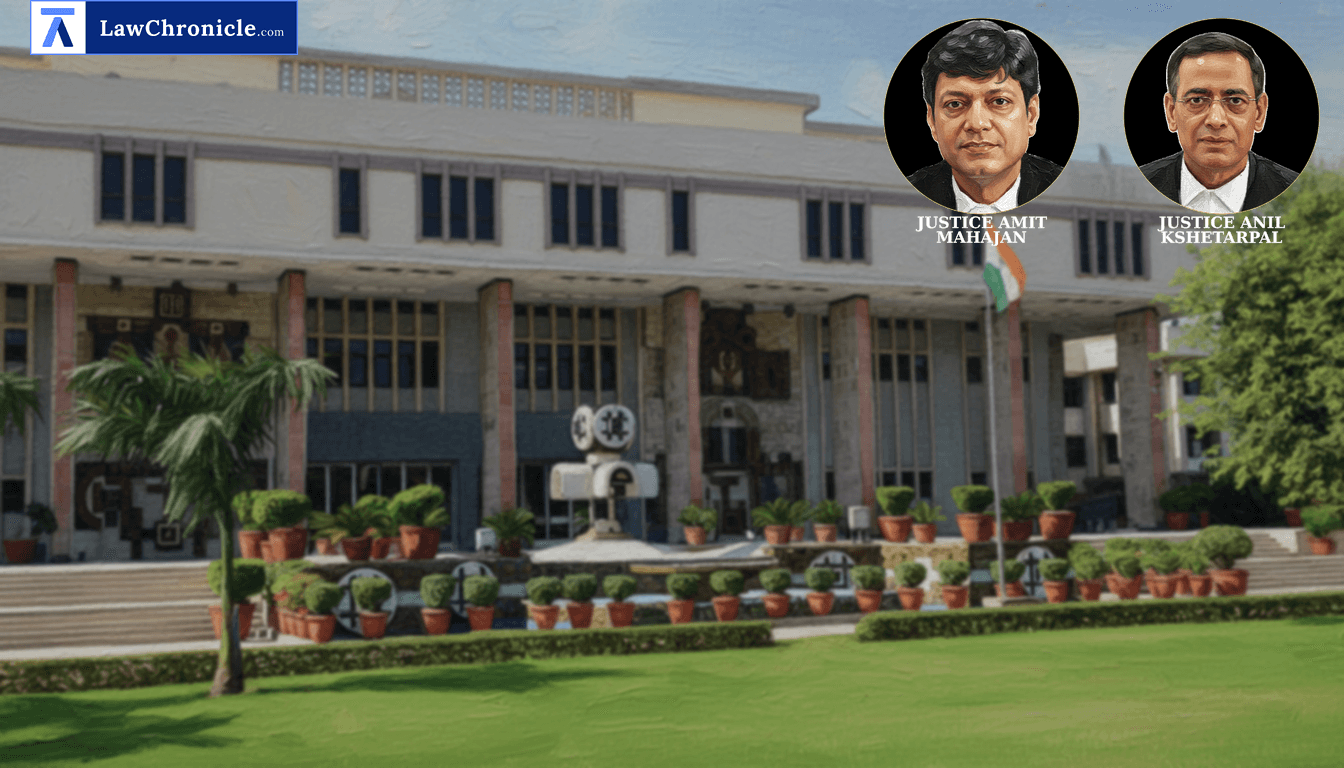
A bench of Justice Anil Kshetrapal and Justice Amit Mahajan heard a writ petition under Article 226 of the Constitution of India, 1950 in which a user fee collection contractor challenged the termination of a contract by the National Highways Authority of India and the contemporaneous tender for appointment of a replacement agency.
The Court dismissed the petition and held that the termination of the contract was legally sustainable when examined in light of the contractual framework and established principles of judicial restraint in commercial disputes. The Court held that powers under Clause 35(2) and the contingency provision in Clause 35(6) relating to a "windfall gain" were part of the bargain accepted by the contractor and could be validly acted upon, subject to the absence of mala fide or arbitrary exercise of power. The Court relied on Tata Cellular v. Union of India ( "(1994) 6 SCC 651": 1994 CaseBase(SC) 278), Jagdish Mandal v. State of Orissa ( "(2007) 14 SCC 517": 2006 CaseBase(SC) 535) and N.G. Projects Ltd. v. Vinod Kumar Jain to reiterate that judicial review of contractual and tender matters is confined to scrutiny of the decision making process and does not permit reappreciation of commercial or policy choices; the Court explained that the doctrine in Central Inland Water Transport Corporation Ltd. v. Brojo Nath Ganguly & Anr. concerning unconscionability and unequal bargaining power was directed to different factual matrices and did not assist the petitioner in a competitive commercial tender. The Court also observed that the remedy of specific performance was generally inappropriate for ongoing commercial contracts and relied on the principles in the Specific Relief Act, 1963 to indicate that damages or compensation would be the appropriate remedy where available.
The Court, in its reasoning, observed: "At the outset, it is necessary to delineate the scope of judicial review exercisable in contractual and tender matters under Article 226 of the Constitution of India, 1950. It is now well settled that when the State or its instrumentalities act within the domain of commercial contracts, the Court does not sit as an appellate authority over contractual decisions. Interference is warranted only where the decision making process is shown to be arbitrary, mala fide, irrational, or in violation of statutory or constitutional mandates."
Background
The dispute arose after the Petitioner was awarded a one year contract for collection of user fees at the Pawangaon Fee Plaza commencing 17.06.2025, and the NHAI subsequently issued a show cause cum seven days' termination notice on 02.04.2026 invoking Clauses 35(2) and 35(6) of the Contract on the ground of a purported "windfall gain" in toll collections and floated a fresh three month tender on the same date. The Respondents placed before the Court compiled monthly collections showing that electronic toll collection and cash collections exceeded the forty percent benchmark specified under Clause 35(6) as early as June 2025 and thereafter rose substantially, which the Respondents said caused a revenue imbalance and estimated loss to the public exchequer. The Petitioner challenged the invocation of Clause 35(6), contending that the provision applied only to new fee plazas and that no breach was attributable to it, further alleging pre-determination because a fresh tender was issued contemporaneously.
The Court examined the contractual scheme as a whole, noting that Clause 35(6) formed part of the tender conditions accepted by the parties and that Clause 35(2) expressly permitted termination on notice. The Court found that procedural fairness was observed: the Petitioner received the notice, filed a reply and was afforded a personal hearing. As the Court recorded, "the Impugned Order records consideration of the submissions advanced and reflects the satisfaction of the Competent Authority that the explanation offered by the Petitioner was not tenable." The Court rejected the submission that administrative preparedness to avoid interruption in toll operations amounted to mala fide conduct and held that hardship or commercial inconvenience alone did not convert lawful contractual termination into a constitutional violation under Article 14 of the Constitution of India, 1950.
The Court further explained that precedents such as Tata Cellular v. Union of India ( "(1994) 6 SCC 651": 1994 CaseBase(SC) 278), Jagdish Mandal v. State of Orissa ( "(2007) 14 SCC 517": 2006 CaseBase(SC) 535) and N.G. Projects Ltd. v. Vinod Kumar Jain were followed to delimit the scope of judicial review, and that Central Inland Water Transport Corporation Ltd. v. Brojo Nath Ganguly & Anr. dealing with unconscionable terms in unequal bargaining relationships was distinguishable because this litigation arose from a competitive commercial tender. The Court noted that the petitioner's request effectively sought specific enforcement of a commercial bargain while simultaneously attacking the clause that permitted termination; relying on the principles in the Specific Relief Act, 1963, the Court held that specific performance was not an appropriate remedy for an ongoing commercial contract that required continuous supervision and that damages would be an adequate remedy.
The Court did, however, record concern about administrative delay in identifying and acting upon the alleged "windfall gain" and observed that institutional delay in monitoring contractual triggers could prejudice public revenue. The Additional Solicitor General conceded delay and informed the Court that disciplinary proceedings were initiated and that steps would be taken to install automated monitoring systems. The Court directed the NHAI to place on record the outcome of the show cause proceedings against the concerned official and expected that disciplinary action, as far as practicable, would be concluded within six months; the Court clarified that these observations in the public interest would not affect the legality of the impugned termination upheld by the Court.
As a result, the petition was dismissed and all pending applications were closed.
Case Details:
Case No.: W.P.(C) 4817/2026
Case Title: MD. KARIMUNNISA v. NATIONAL HIGHWAYS AUTHORITY OF INDIA THROUGH ITS CHAIRMAN & ANR.
Appearances:
For the Petitioner(s): Mr. Sanjoy Ghose, Sr. Adv. with Mr. Kaustubh Anshuraj, Mr. Parmod Kalirana, Mr. Manish Choudhary, Mr. Amaya Vaid, Advs.
For the Respondent(s): Mr. N. Venkataraman, ASG with Mr. Namit Saxena, Adv.
Source: 2026 CaseBase(DEL) 240
Similar Articles
 Breaking News


