


Calcutta HC Upholds Doctrine of Reasonable Accommodation for Disabled LPG Applicants
 Copy Link
 Share
 Save
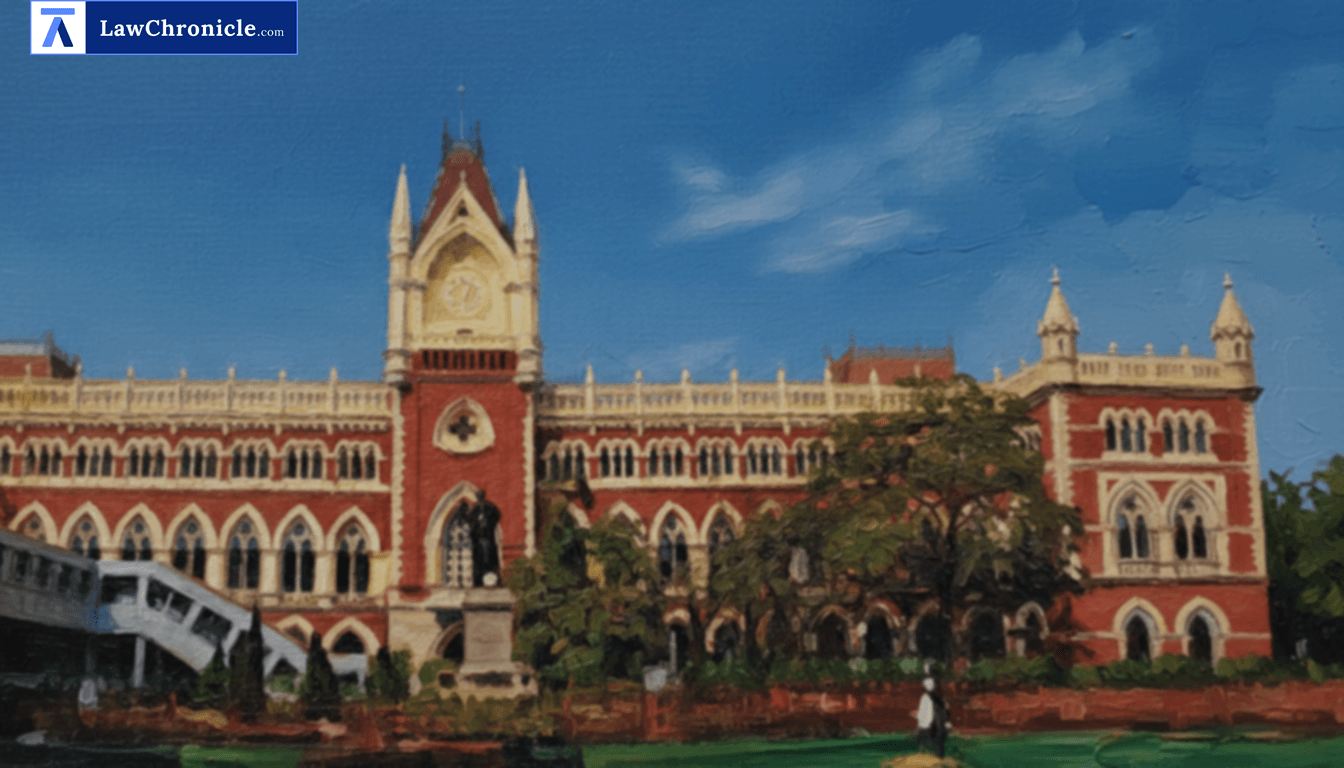
Public authorities cannot hide behind rigid contractual clauses to deny rights to persons with disabilities, as the Calcutta High Court quashed the withdrawal of an LPG distributorship letter of intent due to the applicant's subsequent schizophrenic diagnosis. The ruling establishes that the principle of reasonable accommodation under the Rights Of Persons With Disabilities Act, 2016 must override technical restrictions on substituting family members during the licensing process.
A Single Bench of Justice Smita Das De heard the challenge against Hindustan Petroleum Corporation Limited (HPCL) for its refusal to permit a candidate to nominate his brother to carry out formalities after the candidate suffered 70% disability. The Court scrutinized whether the rigid application of guidelines for Gas Cylinders Rules, 2016 could defeat the beneficial mandate of constitutional and statutory protections.
Key Takeaways
Mandatory Reasonable Accommodation
Public authorities must proactively modify procedures to ensure persons with disabilities can exercise legal rights without undue burden.
LOI vs. Vested Rights
While a Letter of Intent (LOI) is not a firm offer, its withdrawal cannot be arbitrary if the applicant has already completed significant statutory milestones.
Substitution in Licensing
Distinction must be drawn between transferring an existing license and substituting a proposed licensee due to supervening medical incapacitation.
Article 21 and Disability
Rights under the Rights Of Persons With Disabilities Act, 2016 are rooted in the principle of human dignity and form a significant facet of the Right to Life under the Constitution of India, 1950.
Court Rejects Rigid Application of Reconstitution Guidelines
The Court observed that the respondent authorities failed to distinguish between the transfer of an existing license and the substitution of an applicant during a pending licensing process. It noted that while Clause 3.2 of the guidelines restricted co-ownership, the specific circumstances of the case including a nine-year delay due to litigation and the petitioner’s subsequent mental illness required a more humane and flexible legal approach.
The Court, in its reasoning, observed: "The principle of reasonable accommodation, recognised under Section 2(y) of the Rights Of Persons With Disabilities Act, 2016, requires public authorities to make necessary and reasonable changes so that a person with disability is not prevented from exercising his legal rights, unless such changes would cause a disproportionate or undue burden. In the present case, the petitioner is not seeking any relaxation of the statutory safety requirements. He only seeks permission for his elder brother to complete the remaining statutory formalities on his behalf because of his physical incapacity."
Referring to the precedent in Jeeja Ghosh v. Union of India ( "(2016) 7 SCC 761": 2016 CaseBase(SC) 817), the Court emphasized that disability rights are founded on human dignity, a core value of the Constitution of India, 1950. The Bench further noted that since the godown and site plan were already approved, substituting the brother would not affect public safety or regulatory control.
The Court has the following directions:
"The respondent is directed to revisit the issue involved herein and shall pass a well reasoned and speaking order in accordance with law upon affording opportunity of personal hearing to the petitioner, and other stake holders if any, to arrive at a logical conclusion, within a period of eight weeks from the date of communication of this order and communicate such a decision within a week thereafter. Till a fresh decision is taken, status quo with regard to the approved premises shall be maintained."
Ratio
In the absence of a concluded contract, administrative authorities are bound by the doctrine of reasonable accommodation under the Rights Of Persons With Disabilities Act, 2016 to consider the substitution of an applicant who suffers a subsequent disability, ensuring that technical procedural barriers do not result in the arbitrary deprivation of rights guaranteed under the Constitution of India, 1950.
Background
The case originated from an advertisement in 2014 for an LPG distributorship. Petitioner No. 1 was selected and issued an LOI in 2015, which was subject to the outcome of a challenge by a third party. While the litigation traveled to the Supreme Court ultimately upholding the petitioner’s selection in 2023 the petitioner was diagnosed with Schizophrenia with 70% disability.
During the interim, the petitioner invested heavily in constructing a godown and showroom based on initial approvals. However, HPCL withdrew the LOI in February 2025, citing non-compliance with licensing requirements and refusing the petitioner's request to transfer the LOI to his brother. The respondents argued that under the Gas Cylinders Rules, 2016 and Gas Cylinder Rules, 2017, the LOI was non-transferable and the petitioner’s employment as a teacher made him ineligible.
The Court relied on Dresser Rand S.A. v. Bindal Agro Chem Ltd. to clarify that an LOI indicates intent but does not bind parties to a contract; however, relying on Ayaaubkhan Noorkhan Pathan v. State of Maharashtra ( "(2013) 4 SCC 465": 2012 CaseBase(SC) 440), it held the petitioner was an 'aggrieved person' entitled to challenge the arbitrary withdrawal. The Court eventually quashed the withdrawal letter and remitted the matter for fresh consideration.
Case Details:
Case No.: W.P.A. No. 8308 of 2025
Case Title: Rais Uddin Purkait and Anr. Vs. The Union of India and Ors.
Appearances:
For the Petitioner(s): Mr. Soumya Majumder, Sr. Adv.; Ms. Sanjukta Dutta
For the Respondent No. 1&6: Mr. Debapriya Gupta; Mr. Piyas Choudhury; Ms. Sucharita Biswas; Mr. Sujoy Paul
For the Respondent No. 2 to 5: Mr. Prasun Mukherjee; Mr. Deepak Agarwal
Source: 2026 CaseBase(CAL) 2568
Similar Articles
 Breaking News


