


Cryptic Rejection of Land Sale Permission Violates Natural Justice: Gauhati HC
 Copy Link
 Share
 Save
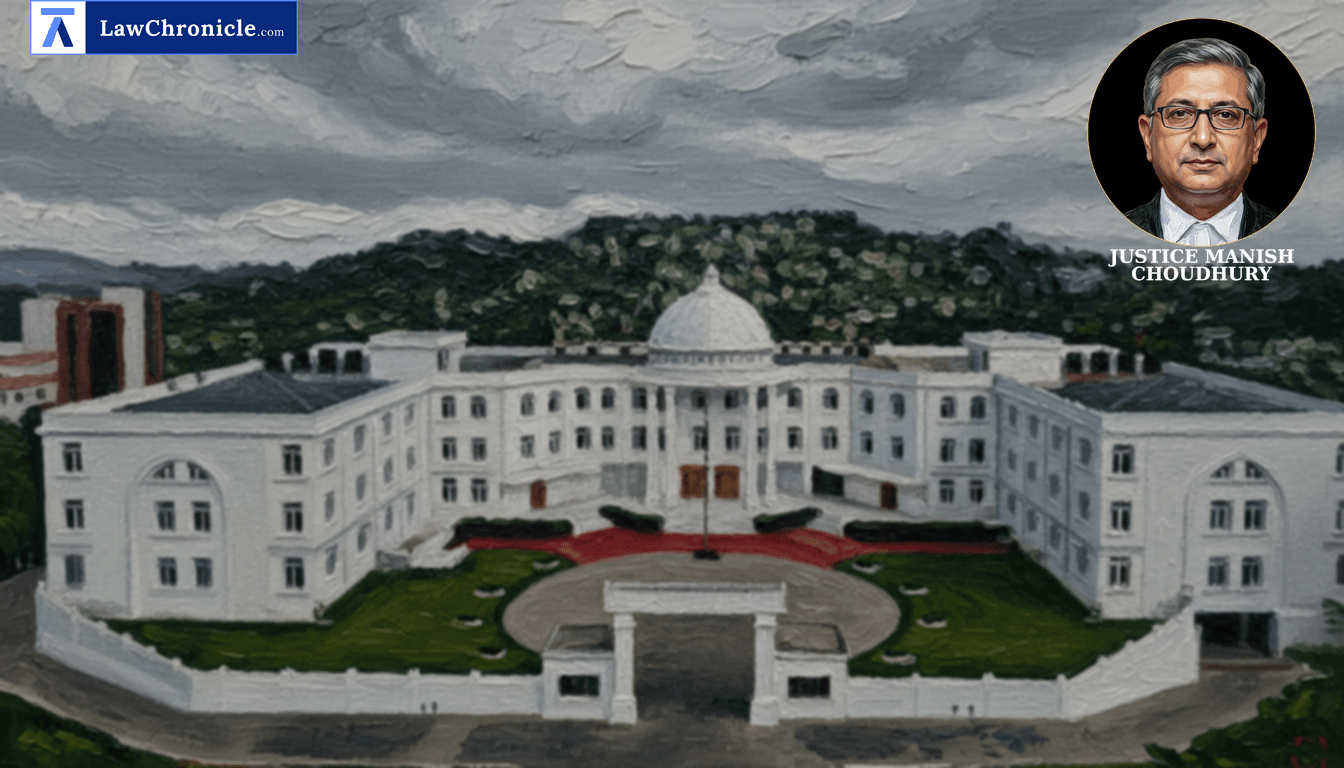
Statutory authorities cannot hide behind vague claims of 'insufficient documents' to deny public services, as the Gauhati High Court has ruled that the failure to issue a reasoned speaking order is a fatal violation of both statutory mandates and the principles of natural justice.
Justice Manish Choudhury presided over the matter, examining a challenge against a Circle Officer's summary rejection of an application for 'Composite Land Sale Transfer'. The Bench scrutinised the intersection of public service delivery laws and registration requirements, emphasizing the duty of designated officials to act with transparency.
Key Takeaways
Mandatory Reasoned Orders
Administrative rejections must expressly state specific deficiencies to allow citizens a fair chance to rectify them or prefer a meaningful appeal.
Judicial Review vs. Alternative Remedy
While statutory appeals exist, writ petitions are maintainable where principles of natural justice are breached or statutory prescriptions for 'speaking orders' are ignored.
Property Rights Protection
Though not a fundamental right, land transfer permissions touch upon Article 300A of the Constitution of India, requiring conscious application of mind by state actors.
Anti-Arbitrariness Check
Recording reasons serves as a safeguard against arbitrary executive action, ensuring that authorities do not pass orders without proper verification.
Invalidity of Non-Speaking Orders
The Gauhati High Court observed that the rejection order, which merely cited "insufficient documents" without specification, failed the test of Section 7(2) of the Assam Right to Public Services Act, 2012 and the proviso to Section 21A of the Registration Act, 1908. It was noted that a speaking order must speak for itself and cannot be "like old wine becoming better as they grow older" through later explanations.
The Court, in its reasoning, observed: "A speaking order is one which expressly states the reasons for the decision. In other words, a speaking order speaks for itself by assigning the reasons behind the conclusion. If an order is passed without giving a reason by the concerned authority, more particularly, when the authority is statutory authority then the order is a non-speaking one... The obligation to record reasons is a possible check against arbitrary action on the part of the authority invested with the statutory power to take a decision which is likely to affect the right of the person concerned. When the statute itself contains a prescription to record reasons in the decision, absence of reasons in the decision falls short of prescription and would be in violation of the prescription and thus, illegal."
The Gauhati High Court issued the following directions:
"As the order of rejection has been set aside, it is now the obligation of the Designated Public Servant to consider the application submitted by the petitioners for the notified public service, ‘Composite Land Sale Transfer’ strictly in compliance of the provisions of Section 7[2] of the Assam Right to Public Services Act, 2012, as amended, the proviso to Section 21A of the Registration Act, 1908, as amended by the Registration [Assam Amendment] Act, 2009; and the Notification dated 11.11.2022; and to pass a speaking and reasoned order within the period of forty-five days from the date of submission of a copy of this order by the petitioner at the office of the Designated Public Servant."
Ratio
When a statute requires a public authority to record reasons for a decision, especially an appealable one, the failure to provide a specific, reasoned, and speaking order constitutes a violation of the principles of natural justice and statutory duty, rendering such an order legally unsustainable and liable to be set aside under writ jurisdiction.
Background
The petitioners, joint owners of land in Goalpara, had applied for a 'Composite Land Sale Transfer' via the SewaSetu platform to sell a plot to petitioner no. 5. Despite submitting requisite documents and an affidavit, the Circle Officer rejected the application on 25.05.2026 with a cryptic remark regarding insufficient documents and a follow-up failure. The petitioners argued this was a non-speaking order, citing the precedent of Mohinder Singh Gill and another vs. Chief Election Commissioner, New Delhi and others ( "(1978) 1 SCC 405": 1977 CaseBase(SC) 276), which mandates that the validity of a statutory order must be judged by the reasons mentioned within it.
The State contended that the petitioners should have approached the appellate authority under the Assam Right to Public Services Act, 2012. However, the Gauhati High Court distinguished the case, holding that the total lack of reasoning and violation of natural justice warranted immediate judicial intervention. The Bench set aside the rejection, directing a fresh, reasoned consideration within 45 days.
Case Details:
Case No.: WP(C)/5364/2026
Neutral Citation: 2026:GAU-AS:15511
Case Title: MAJUMDAR RABHA AND ORS VS. THE STATE OF ASSAM AND ORS
Appearances:
For the Petitioner(s): MR. DITUL DAS, MR. B J TALUKDAR
For the Respondent(s): SC, REVENUE, GA, ASSAM
Source: 2026 CaseBase(GAU) 1469
Similar Articles




 Breaking News


