


Can Married Daughter Claim Compassionate Appointment? Allahabad HC Answers
 Copy Link
 Share
 Save
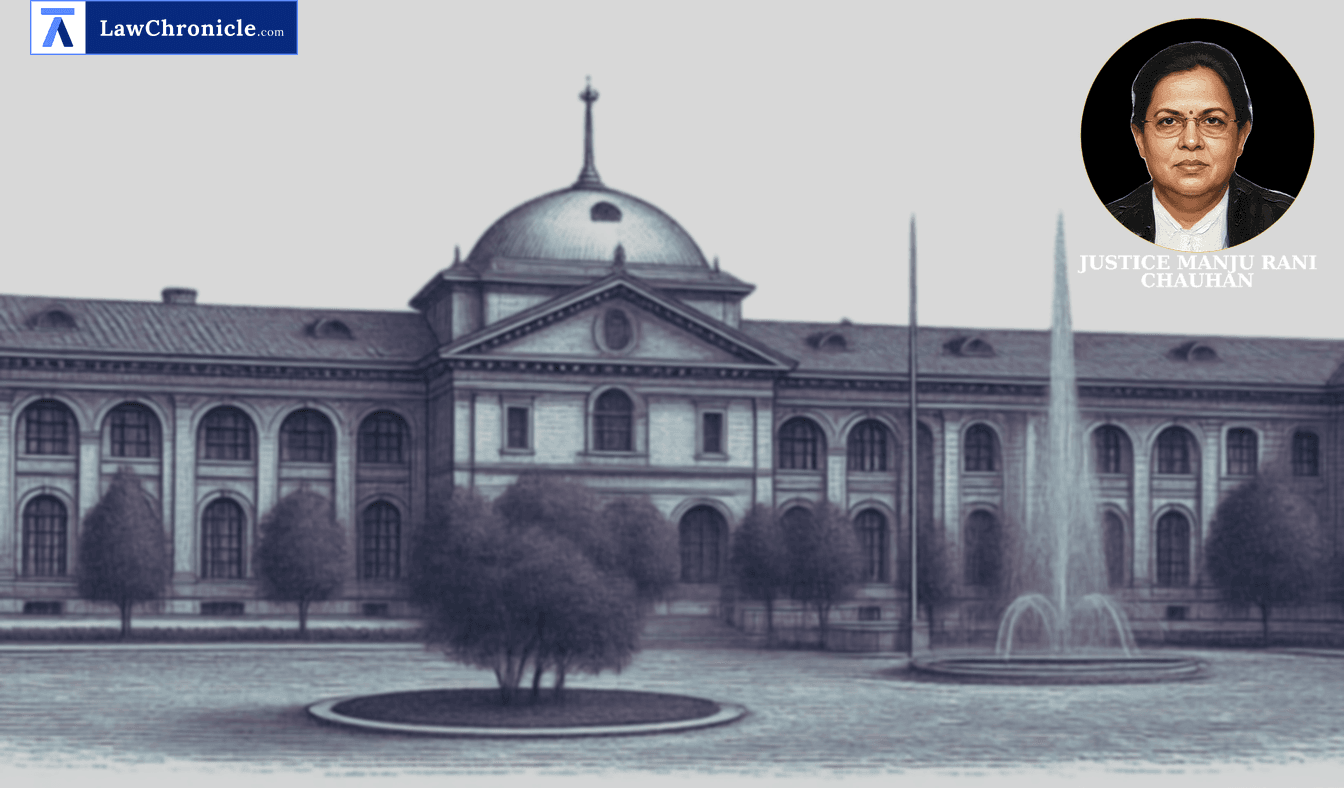
On the legal question of “Can Married Daughter Claim Compassionate Appointment?”, the Allahabad High Court ruled that marital status is not a constitutional disqualification for state employment. Restricting gender-based exclusion, the Bench held that administrative delays cannot be weaponized against dependents to deny their rightful claims for livelihood support after the death of a government servant.
A Single Bench of Justice Manju Rani Chauhan presided over the matter, hearing a challenge against an order by the District Basic Education Officer, Saharanpur. The petition contested the rejection of a daughter’s claim for appointment following her father's death in harness, which had been dismissed primarily on the grounds of her marital status and alleged delay.
Key Takeaways
Can Married Daughter Claim Compassionate Appointment?
Marital status cannot be used as a criterion to exclude a daughter from the definition of 'family', as it violates the fundamental rights to equality and non-discrimination.
Retroactive Application of Legal Declarations
Judicial declarations striking down unconstitutional rules operate retrospectively unless the Court explicitly mandates a prospective application, ensuring benefits to those previously excluded.
Administrative Delay Is Not a Disqualification
Time consumed by the state machinery in processing or wrongly rejecting an application cannot be attributed to the claimant as a 'limitation' or 'delay'.
Legislative Alignment with Judicial Mandates
Once a rule is declared unconstitutional, subsequent statutory amendments merely formalize a right that had already been legally recognized by the courts.
Court's Observations on Marital Status and Rule 2(c)
The Allahabad High Court observed that the exclusion of married daughters from the ambit of U.P. Recruitment Of Dependants Of Government Servants Dying In Harness Rules, 1974 was rendered untenable by the authoritative pronouncement in Vimla Srivastava v. State of U.P.. The Bench emphasized that the State's notification in 2021, which removed the word "unmarried" from the definition of family, was a consequential alignment with the Constitution of India, 1950.
The Bench observed that “The legislative and executive response thus brought the text of the Rules into consonance with the constitutional principle that marital status, by itself, cannot furnish a disqualification to an otherwise eligible daughter seeking consideration for compassionate appointment. The fact that the statutory amendment/notification came subsequently cannot, by itself, efface the legal consequence flowing from the earlier declaration of law.” Regarding the issue of limitation, the Allahabad High Court noted that the petitioner had applied within the prescribed period in 2016. The Court held that to allow the respondents to take advantage of the time consumed in their own administrative process would be “manifestly inequitable and legally unsustainable.”
Ratio
The exclusion of a married daughter from the definition of 'family' for compassionate appointment is unconstitutional as it violates Articles 14 and 15 of the Constitution of India, 1950. A judicial declaration of unconstitutionality regarding a service rule operates retrospectively, and administrative delays in processing an application cannot be used to bar a claim on the grounds of limitation when the applicant approached the authority within the prescribed time.
Background
The petitioner's father, an Assistant Teacher, died in harness in 2015. The petitioner applied for compassionate appointment in 2016, but her claim was rejected because she was a married daughter. Following a previous round of litigation, the matter was remitted for fresh consideration. However, the authorities rejected the claim again in 2024, citing both her marital status and a six-year delay, despite the initial application being timely.
The petitioner relied on Vimla Srivastava v. State of U.P., which struck down the requirement of being "unmarried" in U.P. Recruitment Of Dependants Of Government Servants Dying In Harness Rules, 1974. The Court also considered Government of India And Another vs. Sri Devaraj URS Medical College ( "2026 SCC OnLine SC 1479": 2026 CaseBase(SC) 749) regarding the retrospective operation of law and Sayara Khatoon @ Shayara Khatoon and another v. State of Bihar and others ( "2026 SCC OnLine SC 1466": 2026 CaseBase(SC) 4699) regarding the rights of married daughters. The Allahabad High Court ultimately allowed the petition, quashing the discriminatory order.
Case Details:
Case No.: WRIT - A No. - 1685 of 2025
Case Title: Manisha Tyagi Versus State Of U.P. And 2 Others
Appearances:
For the Petitioner(s): Vijayendra Pratap Singh, Awadh Narayan Rai
For the Respondent(s): C.S.C., Jay Prakash Singh
Source: 2026 CaseBase(ALL) 1215
Similar Articles

 Breaking News


