


Chhattisgarh HC: Insurance Risk Begins on Policy Issuance, Not Premium Payment
 Copy Link
 Share
 Save
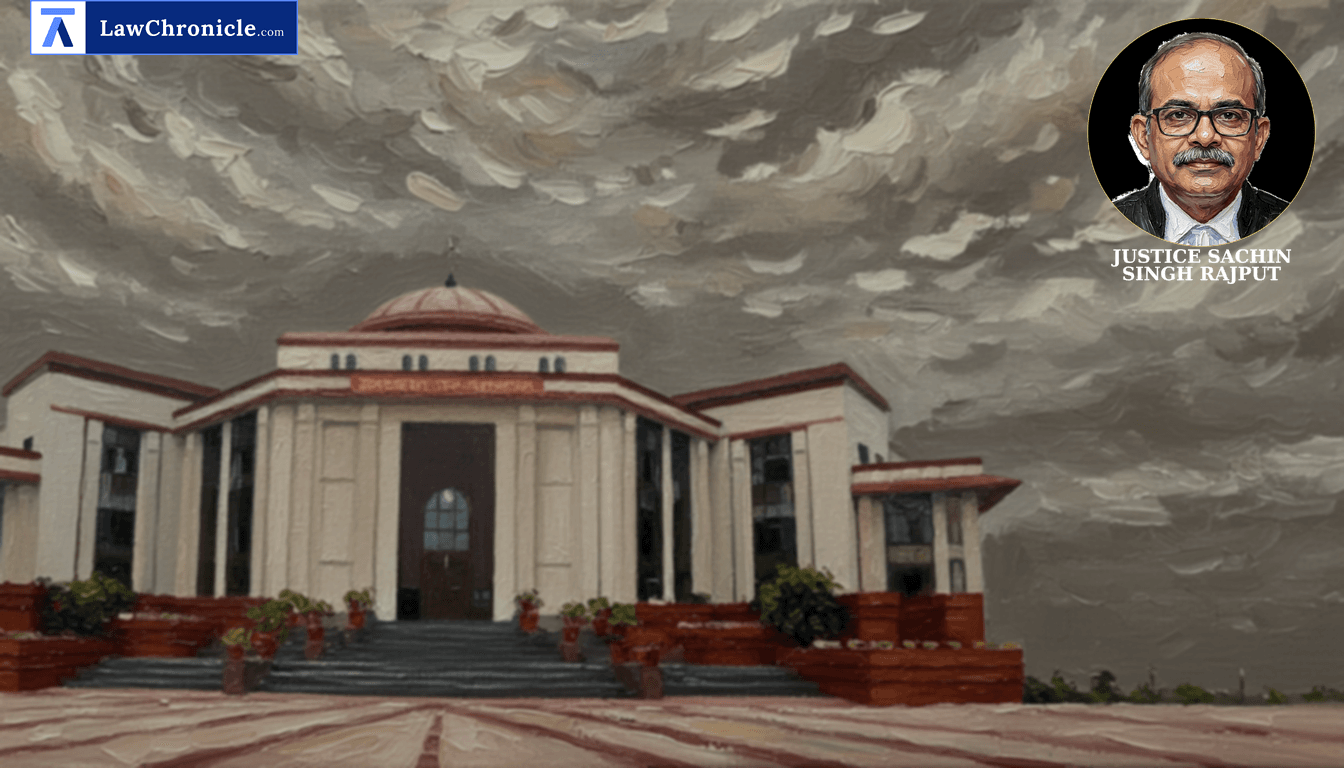
The Chhattisgarh High Court has ruled that a contract of insurance only commences from the date and time explicitly stated on the insurance policy, clarifying that mere receipt of a premium by an agent or its deposit into a company's account does not automatically trigger risk assumption or bind the insurer. This decision shifts the entire financial burden of accident compensation back onto vehicle owners and drivers if a mishap occurs in the temporal gap between the premium payment and the formal issuance of the policy.
A single-judge bench of Justice Sachin Singh Rajput delivered this verdict while hearing multiple appeals and cross-objections arising from a fatal accident involving a Tata Sumo. The central legal dispute revolved around whether the insurance company could be held liable for an accident that occurred just two hours before the policy was set to become effective, even though the premium had been deposited earlier that same day.
Court on Commencement of Insurance Contract
The Court, in its reasoning, observed: "In the opinion of this Court, the contract of insurance only commenced from the date and time of issuance of the insurance policy. ... date of issuance of insurance policy would be the relevant date for all purposes and not the date of proposal or the date of issuance of receipt."
The bench further clarified that if an offer by way of premium is given, it does not lead to an irresistible conclusion that the offer has been accepted unconditionally. The Court has the following directions:
"The appellants are directed to deposit the enhanced amount of the compensation along with interest as awarded by this Court within a period of 60 days from the date of receipt of this order. After the deposit, the learned Claims Tribunal shall pass appropriate orders in respect of apportionment, investment and disbursement of the compensation amongst the claimants keeping in view the law laid down by the Hon’ble Supreme Court in case of General Manager, Kerala State Road Transport Corporation, Trivandrum v. Susamma Thomas (Mrs.) and others. Rest of the awards to remain intact subject to modifications made hereinabove."
Background: The Midnight Accident and Policy Gap
The dispute arose from a road accident on April 19, 2019, at approximately 10:00 PM. A Tata Sumo dashed into a motorcycle, resulting in the death of two persons and serious injuries to a third. The owner of the vehicle contended that he had paid the insurance premium to an agent at 4:00 PM on the day of the accident, which was transferred to the insurance company’s account by 4:35 PM. However, the insurance policy was issued with a commencement time of 12:00:01 AM on April 20, 2019.
The insurance company, represented by New India Assurance, argued that since the accident occurred two hours before the policy’s effective start time, the vehicle was effectively uninsured at the time of the crash. The Claims Tribunal initially exonerated the insurance company, a decision which the owner challenged by citing Oriental Insurance Company Limited v. Dharam Chand and others ( "(2010) 15 SCC 141": 2010 CaseBase(SC) 1188) and New India Assurance Company Limited v. Ram Dayal and others ( "(1990) 2 SCC 680": 1990 CaseBase(SC) 379).
However, the High Court rejected these arguments, noting that the previous policy had expired on April 16, 2019, and the agent involved was not an authorized representative of the company. Relying on the principles in Life Insurance Corporation of India v. Raja Vasireddy Komalavalli Kamba and others ( "(1984) 2 SCC 719": 1984 CaseBase(SC) 16), Reliance Life Insurance Company Limited and another v. Jaya Wadhwani, and Life Insurance Corporation of India and another v. Dharam Vir Anand ( "(1998) 7 SCC 348": 1998 CaseBase(SC) 256), the Court held that a binding contract requires unconditional acceptance and communication.
Enhanced Compensation for Claimants
While the Court upheld the exoneration of the insurance company, it partially allowed the cross-objections filed by the claimants for enhanced compensation. Analyzing the functional disability of the injured survivor under the framework of Raj Kumar v. Ajay Kumar and another ( "(2011) 1 SCC 343": 2010 CaseBase(SC) 368), and applying the standard for future prospects and consortium as per Saroj and others v. Iffco Tokio General Insurance Co. and others ( "2024 INSC 816": 2024 CaseBase(SC) 785), National Insurance Company Ltd. v. Pranay Sethi ( "(2017) 16 SCC 680": 2017 CaseBase(SC) 551), Sarla Verma and others v. Delhi Transport Corporation and others ( "(2009) 6 SCC 121": 2009 CaseBase(SC) 380), and Magma General Insurance Co. Ltd. v. Nanu Ram @ Chuhru Ram and others ( "(2018) 18 SCC 130": 2018 CaseBase(SC) 597), the High Court significantly increased the award amounts. For the death of a 30-year-old mason, the Court increased the compensation from approximately ₹10.73 Lakh to ₹21.57 Lakh, citing the need for "just compensation" under the Motor Vehicles Act, 1988.
Key Takeaways:
Policy Issuance Time is Paramount
Insured parties must ensure the policy period covers their risk immediately, as courts will not retrospectively apply coverage to the moment premium was paid if the document states a future start time.
Liability of Uninsured Vehicle Owners
Vehicle owners are solely liable for third-party claims if an accident occurs during a lapse in insurance coverage, even if the lapse is only for a few hours.
Rejection of Automatic Contractual Bind
Deposit of premium is treated as an 'offer'; the contract is only concluded when the insurer accepts it and specifies the risk commencement terms.
Ratio Decidendi:
The contract of insurance commences only from the date and time of the issuance of the insurance policy as specified by the insurer. Mere payment of premium or submission of a proposal does not create a binding contract or assume risk unless unconditionally accepted by the insurance company through the formal issuance of the policy document.
Case Details:
Case No.: MAC No. 213 of 2022, 210 of 2022, 221 of 2022
NeutralCitation: 2026:CGHC:26430
Case Title: Gopi Sahni and others v. Ranjit Bhunjia and others
Appearances:
For the Petitioner(s): Shri Khulesh Sahu and Ms. Poulami Das, Advocates
For the Respondent(s): Shri Jameel Akhtar Lohani, Advocate; Shri Raghvendra Verma, Advocate on behalf of Shri Deepak Gupta, Advocate
Source: 2026 CaseBase(CTH) 4
Similar Articles

 Breaking News


