


Gujarat HC: Insurers Cannot Evade Liability by Citing Post-Dated Policy Commencement
 Copy Link
 Share
 Save
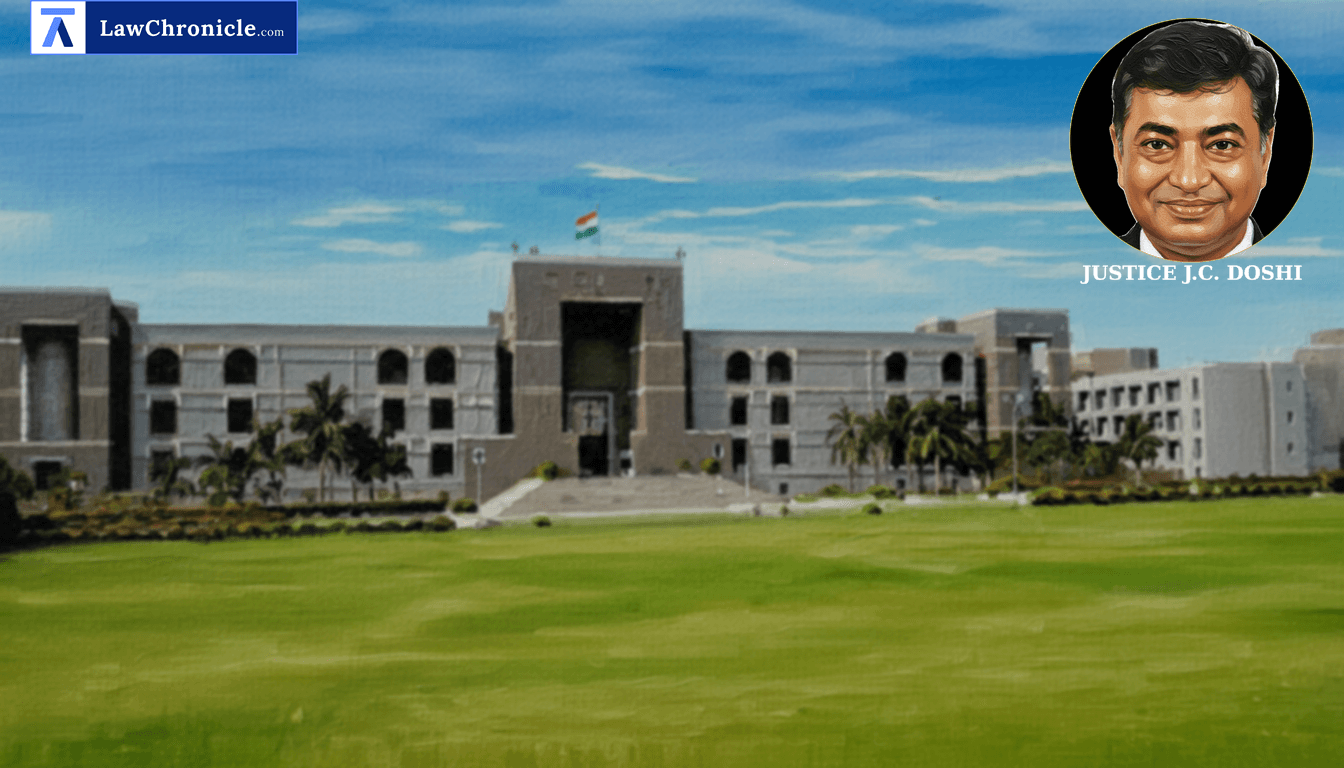
In a decisive blow to insurance companies attempting to evade liability through hyper-technical interpretations of policy commencement, the Gujarat High Court has ruled that the risk of a vehicle is presumed to start from the date the proposal form is signed if the insurer fails to prove when the premium was actually received. The Court emphasized that insurance companies cannot hide behind inconsistent evidence or the absence of records to disown their statutory obligation to indemnify third parties, especially when a proposal was initiated prior to the accident.
Justice J. C. Doshi presided over the appeal, which challenged a Tribunal's decision that had exonerated the insurance company because the accident occurred just days before the formal policy start date despite the proposal being signed earlier.
Key Takeaways
Burden of Proof on Insurers
Insurance companies bear the primary obligation to produce premium receipt records to prove that a policy was not in force at the time of an accident if a proposal had already been signed.
Presumption of Risk Commencement
In the absence of clear evidence regarding premium payment dates, courts may draw an inference that the risk commenced with the submission of the proposal form.
Object of Social Welfare Legislation
Courts must avoid hyper-technical views that frustrate the remedial purpose of the motor vehicle laws, which aim to provide just and fair compensation to accident victims.
Inconsistent Evidence and Lack of Records
The High Court scrutinised the testimony of the insurance company’s Divisional Manager, noting significant inconsistencies. While an affidavit filed during the appeal claimed the proposal was signed months after the policy started, the same officer remained silent on this during the trial. The Court found it "highly inconceivable" that a contract of insurance would be signed after it had already been executed. Relying on the principles in Oriental Insurance Co. Ltd. Vs. Dharam Chand and others ( "2010 ACJ 2659": 2010 CaseBase(SC) 1188) and United India Insurance Co. Ltd. Vs. Laxmamma and others, the Court held that once a premium is received, the risk commences.
The Court has the following directions:
"The insurance company is directed to pay the decretal amount, together with accrued interest, within eight weeks from the date of this judgment before the learned Tribunal. The finding of the learned Tribunal exonerating the insurance company, based on the terms and conditions of the policy, is set aside. Rest of the direction(s) of the learned Tribunal shall remain unaltered."
The Court, in its reasoning, observed: "...the learned Tribunal had committed a serious error in taking a hyper-technical view in the matter to exonerate the insurance company. Such view itself frustrates the very object of the Motor Vehicles Act, namely, to grant just, fair and equitable compensation."
Ratio
Where a proposal form is signed prior to an accident and the insurance company fails to produce evidence regarding the exact date of premium receipt, a presumption arises that the risk commenced from the date of the proposal, and the insurer cannot disown its liability to indemnify third parties based on a later policy commencement date.
Background
The case arose from a road accident on January 26, 1990. The insurance policy issued by the New India Assurance Company Limited stated it was effective from February 1, 1990. However, the proposal form was signed on January 18, 1990. The Motor Accident Claims Tribunal had originally exonerated the insurance company, holding that the policy did not cover the risk on the date of the accident. The claimants appealed this under Section 173 of the Motor Vehicles Act, 1988. The High Court noted that the insurer failed to produce the proposal form or premium receipts and provided contradictory testimony. Citing National Insurance Co. Ltd. Vs. Sobina Lakai, the insurer argued policy effectiveness starts from the date specifically incorporated in the policy, but the High Court distinguished this, noting the insurer's failure to maintain or produce critical records. Consequently, the Court modified the award, making the insurance company jointly and severally liable to pay the Rs. 83,000 compensation with 12% interest.
Case Details:
Case No.: R/FIRST APPEAL NO. 2354 of 2010
Neutral Citation: 2026:GUJHC:63945
Case Title: Bhikhiben Koyabhai Patel & Anr. Versus Jivanbhai Ladhubhai Zanzar (Varli) & Ors.
Appearances:
For the Petitioner(s): Mr Amit N Patel(2749)
For the Respondent(s): Mr Vd Parghi(568) For Defendant No. 1, Mr Vibhuti Nanavati(513) for Defendant No. 3
Source: 2026 CaseBase(GUJ) 29388
Similar Articles

 Breaking News


