


Chhattisgarh HC: Narrow Scope For Interference In Arbitral Awards Upheld Under Section 34
 Copy Link
 Share
 Save
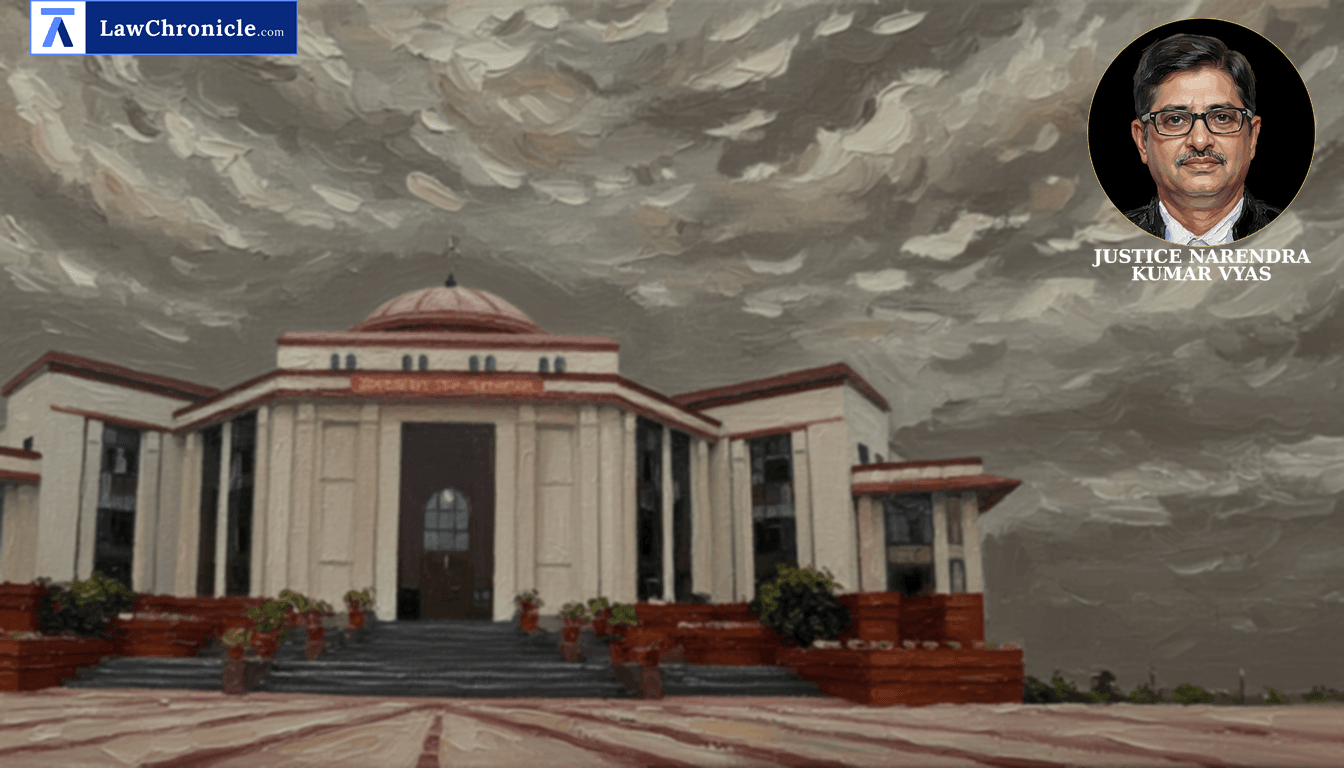
The High Court of Chhattisgarh has reinforced the principle of minimal judicial interference in arbitration, ruling that appellate courts cannot reappraise evidence or reverse awards simply because an alternative view is possible. This decision fortifies the finality of arbitral proceedings, emphasizing that once a District Judge upholds an award under Section 34, the window for appellate intervention under Section 37 narrows significantly.
In a comprehensive ruling, a Bench of Justice Narendra Kumar Vyas dismissed an appeal challenging an award related to a hire-purchase dispute, affirming that the supervisory jurisdiction of the court is limited to correcting patent illegalities and fundamental policy violations. The Court heard an appeal filed under Section 37 of the Arbitration & Conciliation Act, 1996 against an order of the District Judge, Raipur, which had rejected an application to set aside an award passed in 2001.
The Mandate of Minimal Judicial Intervention
The Court emphasized that the Arbitration & Conciliation Act, 1996 is a special enactment designed to resolve commercial disputes with minimal court interference. It noted that the appellate power under Section 37 is strictly confined within the domain of Section 34.
The Court, in its reasoning, observed: "The arbitral award is not liable to be interfered unless a case for interference as set out in the earlier part of the decision, is made out. It cannot be disturbed only for the reason that instead of the view taken by the arbitral tribunal, the other view which is also a possible view is a better view according to the appellate court."
Validity of Appointing Company Employees as Arbitrators
A key challenge raised by the appellant concerned the appointment of a company secretary as the sole arbitrator. The Court clarified that under the unamended Section 12 of the Arbitration & Conciliation Act, 1996, there was no per se bar on an employee of a party being appointed as an arbitrator, provided there were no justifiable doubts regarding their independence or impartiality.
Citing the precedent in Aravali Power Company Private Limited vs. Era Infra Engineering Limited, the Bench noted that the mere fact that an arbitrator is an employee does not raise a presumption of bias. Since the appellant failed to establish any personal interest of the arbitrator in the dispute and had participated in the proceedings without successful challenge, the objection was rejected.
Interpretation of Repeal and Saving Clauses
The appellant had also argued that the proceedings were improperly conducted under the Arbitration Act, 1940. However, the Court observed that the hire-purchase agreement was executed after the Arbitration & Conciliation Act, 1996 came into force.
Referring to Disortho S.A.S vs. Meril Life Sciences Private Limited ( "(2026) 2 SCC 599": 2025 CaseBase(SC) 312), the Court noted: "The interpretation of a contract involves determining the meaning that a reasonable person, with all relevant background knowledge available to the parties at the time of the contract, would derive from the document." The Bench concluded that references in the agreement to "statutory amendments" naturally pointed toward the application of the 1996 Act.
Court Directions
The Court has the following directions:
"The interim order passed by this Court on 17-01-2006 is vacated. ...the appeal is sense merit, liable to be dismissed and accordingly, it is dismissed."
Key Takeaways
Narrowing Appellate Review: Reaffirms that Section 37 appeals have a significantly narrower scope than standard civil appeals, especially when an award has already passed the Section 34 hurdle.
Pre-2015 Arbitrator Neutrality: Clarifies that for appointments made before the 2015 amendment, being an employee of a party does not automatically disqualify an arbitrator.
Contractual Interpretation: Highlights that references to repealed statutes in agreements should be interpreted in light of existing legislation at the time of the contract's execution.
Finality of Arbitral Findings: Establishes that if an arbitrator has applied their mind to the pleadings and evidence, courts cannot sit as a 'court of appeal' to re-evaluate the merits.
Ratio
The appellate jurisdiction under Section 37 of the Arbitration & Conciliation Act, 1996, has a much narrower scope of intervention than Section 34. An arbitral award that is not patently illegal or contrary to the fundamental policy of Indian law cannot be set aside merely because a court prefers a different interpretation of the facts or the contract.
Background:
The dispute originated from a Hire Purchase Agreement executed in August 1996 between the appellant (hirer) and the respondent finance company for the purchase of a Maruti Van. The appellant alleged that the finance company and the guarantor committed fraud as the vehicle was never delivered despite payments. Conversely, the finance company claimed the appellant defaulted on installments and misused the funds.
An arbitrator was appointed as per the agreement, leading to an award in 2001 in favor of the finance company. The appellant challenged this before the District Judge under Section 34, alleging procedural irregularities, lack of consent for the arbitrator's appointment, and bias due to the arbitrator being an employee of the respondent. After the District Judge dismissed the challenge in 2005, the matter moved to the High Court. The High Court, relying on Punjab State civil Supplies Corporation Limited and another vs. Sanman Rice Mill and others and Jan De Nul Dredging India Pvt. Ltd. v. Tuticorin Port Trust ( "2026 INSC 34": 2026 CaseBase(SC) 12), ultimately upheld the lower court's refusal to interfere with the award, emphasizing that the proceedings were conducted fairly and the arbitrator's view was a plausible one.
Case Details:
Case No.: MA No. 1490 of 2005
NeutralCitation: 2026:CGHC:30412
Case Title: Madhusudan Agrawal Vs. Galaxy Exfeen Limited & others
Appearances:
For the Petitioner(s): Mrs. Shraddha Mishra, Advocate appears on behalf of Mr. Prateek Sharma, Advocate.
For the Respondent(s): Mr. Mayur Khandelwal, Advocate.
Source: 2026 CaseBase(CTH) 23
Similar Articles

 Breaking News


