Chhattisgarh HC: Overnight Halt at Destination Does Not Create an Illegal 'Third Terminus'
 Copy Link
 Share
 Save
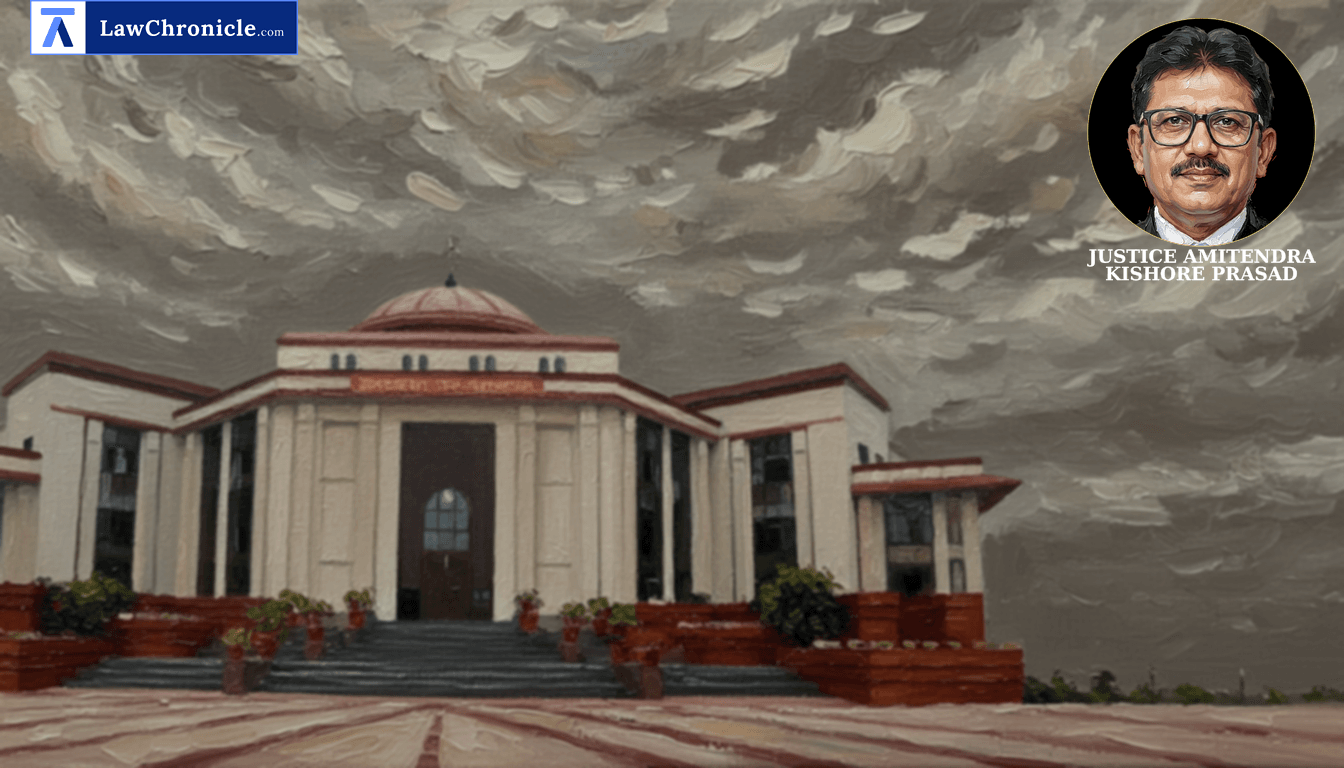
The Chhattisgarh High Court has slammed the door on the restrictive interpretation of bus route permits, ruling that a vehicle stationed overnight at a permitted destination does not legally transform into a 'third terminus.' This decisive verdict restores stage carriage permits for operators, clarifying that the mere operational reality of night halting does not violate the statutory definition of a route under motor vehicle laws.
In a common order, a single-judge bench of Justice Amitendra Kishore Prasad heard a cluster of petitions challenging the Chhattisgarh State Transport Appellate Tribunal's (STAT) decision to quash validly granted stage carriage permits. The central dispute revolved around whether an express bus service plying between two specific cities could be accused of creating an unauthorized third terminus simply because the vehicle remained at one end of the route overnight.
Defining the 'Route' and the Fallacy of Three Termini
The Court scrutinized the definition of 'route' as provided under Section 2(38) of the Motor Vehicles Act, 1988, which describes it as a line of travel between one terminus and another. The bench observed that a route, by its very legal definition, possesses only two termini. The Court noted that the petitioner had applied for and was granted permits for the Raipur to Kawardha route, which strictly adhered to this two-terminus requirement.
Justice Prasad found that the STAT had proceeded on a factual misapprehension. The Tribunal had previously ruled that because the bus stayed at Kawardha on Tuesday and Thursday nights, it effectively created a third terminus. Rejecting this, the High Court emphasized that there was nothing in the application or the permit to suggest the existence of more than two termini. The Court noted that even if a bus is stationed at a terminus for two days, it cannot be termed as the creation of a third terminus as long as it does not proceed to an unauthorized destination.
Reliance on Judicial Precedents
The Court placed heavy reliance on the Madhya Pradesh High Court's decision in Prem Naraian Ramlal Sharma v. State Transport Appellate Tribunal and others, which held that reversing an RTA order on the sole ground of 'three termini' when the application complied with the two-terminus rule was erroneous. Further, the Court invoked the Supreme Court's ruling in State of West Bengal v. S.K. Nural Amin, which clarified that the Motor Vehicles Act, 1988 prohibits granting permits for routes not specified in the application but allows for modifications and curtailments. The bench also noted the principles affirmed in Dharmendra Singh Yadav Vs. The State of Madhya Pradesh and others ( "Writ Appeal No.2228 of 2024 decided on 22.4.2025": 2025 CaseBase(MP) 8580) regarding the formulation of routes and the validity of modifications under Section 72 of the Motor Vehicles Act, 1988.
Court Observations on Overnight Halts
The Court, in its reasoning, observed: "A route has two termini, it must be stated not only in the application but also in the permit. In this way, the observation of the S.T.A.T., on the basis of which the revision was allowed, appears to be against the provision of law and wholly erroneous. The finding of the STAT, predicated upon factual misapprehension of ‘three termini’, is perverse and unsustainable and liable to be set-aside."
The Court has the following directions:
"Resultantly, all the Writ Petitions are Allowed. The impugned orders dated 25.10.2024 are hereby quashed. Consequently, the stage carriage permits granted by the RTA, Raipur are held to be valid and restored, with all consequential benefits flowing therefrom."
Background:
The petitioner, a bus operator, applied for stage carriage permits for the Raipur to Kawardha route under Section 70 of the Motor Vehicles Act, 1988. The Regional Transport Authority (RTA), Raipur, granted four permits after considering objections from other operators regarding timing clashes. However, respondent No. 3 (a private bus service) challenged these grants before the STAT. The respondent argued that because the buses remained stationed at Kawardha overnight on certain days instead of performing a return journey to Raipur the same day, an illegal 'third terminus' was created. The STAT accepted this argument and quashed the permits, leading the petitioner to move the High Court. The High Court ultimately found that the Tribunal's logic was legally flawed, as an overnight halt does not constitute an additional terminus.
Key Takeaways:
Night Halts Are Legally Permissible
Stationing a vehicle overnight at a designated terminus does not equate to the creation of an unauthorized third terminus under transport law.
Statutory Primacy of the 'Route' Definition
A 'route' is strictly the line of travel between two termini; as long as the permit specifies only two endpoints, operational schedules cannot be used to invent a third.
Protection of Transport Permits
Validly granted permits by the RTA cannot be set aside by appellate tribunals on factual misinterpretations that contradict the Motor Vehicles Act, 1988.
Ratio Decidendi:
A 'route' under Section 2(38) of the Motor Vehicles Act, 1988 consists of only two termini. An overnight halt at a permitted destination does not constitute the creation of an additional or third terminus. Consequently, a stage carriage permit cannot be cancelled solely on the ground of night halting if the applied route specifies only two valid termini.
Case Details:
Case No.: WPC No. 6042 of 2024 (and connected matters)
NeutralCitation: 2026:CGHC:27067
Case Title: Vinod Singh Thakur v. State of Chhattisgarh & Ors.
Appearances:
For the Petitioner(s): Mr. Subodh Pandey, Advocate
For the Respondent(s): Mr. Soumitra Kesharwani, Panel Lawyer (for Respondents 1 & 2); Mr. Birjesh Kumar Dubey, Advocate (for Respondent No. 3)
Source: 2026 CaseBase(CTH) 9
Similar Articles
 Breaking News