Can I challenge Tribunal decision under Article 226 or 227 of Constitution? Supreme Court Answers
 Copy Link
 Share
 Save
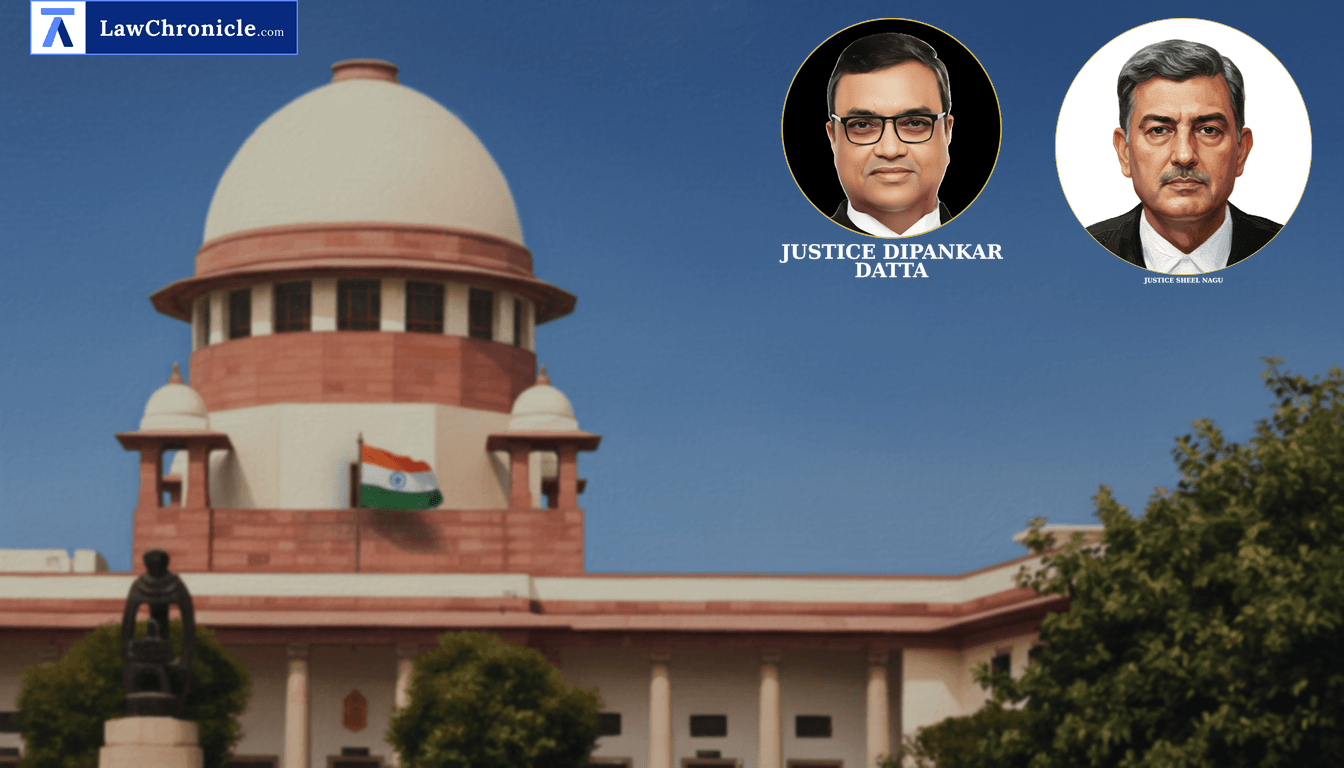
The Supreme Court has ruled that orders passed by statutory transport tribunals can be directly challenged under Article 226 or 227 of the Constitution. The Apex Court warned against systemic 'bench-hunting' and recommended that High Courts consider assigning dedicated Division Benches to hear challenges against statutory tribunal decisions.
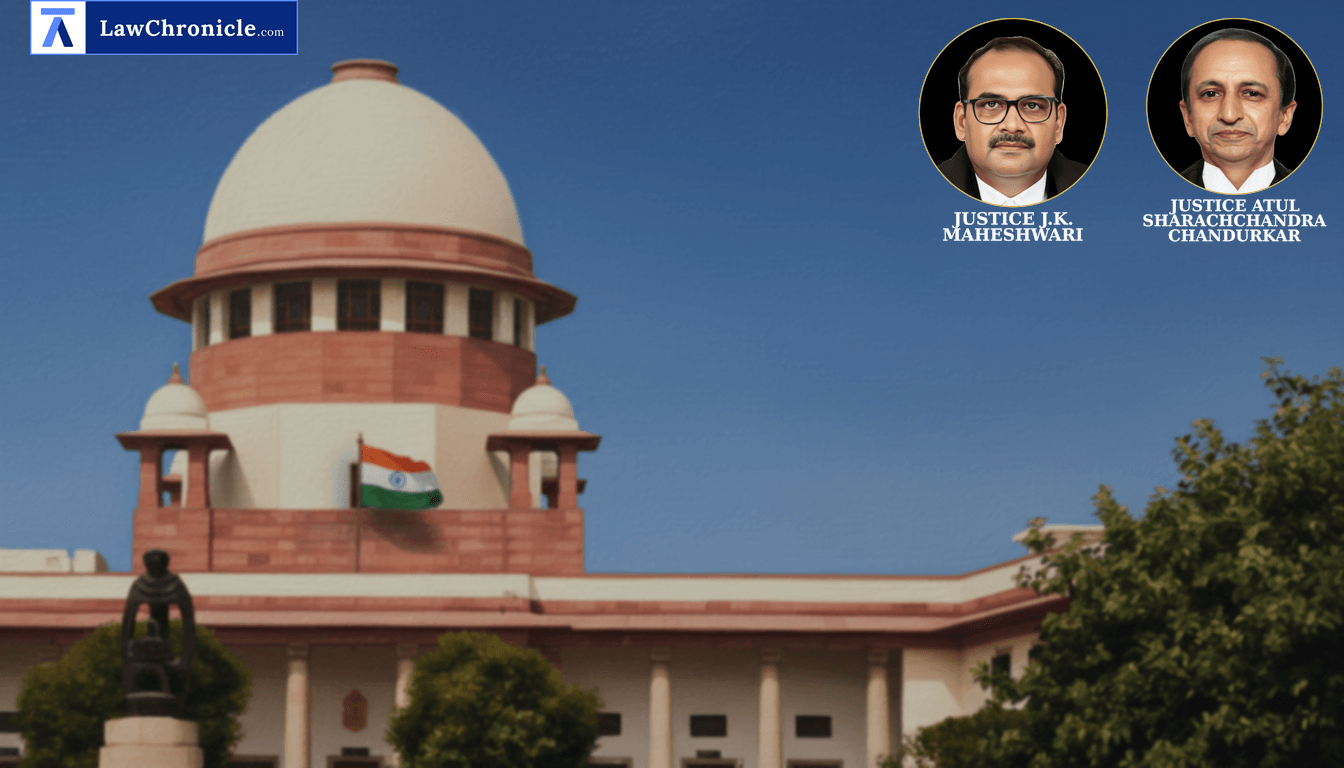
A Bench comprising Justice Dipankar Datta and Justice Sheel Nagu set aside a judgment of the Rajasthan High Court which had dismissed an intra-court appeal as non-maintainable. The Supreme Court clarified the distinct constitutional spheres of writ jurisdiction and supervisory power, restoring the transport permit appeal for fresh consideration.
Key Takeaways
- Option of Constitutional Remedies: Litigants can challenge tribunal decisions under Article 226 or 227of the Constitution, if the High Court rules permit.
- Maintainability of Special Appeals: Intra-court appeals lie against a Single Judge's order when jurisdiction under Article 226 is properly invoked.
- Cap Removal on Permits: Statutory omission of caps under transport law means individual operators can hold multiple permits.
- Curbing Bench-Hunting: High Courts are advised to frame rules assigning Division Benches for tribunal orders to prevent forum shopping.
Article 226 and 227 of Indian Constitution: Difference
The Supreme Court analyzed the constitutional scheme, emphasizing that Article 226 serves as the repository of judicial review, while Article 227 grants supervisory superintendence over subordinate courts and tribunals. The Apex Court observed that deciding which jurisdiction was invoked requires reading the whole petition, the roster determination, and the relief sought, rather than relying solely on prayer clauses.
The Supreme Court observed that "...orders made by statutory tribunals (like the STAT under the MV Act) and it can be challenged in writ proceedings under Article 226 or even in proceedings under Article 227 or both, subject to the rules permitting it. It is vital to remember that exercise of discretion under Article 226 cannot, however, be refused merely because the tribunal’s order could also have been challenged under Article 227."
Reiterating long-standing precedent from Dwarka Nath v. ITO and Comptroller and Auditor General v. K. S. Jagannathan, the Supreme Court confirmed that superior courts retain broad powers under Article 226 to quash tribunal decisions and grant appropriate relief to reach injustice.
Directions Issued to Statutory Authorities
The Court issued specific directions to address both the dispute at hand and the broader administrative issue. The Court has following directions:
"Appellant’s appeal before the STAT, i.e., Appeal No.168/2019 shall stand revived. Let the STAT decide the appeal in accordance with law and in the light of the observations made in this judgment and order, as early as possible but positively within six months from date of receipt thereof. If for any valid reason permit to the appellant cannot now be granted on the route Bikaner – Ganganagar, he may be so informed (with the reason) whereupon the appellant may intimate his willingness to have a permit on any other chosen route; in such case, an appropriate decision may be taken without any delay."
"This judgment may be circulated to the Chief Justices of the high courts by the Registry for information and compliance of what we have observed in the preceding paragraph."
Ratio
An order passed by a statutory tribunal acting judicially is amenable to challenge under Article 226 as well as Article 227 of the Constitution of India. When a petition is filed under Article 226 and entertained by a Single Judge, an intra-court appeal against such order cannot be shut out on the erroneous assumption that the jurisdiction exercised was purely supervisory under Article 227.
Background to Challenge Tribunal Decisions
The appellant had applied for stage carriage permits in Rajasthan pursuant to a departmental notification issued under the Motor Vehicles Act, 1989. The State Transport Authority rejected his application for the Bikaner-Ganganagar route, and the State Transport Appellate Tribunal affirmed the rejection on the premise that the appellant had not surrendered a previously issued permit.
When the appellant preferred a writ petition under Article 226 of the Constitution of India, 1950, the High Court dismissed it on the ground that a single vehicle could not be offered for multiple routes. An intra-court appeal preferred under Rule 134 of the Rules of the High Court of Judicature for Rajasthan, 1952 was dismissed by a Division Bench as non-maintainable, relying on precedent regarding supervisory jurisdiction.
Reversing this view, the Supreme Court noted that under the Rajasthan Motor Vehicles Rules, 1990, there is no requirement to possess a vehicle on the date of application. Distinguishing earlier decisions including Hari Vishnu Kamath v. Syed Ahmad Ishaque, Nagendra Nath Bora v. Commissioner, Hills Division, and L. Chandra Kumar v. Union of India, and relying on the principle in Bhowanipore Gujrati Education Society v. Kolkata Municipal Corporation, the Court held that the petition was under Article 226, making the special appeal maintainable. The Supreme Court allowed the appeal, set aside the High Court and STAT orders, and revived the appeal before the STAT. The Apex Court opened doors to challenge Tribunal decision under Article 226 or 227 of the Constitution.
Case Details:
Case No.: Civil Appeal No. 733/2026
Neutral Citation: 2026 INSC 733
Case Title: Ajit Singh v. State of Rajasthan & Ors.
Appearances:
For the Petitioner(s): Mr. Siddharth Krishna Dwivedi
For the Respondent(s): Mr. Padmesh Mishra
Source: 2026 CaseBase(SC) 731
Similar Articles
 Breaking News