


Consistency In Multiple Dying Declarations Crucial For Conviction: Delhi HC
 Copy Link
 Share
 Save
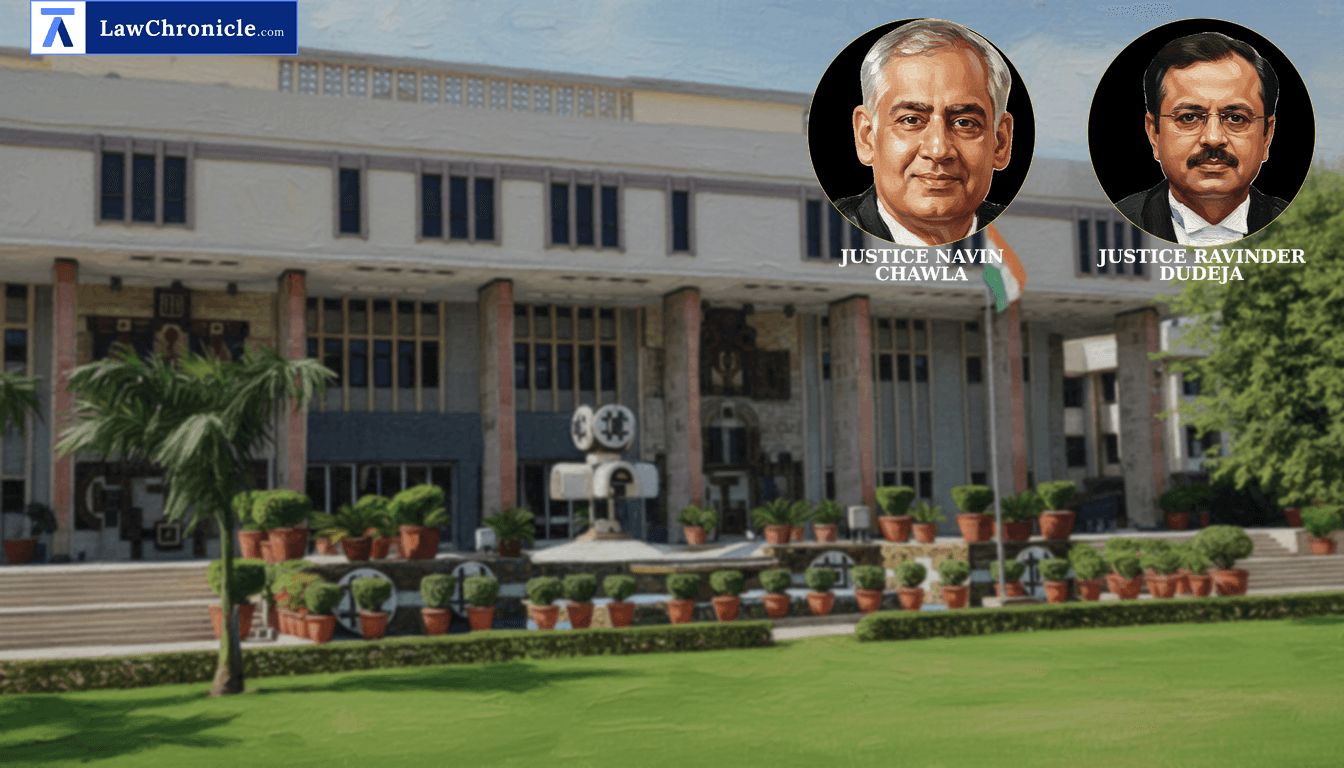
The Delhi High Court has acquitted a man sentenced to life imprisonment for the alleged murder of his wife, ruling that mutually incompatible dying declarations cannot form the sole basis of conviction without independent corroboration. This judgment reinforces the high evidentiary threshold required to sustain criminal liability in cases where a victim's statements undergo a complete somersault during the course of medical treatment.
A division bench of Justice Navin Chawla and Justice Ravinder Dudeja set aside the conviction of the appellant who had been held guilty of murder and dowry harassment. The Court emphasized that when the earliest version provided to a doctor attributes no guilt to the accused, subsequent incriminatory statements recorded after the arrival of relatives must be scrutinized with extreme caution.
Key Takeaways
Primacy of First Statement
Statements made immediately after an incident without tutoring or embellishment carry higher evidentiary weight than subsequent conflicting versions.
Corroboration in Multiple Declarations
Where multiple dying declarations exist, they must be consistent on material particulars to inspire judicial confidence for a conviction.
Impact of Relatives' Presence
While the presence of relatives at a hospital is natural, the possibility of tutoring must be ruled out when a victim changes their stance to implicate the accused.
Medical State and Sedation
Courts cannot assume mental fitness for a statement based on a single-line certificate if the patient has suffered 100% burns and is under active medical management.
Judicial Analysis of Multiple Dying Declarations
The Court observed that the prosecution's case rested primarily on four dying declarations, which were mutually incompatible. The first declaration, recorded in the MLC by Kamla v. State of Punjab, stated the victim did not know how she got burnt as she was sleeping. However, later statements recorded by the Investigating Officer and the SDM alleged that the appellant poured kerosene and set her ablaze.
The Court has following directions:
"The appeal is accordingly allowed. The conviction and sentence of the appellant Prithvi Raj is hereby set aside. The appellant is acquitted of all the charges against him. However, the bail bond furnished by him shall remain valid for a period of three months. A copy of this judgment be sent to the learned Trial Court and the Superintendent Jail for information and necessary action."
The Court, in its reasoning, observed: "In a case where there are more than one dying declaration if some inconsistencies are noticed between one and the other, the court has to examine the nature of the inconsistencies namely whether they are material or not. In scrutinising the contents of various dying declarations, in such a situation, the court has to examine the same in the light of the various surrounding facts and circumstances... If the court finds that the incriminatory dying declaration brings out the truthful position particularly in conjunction with the capacity of the deceased to make such declaration, the voluntariness with which it was made which involves, no doubt, ruling out tutoring and prompting and also the other evidence which support the contents of the incriminatory dying declaration, it can be acted upon."
Ratio
In cases involving multiple dying declarations where the deceased changes their stance to implicate the accused in later versions, the Court must examine the entirety of materials and the circumstances surrounding such declarations. If the declarations present mutually incompatible versions or create uncertainty regarding the true genesis of the occurrence, it is unsafe to base a conviction solely upon them in the absence of independent corroborative evidence.
Background
The appellant was convicted under Section 302 and Section 498-A of the Indian Penal Code, 1860 following the death of his wife due to 100% burn injuries in 1999. The Trial Court relied on dying declarations recorded by the IO and SDM to award life imprisonment. The appellant challenged this, pointing to the initial history recorded in the MLC and his own burn injuries sustained while attempting to save his wife.
The High Court noted that the prosecution failed to examine the couple's five-year-old son, who was an eye-witness, despite his presence at the spot. Applying principles from Suresh Vs. State Rep. by Inspector of Police ( "2025 INSC 318": 2025 CaseBase(SC) 217), Abhishek Sharma Vs. State (Govt. of NCT of Delhi) ( "(2024) 13 SCC 660": 2023 CaseBase(SC) 801), and Jagbir Singh Vs. State (NCT of Delhi), the Court found that the prosecution failed to establish the homicidal nature of the death beyond reasonable doubt. The Court also noted that the allegations of dowry demand were vague and not mentioned in the victim's letters or her statements to the SDM.
Case Details:
Case No.: CRL.A. 837/2003
Case Title: PRITHIVI RAJ v. STATE (NCT OF DELHI)
Appearances:
For the Petitioner(s): Mr. L.K.Singh, Advocate.
For the Respondent(s): Mr. Aman Usman, APP with Mr. Manvendra Yadav, Advocate.
Source: 2026 CaseBase(DEL) 6683
Similar Articles
 Breaking News


