


Laches Bar Recovery: Patna High Court Rejects Decade-Old Contractual Money Claim
 Copy Link
 Share
 Save
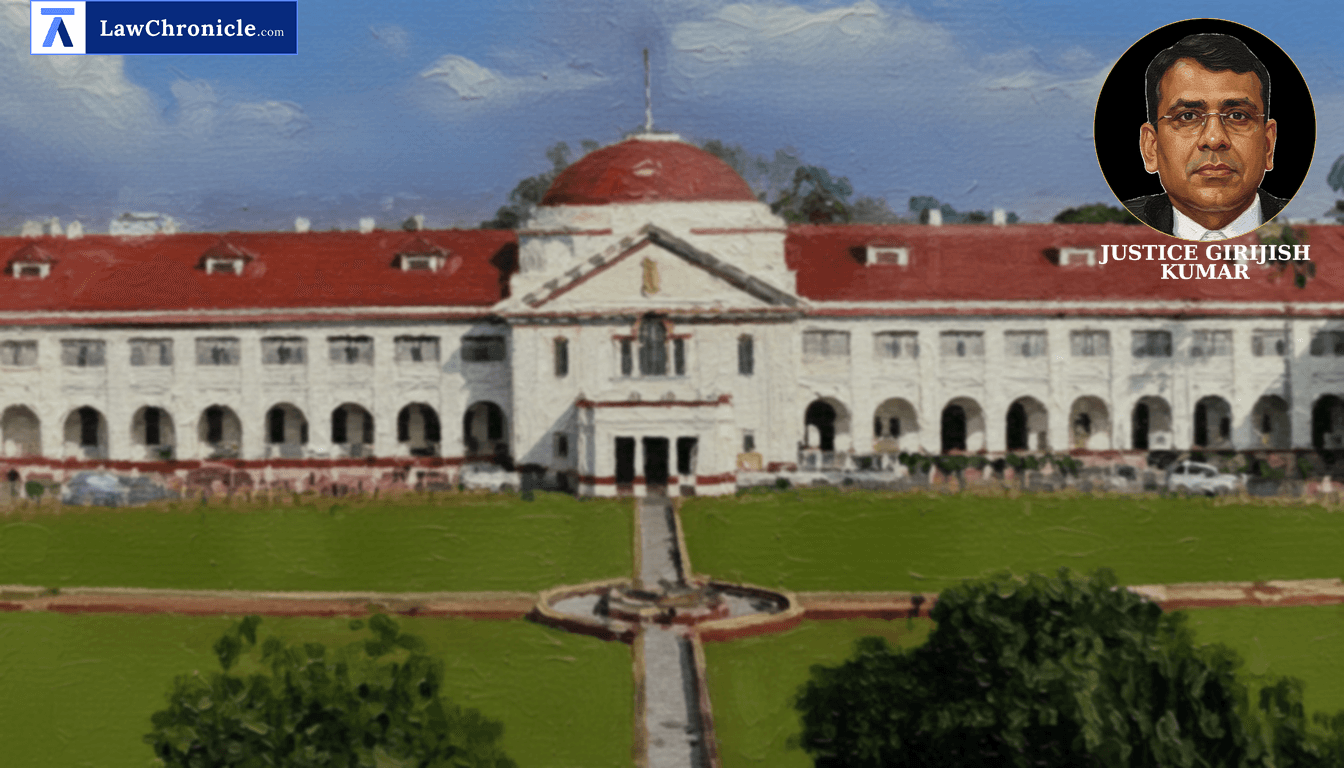
Vigilant litigants must not sleep over their rights, as the Patna High Court dismissed a writ petition seeking recovery of dues after a nine-year delay, ruling that extraordinary writ jurisdiction cannot be used to revive stale contractual claims. The court emphasized that while the Limitation Act, 1963 does not strictly apply to writ proceedings, the principles of delay and laches serve as a necessary bar against those who allow illegalities to fester for years before seeking judicial intervention.
A Single Bench of Justice Girijish Kumar adjudicated the matter, dealing with a petitioner who sought the release of outstanding payments and performance bank guarantees arising from a 2012 contract. The Court was tasked with determining whether a writ application under Article 226 of the Constitution of India is maintainable for enforcing contractual money claims after significant inordinate delay.
Key Takeaways
Laches Overrides Equity
The court reaffirmed that "delay defeats equity," meaning even if a claim is valid on merits, an unexplained delay of nine years makes it unreasonable for a High Court to exercise discretionary jurisdiction.
Limited Scope in Private Law
Contractual disputes falling within the realm of private law, devoid of any public law element, should be pursued through civil suits or arbitration rather than writ petitions.
Internal Notings Create No Rights
Inter-departmental communications or internal notings requesting action on a claim do not constitute a final order or an admission of liability by the State.
Statutory Limitation Analogy
High Courts will generally act on the analogy of the Limitation Act, 1963 to decline stale claims, particularly when the three-year period for a civil suit has long expired.
Court Observations on Maintainability and Delay
The Court observed that the petitioner had approached the bench in 2024 for a contract that ended in 2015, without providing a satisfactory explanation for the intervening years. It noted that the petitioner failed to invoke the dispute resolution clause provided in the agreement, which mandated arbitration under the Arbitration and Conciliation Act, 1996.
The Court, in its reasoning, observed: "Consideration of unexplained delays and inordinate laches would always be relevant in writ actions, and the writ courts naturally ought to be reluctant in exercising their discretionary jurisdiction to protect those who have slept over wrongs and allowed illegalities to fester. Fence-sitters cannot be allowed to barge into courts and cry for their rights at their convenience, and vigilant citizens ought not to be treated alike with mere opportunists."
Addressing the petitioner's reliance on inter-departmental letters, the Court held that such communications are merely part of the decision-making process. Citing Mahadeo and Others v. Sovan Devi and Others and Delhi Development Authority v. Hello Home Education Society ( "(2024) 3 SCC 148": 2024 CaseBase(SC) 972), the Court clarified that unless a decision is converted into a final order and communicated to the party, no vested right accrues.
The Court has following directions:
"(39) Accordingly, the writ application is dismissed on the ground of delay and laches alone."
"(40) It is made clear that this Court has not examined the merits of the claim."
Ratio
A writ petition under Article 226 of the Constitution of India is not maintainable for the enforcement of purely contractual money claims involving disputed questions of fact, especially when filed after an inordinate delay. The High Court will refuse to exercise its discretionary jurisdiction for stale claims by applying the analogy of the Limitation Act, 1963, as writ remedies are intended for vigilant litigants, not those who sleep over their rights.
Background
The petitioner, a registered society, was awarded a tender in 2011 for community mobilization and livelihood support in Bhagalpur and Katihar under the Support Programme for Urban Reforms (SPUR). A contract was executed in February 2012 for a three-year period. While the petitioner claimed to have completed the work and submitted progress reports, it alleged that only a portion of the contract amount was paid, leaving a balance of Rs. 43,28,871/- unpaid.
The State authorities contended that the SPUR programme ended in 2017 and that payments were subject to the verification of documents, which the petitioner allegedly failed to provide. A preliminary objection was raised by the Katihar Municipal Corporation regarding the maintainability of the writ, pointing out that the cause of action arose in 2015, and the three-year limitation period for a money suit expired in 2020.
The petitioner argued that the claim was never rejected and that inter-departmental letters in 2019 acknowledged the pending dues, thereby extending the cause of action. The petitioner further cited M/s Utkal Highways Engineers and Contractors Vs. Chief General Manager and Others to argue that money claims could be adjudicated in writ jurisdiction if non-payment is arbitrary. However, the Court distinguished these precedents, relying on Joshi Technologies International Inc. vs. Union of India and Others ( "(2015) 7 SCC 728": 2015 CaseBase(SC) 525), Hindustan Petroleum Corporation Limited and others Vs. Dolly Das ( "(1999) 4 SCC 450": 1999 CaseBase(SC) 108), and Chairman/Managing Director, Uttar Pradesh Power Corporation Ltd. v. Ram Gopal, to hold that the existence of an arbitration clause and the lack of a public law element barred the writ petition.
Case Details:
Case No.: Civil Writ Jurisdiction Case No.5288 of 2024
CNR No.: BRHC010276642024
Case Title: Aim of People (Society) v. The State of Bihar & Others
Appearances:
For the Petitioner(s): Mr. Ashish Giri, Sr. Advocate
For the Respondent(s): Mr. Mohit Agarwal, AC to AG; Mr. Manoj Kumar Singh, Adv; Mr. Gautam Kejriwal, Advocate; Mr. Aditya Agarwal, Advocate
Source: 2026 CaseBase(PAT) 3329
Similar Articles
 Breaking News


