


Courts Cannot Exercise Equitable Jurisdiction To Regularize Illegal Structures: Calcutta HC
 Copy Link
 Share
 Save
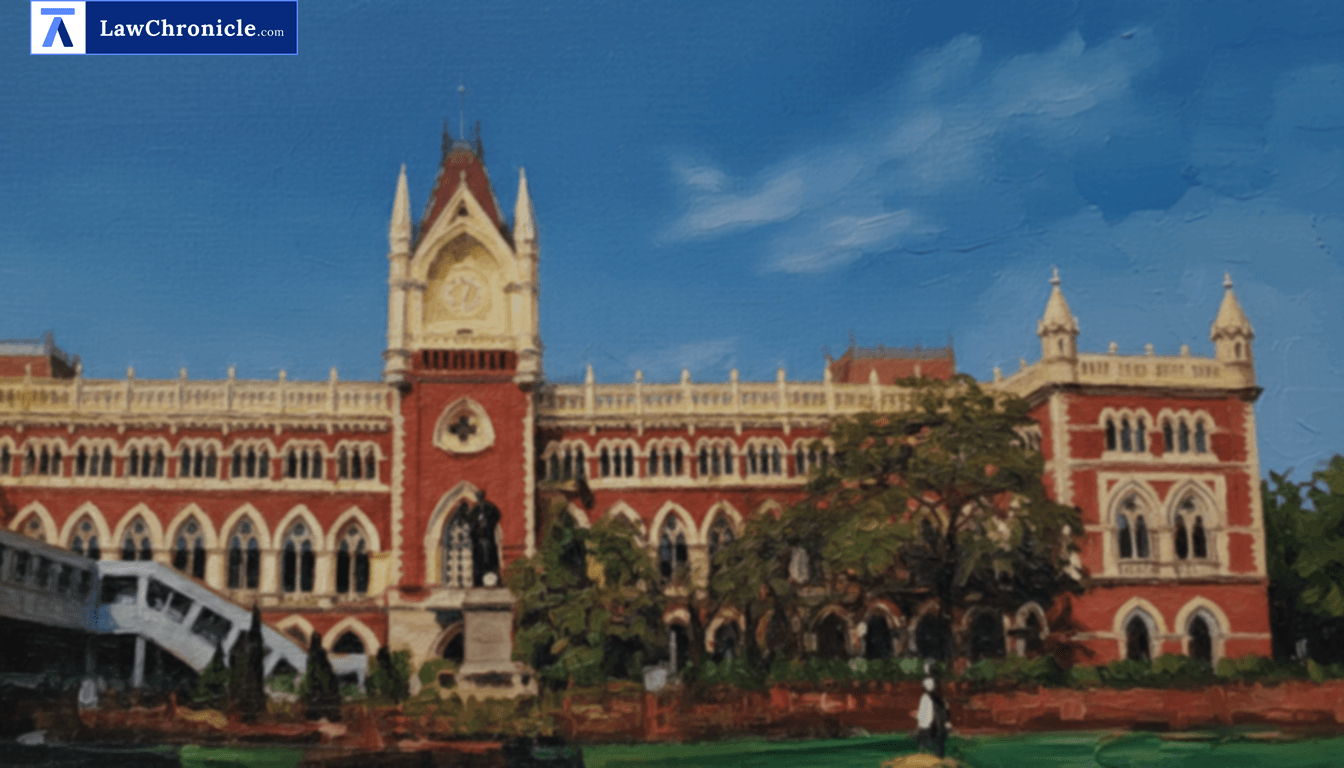
In a stern crackdown on unauthorized urban developments, the High Court has ruled that courts cannot assume jurisdiction to grant equitable relief or judicial regularization to unapproved building constructions that exceed permissible statutory parameters. Affirming the demolition of illegal commercial extensions and encroached portions of a hotel, the court emphasized that rampant unauthorized construction destroys planned urban development and severely burdens civic infrastructure.
Presiding over the matter, a Division Bench comprising Justice Shampa Sarkar and Justice Arjun Ray Mukherjee adjudicated an intra-court appeal challenging a Single Judge order that had directed the Vijay Puram Municipal Council and local administration to seal and demolish non-regularized portions of a hotel structure.
Key Takeaways
- No Negative Equality Under Article 14: Litigants cannot claim protection for unauthorized structures by citing the non-demolition of other illegal buildings in the region.
- Locus Standi of Citizens Affirmed: Any public-spirited citizen can approach the authorities or the court under Constitution of India to report civic infractions and enforce statutory demolition orders.
- Judicial Restraints on Regularization: Courts must refrain from granting empathetic or charitable orders to regularize illegal constructions at the expense of public welfare.
- Strict Adherence to Master Plans: Violations exceeding permissible parameters, such as unapproved extra floors and commercial conversions on residential plots, cannot be regularized through proposed master plan modifications.
Courts' Rationale and Mandatory Directions
The Court noted that unauthorized constructions pose safety hazards and deny citizens dignified living by causing risks and hardships. Dismissing the appellant's objection regarding the writ petitioner's locus standi, the court relied on the precedent set in Deepak Kumar Mukherjee Vs. Kolkata Municipal Corporation ( "(2013) 5 SCC 336": 2012 CaseBase(SC) 398), reiterating that any citizen has the right to report illegal structures. Emphasizing the principles laid down in Kaniz Ahmed vs Sabuddin & Ors. ( "2025 INSC 610": 2025 CaseBase(SC) 929), Rajendra Kumar Bhajtiya & Anr., Vs. U.P. Avas Evam Vikas Parishad & Ors. ( "2024 INSC 990": 2024 CaseBase(SC) 761), Supertech Ltd. v. Emerald Court Owner Resident Welfare Assn. ( "(2021) 10 SCC 1": 2021 CaseBase(SC) 382), Friends Colony Development Committee v. State of Orissa ( "(2004) 8 SCC 733": 2004 CaseBase(SC) 451), and Priyanka Estates International (P) Ltd. v. State of Assam, the bench observed that building rules must be enforced strictly to prevent planned urban collapse.
The Court, in its reasoning, observed: "The courts should refrain from passing any empathetic and charitable orders in cases of violation of law, at the expense and the cost of the public. If the authorities are of the opinion that the construction of the appellant cannot be regularized under the scheme or the modified plan, the court cannot assume jurisdiction by engaging in judicial regularization of buildings erected without requisite permissions from the competent authority. The courts are duty bound to ensure adherence to law."
Addressing the mandatory compliance framework for urban bodies, the Court took note of the binding guidelines issued in Rajendra Kumar Bhajtiya & Anr., Vs. U.P. Avas Evam Vikas Parishad & Ors. ( "2024 INSC 990": 2024 CaseBase(SC) 761). The Court has following directions:
"(i) While issuing the building planning permission, an undertaking be obtained from the builder/applicant, as the case may be, to the effect that possession of the building will be entrusted and/or handed over to the owners/beneficiaries only after obtaining completion/occupation certificate from the authorities concerned.
(ii) The builder/developer/owner shall cause to be displayed at the construction site, a copy of the approved plan during the entire period of construction and the authorities concerned shall inspect the premises periodically and maintain a record of such inspection in their official records.
(iii) Upon conducting personal inspection and being satisfied that the building is constructed in accordance with the building planning permission given and there is no deviation in such construction in any manner, the completion/occupation certificate in respect of residential / commercial building, be issued by the authority concerned to the parties concerned, without causing undue delay. If any deviation is noticed, action must be taken in accordance with the Act and the process of issuance of completion/occupation certificate should be deferred, unless and until the deviations pointed out are completely rectified.
(iv) All the necessary service connections, such as, Electricity, water supply, sewerage connection, etc., shall be given by the service provider / Board to the buildings only after the production of the completion/occupation certificate.
(v) Even after issuance of completion certificate, deviation / violation if any contrary to the planning permission brought to the notice of the authority immediate steps be taken by the said authority concerned, in accordance with law, against the builder / owner / occupant; and the official, who is responsible for issuance of wrongful completion /occupation certificate shall be proceeded departmentally forthwith.
(vi) No permission /licence to conduct any business/trade must be given by any authorities including local bodies of States/Union Territories in any unauthorized building irrespective of it being residential or commercial building.
(vii) The development must be in conformity with the zonal plan and usage. Any modification to such zonal plan and usage must be taken by strictly following the rules in place and in consideration of the larger public interest and the impact on the environment.
(viii) Whenever any request is made by the respective authority under the planning department/local body for co-operation from another department to take action against any unauthorized construction, the latter shall render immediate assistance and co-operation and any delay or dereliction would be viewed seriously. The States/UT must also take disciplinary action against the erring officials once it is brought to their knowledge.
(ix) In the event of any application / appeal / revision being filed by the owner or builder against the non- issuance of completion certificate or for regularisation of unauthorised construction or rectification of deviation etc., the same shall be disposed of by the authority concerned, including the pending appeals / revisions, as expeditiously as possible, in any event not later than 90 days as statutorily provided.
(x) If the authorities strictly adhere to the earlier directions issued by this court and those being passed today, they would have deterrent effect and the quantum of litigation before the Tribunal / Courts relating to house / building constructions would come down drastically. Hence, necessary instructions should be issued by all the State/UT Governments in the form of Circular to all concerned with a warning that all directions must be scrupulously followed and failure to do so will be viewed seriously, with departmental action being initiated against the erring officials as per law.
(xi) Banks / financial institutions shall sanction loan against any building as a security only after verifying the completion/occupation certificate issued to a building on production of the same by the parties concerned.
(xii) The violation of any of the directions would lead to initiation of contempt proceedings in addition to the prosecution under the respective laws."
In disposing of the appeal, the bench provided final operational instructions, stating: "His Lordship had directed demolition subject to any order or scheme of regularization. Thus, we direct implementation of the order of demolition, upon taking into consideration the modified scheme or the proposed scheme to the extent the same may be applicable to the construction of the appellant. With regard to the reclamation of the encroached portion of revenue land, we are of the view that the law will take its own course and the administration shall take steps in accordance with law. We extend the time for demolition by a further period of eight weeks from date of communication of this order."
Ratio
Regularization of an unauthorized building construction is not a matter of right and cannot be claimed by invoking negative equality under Article 14. Courts exercising writ jurisdiction cannot grant equitable relief or judicial regularization to structures that violate statutory building norms, master plans, or safety parameters beyond compoundable limits.
Background
The dispute stemmed from an unauthorized construction carried out by the appellant in Port Blair. While the sanctioned plan permitted a residential building with a floor area of 293.49 sq.m., the actual construction covered 1156.50 sq.m., including illegal extra floors, commercial conversions into a hotel, and public land encroachments. A demolition order issued in 2011 by the Municipal Council remained unexecuted.
In 2026, a third-party complainant moved a writ petition under Constitution of India seeking execution of the 2011 demolition order. The Single Judge ordered the municipal body and revenue authorities to seal the hotel, enforce demolition, and reclaim encroached land. The appellant challenged this on grounds of locus standi and pending regularization schemes under local planning regulations. The Division Bench dismissed the appeal, holding that the massive deviations could not be regularized under any policy and extended the demolition timeline by eight weeks.
Case Details:
Case No.: MAT 82 OF 2026 With CAN No. 1 of 2026
Case Title: Dr. R. Thulasidasan vs. Shri M. Sethu & Ors.
Appearances:
For the Petitioner(s): Mr. Surajit Samanta, Adv., Mr. Balailal Sahoo, Adv., Ms. Sohini Samanta, Adv., Mr. Subhasis Maity, Adv., Mr. Roop Shankar Roy, Adv.
For the Respondent(s): Mr. Arul Prasanth, Adv. (for Respondent No. 1), Mr. Rakesh Kumar, Adv. (for Respondent Nos. 2 & 3)
Source: 2026 CaseBase(CAL) 2309
Similar Articles

 Breaking News


