


Courts Under Article 226 Cannot Examine Veracity Of Charges In Disciplinary Proceedings: Delhi High Court
 Copy Link
 Share
 Save
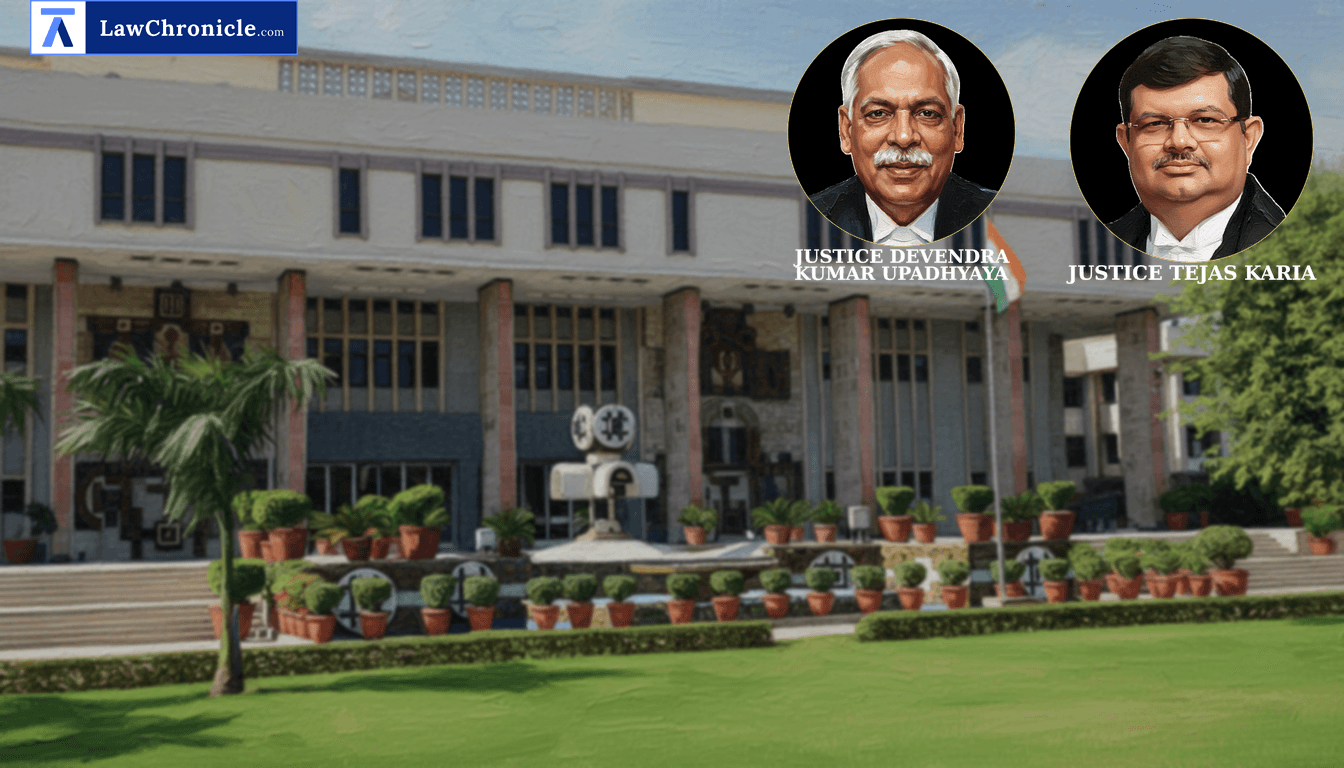
In a decisive affirmation of executive disciplinary powers over tribunal heads, the Delhi High Court ruled that courts exercising extraordinary writ jurisdiction cannot scrutinize the truthfulness or factual merits of allegations framed in a departmental charge sheet.
A Division Bench comprising Chief Justice Devendra Kumar Upadhyaya and Justice Tejas Karia dismissed an intra-court appeal filed by a former Presiding Officer of the Debts Recovery Tribunal (DRT), Chandigarh, who had challenged his suspension and charge sheet issued by the Central Government.
Key Takeaways
No Judicial Inquiry Into Merits of Charges: Article 226 proceedings cannot be converted into a factual inquiry to test the veracity or truthfulness of departmental allegations.
Jurisdictional Validity of Disciplinary Action: The Central Government acts fully within its statutory authority when initiating disciplinary proceedings against judicial officers of tribunals under statutory service rules.
Post-Removal Challenges Infructuous: Interim challenges against suspension orders become infructuous once formal departmental inquiry concludes resulting in final orders of removal.
Court's Observations and Directions
The Delhi High Court affirmed the findings of the Single Judge, reiterating the limited scope of judicial review when a departmental charge sheet is challenged under Article 226 of the Constitution of India.
The Court, in its reasoning, observed: "While a charge sheet is subjected to judicial scrutiny or judicial review by this Court in proceedings under Article 226 of the Constitution of India, this Court cannot go into the veracity or truthfulness or otherwise of the charges or allegations."
Addressing the competence of the Ministry and Central Government to initiate disciplinary action, the Court highlighted the interplay between service rules, observing that statutory procedures were meticulously complied with. The Court noted: "The Rule, in fact, requires the SCSC to submit a report to the Central Government, which is the designated authority. It is clear from Section 4 of the TR Act that the power to remove a Chairperson or Member from office vests in the Central Government. This position is also fortified by Rules 12(2) and 13 of the CCS (CCA) Rules, which vest the President with disciplinary authority over a Government servant."
The Court issued no specific operational directions, concluding with the dismissal of the appeal:
"Accordingly, the appeal is hereby dismissed. Pending applications, if any, also stand disposed of. No order as to costs."
Ratio
In proceedings under Article 226 of the Constitution of India, High Courts cannot adjudicate upon the truthfulness, merits, or factual veracity of charges levelled in a departmental disciplinary charge sheet, provided the disciplinary authority possesses valid statutory jurisdiction to initiate the proceedings.
Background
The appellant, appointed as the Presiding Officer of the Debts Recovery Tribunal-II, Chandigarh, was placed under suspension on February 13, 2024, followed by a charge sheet issued on February 26, 2024. He challenged the suspension order and charge sheet by filing writ petitions before the Delhi High Court.
During the pendency of litigation, his suspension was periodically extended. The departmental proceedings subsequently culminated in an inquiry report, leading to his formal removal from service on November 18, 2025.
In the impugned judgment, the Single Judge analyzed the statutory provisions under the The Recovery of Debts and Bankruptcy Act, 1993, the The Tribunals Reforms Act, 2021, the Tribunal (Conditions of Service) Rules, 2021, the Central Civil Services (Classification, Control and Appeal) Rules, 1965, the Central Civil Services (Conduct) Rules, 1964, and the The Government of India (Transaction of Business) Rules, 1961. The Single Judge concluded that proper statutory procedure was followed and no jurisdictional defect existed in issuing the charge sheet.
Agreeing with the Single Judge's conclusions, the Division Bench held that the challenge to the suspension order was rendered infructuous due to the subsequent removal order, while the challenge to the charge sheet lacked merit. Consequently, the intra-court appeal was dismissed.
Case Details:
Case No.: LPA 703/2025 & CM APPL. 72503/2025
Case Title: M.M. DHONCHAK v. UNION OF INDIA
Appearances:
For the Petitioner(s): Appellant in person
For the Respondent(s): Ms. Pratima N Lakra, CGSC with Mr. Shailendra Kumar Mishra, Ms. Smuthi, Mr. Aryan Pathak and Ms. Indu Uttara, Advs.
Source: 2026 CaseBase(DEL) 3749
Similar Articles
 Breaking News


