


Writ Court Cannot Re-Appreciate Evidence In Disciplinary Inquiries: Calcutta High Court
 Copy Link
 Share
 Save
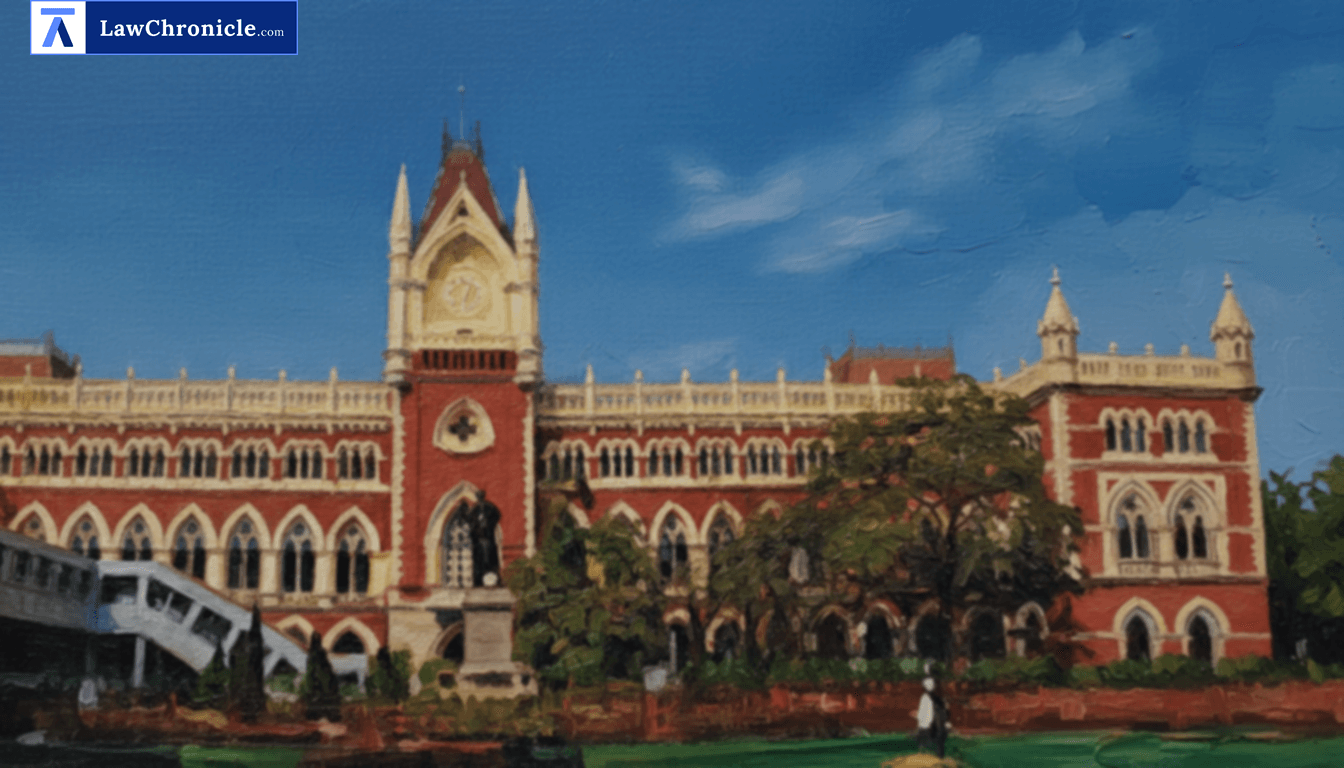
In a decisive blow to attempts at reopening concluded departmental inquiries, the High Court has ruled that delinquent employees cannot belatedly reconstruct disciplinary proceedings under the guise of natural justice violations after exhausting all statutory remedies.
A single-judge bench of Justice Rai Chattopadhyay dismissed a writ petition filed by a former Life Insurance Corporation of India (LIC) employee challenging his dismissal over financial irregularities. The Court underscored that judicial review under Constitution of India, 1950 is strictly supervisory, focusing on the fairness of the decision-making process rather than the correctness of the conclusion.
Key Takeaways
- Supervisory Limits Defined: Writ courts cannot sit as appellate authorities to re-evaluate evidence in departmental proceedings.
- No Belated Reopening: Delinquent employees cannot demand reopening of inquiries based on documents not produced at the appropriate stage after exhausting appeals.
- Fair Opportunity vs Result: Principles of natural justice guarantee a fair opportunity to defend, not a favorable outcome.
- Preponderance of Probabilities: Disciplinary proceedings are governed by standard of probabilities rather than strict criminal proof.
Scope of Judicial Review in Disciplinary Matters
The High Court reaffirmed the established legal limits governing judicial intervention in disciplinary inquiries. Reiterating the principles laid down by the Supreme Court, the Court noted that the constitutional court's primary objective is ensuring fairness in procedure rather than evaluating the merits of the decision itself.
The Court, in its reasoning, observed: "The jurisdiction of a writ Court under Article 226 is supervisory and not appellate. The Court is concerned primarily with the decision-making process and not with undertaking a fresh appraisal of the evidence as though it were sitting in appeal over the findings of the enquiry officer or the disciplinary authority."
Addressing the scope of judicial review, the Court further noted: "The expression “judicial review” in this context is thus not synonymous with “judicial reappraisal”. The Court may interfere where there is an error of jurisdiction, violation of a statutory procedure having civil consequences, breach of the principles of natural justice, consideration of extraneous material, refusal to consider relevant material placed before the enquiry authority, reliance upon no evidence, or a finding which is so irrational or perverse that no reasonable disciplinary authority, properly instructed in law, could have arrived at it."
While addressing the petitioner's argument regarding non-consideration of certain records, the Court held: "A disciplinary proceeding cannot be treated as an open-ended process in which a delinquent employee, having participated throughout the enquiry and having exhausted the available stages of defence and appeal, may subsequently identify a further piece of material and seek to reopen the entire proceeding on that basis."
The Court has following directions:
"Writ petition No. WPA 7372 of 2018 is dismissed. The application No. CAN 2 of 2025 also stands dismissed."
Ratio
In disciplinary proceedings, the jurisdiction of a writ court under Article 226 of the Constitution is limited to examining the fairness of the decision-making process, procedural compliance, and natural justice. The court cannot re-appreciate evidence or reopen concluded proceedings based on belatedly produced documents when fair opportunity was provided at all stages.
Background
The petitioner was an employee of LIC who was dismissed from service on March 11, 2016, following allegations of financial irregularities concerning double payment of Rs. 79,000 to an agent through NEFT. The petitioner claimed the overdrawal was a bona fide online operational error that caused no financial loss, as the amount was recovered. He also contended that major penalty of dismissal was disproportionate under Rule 39(1)(c) of the Life Insurance Corporation Of India (Staff) Rules, 1960.
LIC argued that the payment was manually issued through a green voucher bypassing the mechanized module and CLIA code checks, rendering it unaccounted for. LIC further highlighted that the petitioner had prior records of financial irregularities where minor penalties were imposed. Departmental inquiries were properly conducted adhering to all procedural safeguards and natural justice.
The Court relied on precedents including B.C. Chaturvedi versus Union of India ( "(1995) 6 SCC 749": 1995 CaseBase(SC) 611), Union of India versus P. Gunasekaran ( "(2015) 2 SCC 610": 2014 CaseBase(SC) 744), Pravin Kumar v. Union of India ( "(2020) 9 SCC 471": 2020 CaseBase(SC) 1376), DGM v. Ajai Kumar Srivastava ( "(2021) 2 SCC 612": 2021 CaseBase(SC) 1228), Ex-Constable/Mukesh Kumar Raigar v. Union of India, and M.V. Bijlani v. Union of India ( "(2006) 5 SCC 88": 2006 CaseBase(SC) 429) to reiterate that courts must refrain from re-assessing evidentiary weight or substituting findings unless perversity or no-evidence claims are firmly established. Finding no procedural infirmity or natural justice violation, the High Court dismissed the writ petition and the accompanying application.
Case Details:
Case No.: WPA 7372 of 2018 with CAN 2 of 2025
Case Title: Goutam Goswami Vs. LIC of India & Ors.
Appearances:
For the Petitioner(s): Mr. Krishnendu Banerjee, Md. Idrish, Mr. Ishan Ganguly
For the Respondent(s): Mr. Samarjit Roy Chowdhury
Source: 2026 CaseBase(CAL) 1653
Similar Articles
 Breaking News


