


Alternative Statutory Appeal Bars Article 227 Relief Against BNSS Orders: Gujarat HC
 Copy Link
 Share
 Save
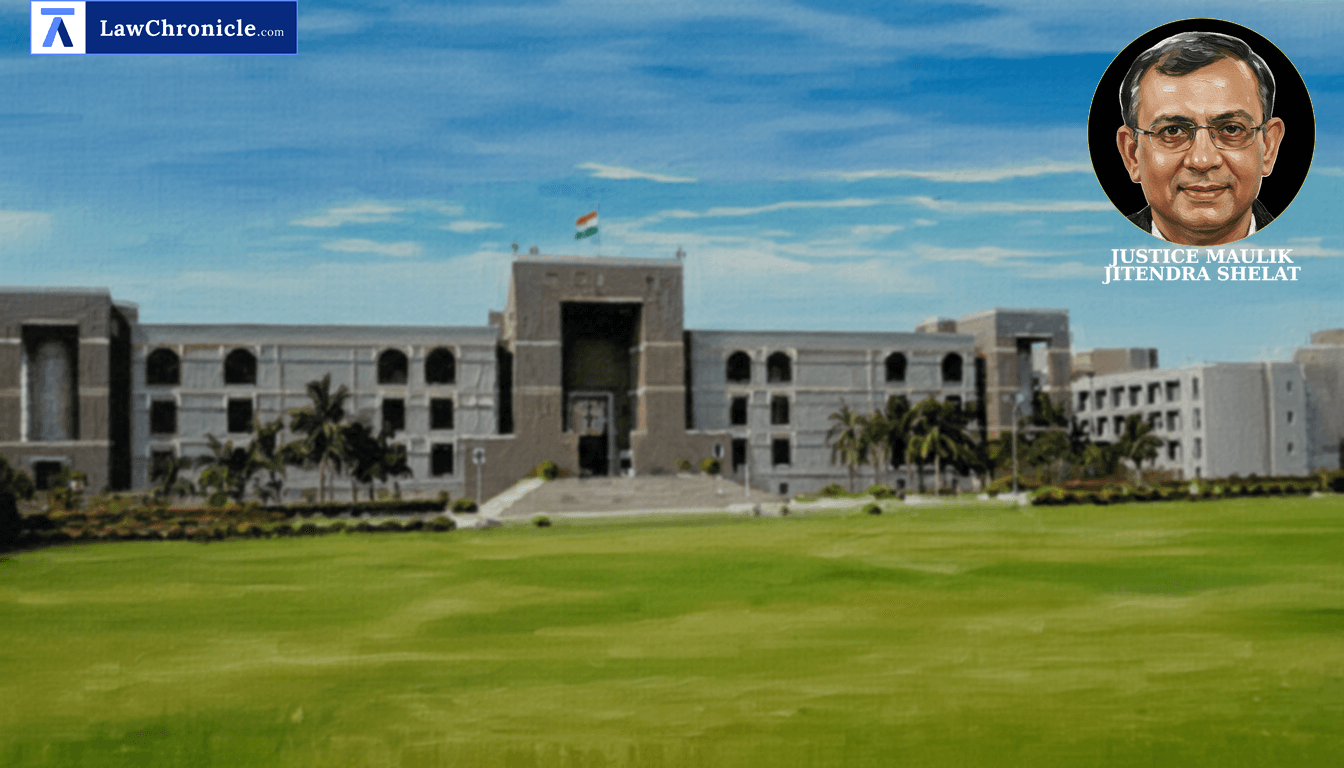
The High Court of Gujarat has slammed the doors on litigants bypassing statutory remedies, ruling that the availability of a specific appeal mechanism under the new procedural laws effectively ousts the court's discretionary supervisory jurisdiction. This decision reinforces the procedural sanctity of the newly enacted criminal laws, clarifying that Article 227 cannot be invoked as a shortcut when a clear legislative route for challenge exists.
In a matter concerning allegations of forgery and forensic examination of documents, a Single Judge Bench of Justice Maulik J. Shelat presided over the challenge. The Court was tasked with deciding whether a writ petition under Constitution of India is maintainable against an order passed under Section 379 of the Bharatiya Nagarik Suraksha Sanhita (BNSS) Act, 2023 when a statutory appeal is provided.
Key Takeaways
Statutory Supremacy Over Discretion
The existence of an efficacious alternative remedy under Section 380 of Bharatiya Nagarik Suraksha Sanhita (BNSS) Act, 2023 precludes the exercise of supervisory jurisdiction under Constitution of India.
Procedural Discipline Under BNSS
Litigants must adhere strictly to the appellate framework established by the Bharatiya Nagarik Suraksha Sanhita (BNSS) Act, 2023 rather than seeking direct interventions from the High Court for interlocutory or final orders.
Limitation of Non-Speaking Order Pleas
Even if a Trial Court's order is allegedly non-speaking or contains manifest errors, the High Court will not entertain a writ if the law provides a specific forum for appeal to correct such errors.
Court Observations and Directions
The Court noted that the petitioner had filed an application before the Trial Court seeking forensic examination of an allotment letter and subsequent registration of an FIR for alleged forgery. Upon the rejection of this application, the petitioner approached the High Court. However, the Bench highlighted that Section 380 of the Bharatiya Nagarik Suraksha Sanhita (BNSS) Act, 2023 provides a categorical remedy of appeal against such orders.
The Court, in its reasoning, observed: "As per the aforesaid decisions of the Hon'ble Apex Court and the law laid down thereon, it is now a well-settled position of law that when there is an alternative statutory remedy of appeal available to the petitioner against the order passed by the Civil Court, this Court should not exercise its power vested under Article 227 of the Constitution of India."
The Court has the following directions:
"In view of the foregoing discussions and reasons, this petition is not entertained by this Court only on the ground that the petitioner can avail the alternative statutory remedy of appeal by preferring an appeal under Section 380 of BNSS against the order impugned in this petition. Accordingly, the present petition is dismissed in limine."
Ratio
Where a statutory remedy of appeal is expressly provided under Section 380 of the Bharatiya Nagarik Suraksha Sanhita (BNSS) Act, 2023 against an order passed by a lower court, the High Court shall not exercise its supervisory jurisdiction under Constitution of India, adhering to the principle that discretionary powers are not to be used to circumvent legislative mandates.
Background
The dispute arose from an application filed by Subhash Rupchand Thawani in a civil suit, alleging that a document (Mark 139/4) produced by the respondents was forged. The petitioner sought to have the document examined by the Forensic Science Laboratory (FSL) and requested the registration of an FIR under the Bharatiya Nyaya Sanhita. The Additional Senior Civil Judge, Gandhidham, rejected this application on September 2, 2026. The petitioner challenged this order before the High Court, contending that the Trial Court had passed a non-speaking order and committed a manifest error.
The High Court, relying on the precedents set in Virudhunagar Hindu Nadargal Dharma Paribalana Sabai v. Tuticorin Educational Society ( "(2019) 9 SCC 538": 2019 CaseBase(SC) 1544) and Mohamed Ali vs. V. Jaya and others ( "(2022) 10 SCC 477": 2022 CaseBase(SC) 523), held that judicial discipline requires parties to exhaust statutory remedies before invoking constitutional writs. Consequently, the Court dismissed the petition at the threshold, granting the petitioner the liberty to approach the appropriate appellate forum.
Case Details:
Case No.: R/SPECIAL CIVIL APPLICATION NO. 15475 of 2026
Neutral Citation: 2026:GUJHC:67279
Case Title: Subhash Rupchand Thawani Through Poa Jaya Prem Thawani Versus Nirmaladevi Raghunath Rai Kakhhar & Anr.
Appearances:
For the Petitioner(s): Mr Zubin F Bharda(159)
Source: 2026 CaseBase(GUJ) 31759
Similar Articles
 Breaking News


