


Daughter's Coparcenary Right Independent of Father's Death Date: Calcutta HC
 Copy Link
 Share
 Save
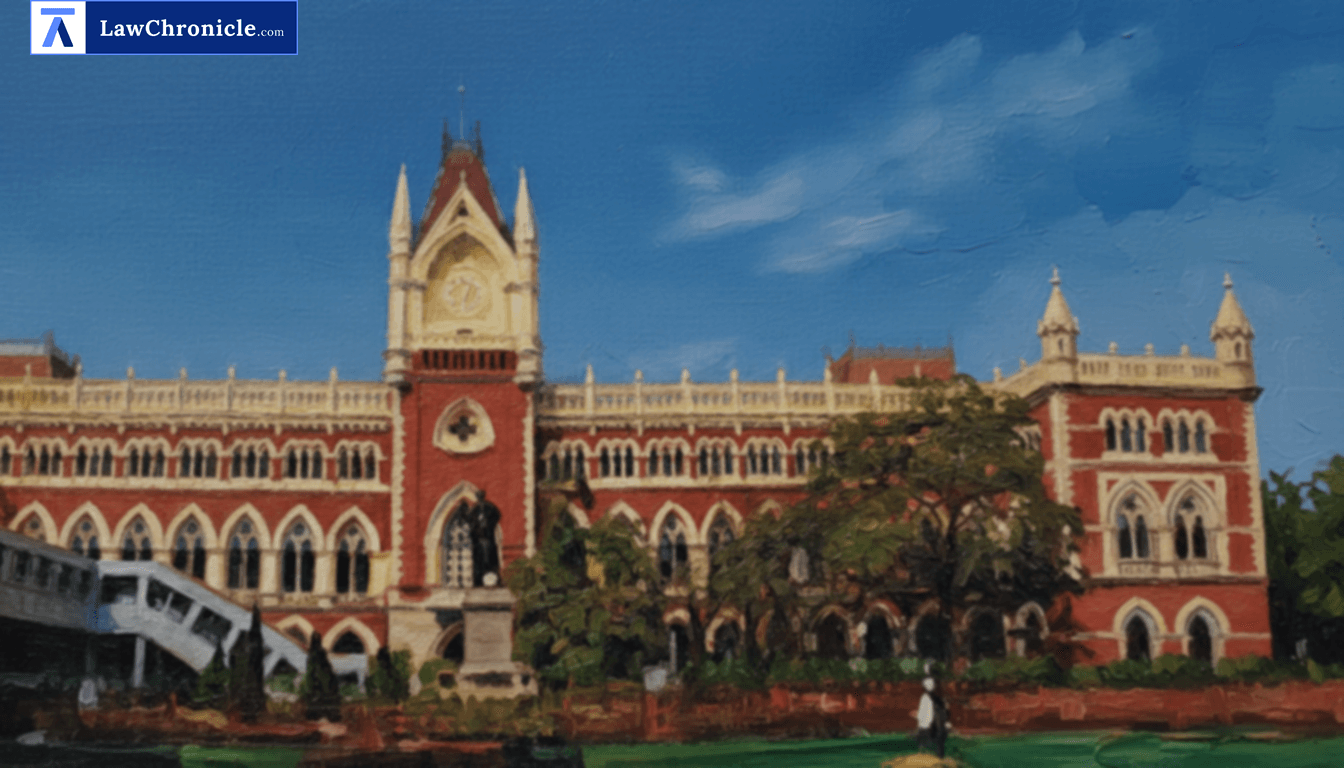
The High Court at Calcutta has cemented the retrospective application of gender-neutral inheritance laws, ruling that a daughter’s status as a coparcener is a birth right that remains unaffected by the death of her father prior to the 2005 legal reforms. This decision effectively dismantles the restrictive interpretation that required the father to be alive at the time of the amendment, reinforcing the absolute parity between sons and daughters in ancestral property.
A single-judge bench of Justice Prasenjit Biswas presided over a second appeal challenging concurrent findings of the lower courts in a partition suit. The primary legal battle centered on whether a daughter could claim a one-fourth share in properties where the succession opened upon her father’s death in 2002, three years before the landmark amendment to the Hindu Succession Act, 1956.
Key Takeaways
Birthright Over Survival
A daughter’s right to be a coparcener is acquired by birth, making the date of the father's death irrelevant to her entitlement under modern succession law.
Primacy of Registered Partition
Oral family arrangements or 'no-objection' statements during mutation are insufficient to extinguish coparcenary rights unless backed by a registered deed or court decree.
Settled Legal Precedent
The ruling reaffirms the shift from the earlier 'Phulavati' doctrine to the more expansive 'Vineeta Sharma' principle, ensuring uniform application of inheritance rights across India.
Court's Observations on Coparcenary Rights
The Court examined the evolution of Section 6 of the Hindu Succession Act, 1956, noting that the 2005 amendment was designed to rectify historical gender discrimination. The appellant argued that since the father died in 2002, the daughter could not derive rights from a prospective amendment. However, the Court rejected this, observing that the right is conferred by birth, not by the timing of the father's demise.
The Court, in its reasoning, observed: "The legal position now stands clarified that the daughter's coparcenary right is founded upon birth and is not dependent upon the father being alive on the date on which the 2005 Amendment came into force... the mere fact that the father of the plaintiff died on 02.03.2002, prior to the commencement of the Hindu Succession (Amendment) Act, 2005, cannot, by itself, operate as a bar to the plaintiff asserting her coparcenary rights under the substituted Section 6."
Validity of Family Arrangements and Oral Relinquishment
Addressing the appellant's claim that a prior family arrangement and the plaintiff's initial signature on a deed barred the suit, the Court emphasized that statutory requirements for partition must be met. The Court noted that even if family members provided "no-objection" for mutation, it does not constitute a legal partition under the Act.
The Court has following directions:
"The present second appeal is dismissed. The judgment and decree passed by the learned First Appellate Court are accordingly affirmed. Consequently, the judgment and decree passed by the learned Trial Court shall also stand affirmed. There shall, however, be no order as to costs. The Registry is directed to draw up the decree accordingly. Let a copy of this judgement along with Trial Court Record be sent down to the Trial Court immediately."
Ratio
A daughter is a coparcener by birth in the same manner as a son under the substituted Section 6 of the Hindu Succession Act, 1956. This right is independent of whether the father-coparcener was alive on the date of the 2005 Amendment (September 9, 2005). Furthermore, a plea of partition to defeat such rights can only be accepted if it is evidenced by a registered partition deed or a court decree, as mandated by Section 6(5) of the Act.
Background
The dispute originated from a partition suit filed by Kamala Devi (Respondent No. 1) seeking a one-fourth share in properties left by her father, Siri Narayan, who died in 2002. The appellant, Jag Narayan, contested the suit claiming that the property was self-acquired and that a family arrangement had already allotted only a small portion to the daughter. He further argued that the Civil Court lacked jurisdiction under the Andaman and Nicobar Islands Land Revenue and Land Reforms Regulation, 1966.
The Trial Court and First Appellate Court had concurrently ruled in favor of the daughter, applying the principles laid down by the Supreme Court in Vineeta Sharma v. Rakesh Sharma and Others ( "(2020) 9 SCC 1": 2020 CaseBase(SC) 1056), which overruled the earlier restrictive view in Prakash and Others v. Phulavati and Others ( "(2016) 2 SCC 36": 2015 CaseBase(SC) 854). The High Court, while dismissing the second appeal, noted that the appellant failed to prove a legally recognized partition prior to the statutory cutoff date of December 20, 2004. The Court also dismissed jurisdictional challenges, noting that Section 86 of the Andaman and Nicobar Islands Land Revenue and Land Reforms Regulation, 1966 preserves civil court jurisdiction for disputes between private parties.
Case Details:
Case No.: SA/3/2026
Case Title: Shri. Jag Narayan v. Smt. Kamal Devi and Others
Appearances:
For the Petitioner(s): Mr. K.M.B Jayapal, Advocate
For the Respondent Nos. 1, 3 (a),(b) & (c): Mr. Pardeshia Munda, Advocate
For the Respondent Nos. 2 (a) & (b): Mr. Rakesh Pal Gobind, Advocate
Source: 2026 CaseBase(CAL) 2931
Similar Articles


 Breaking News


