


Daughter’s Gifts or Taking Parents to Pilgrimage Not Undue Influence in Will Execution: Bombay HC
 Copy Link
 Share
 Save
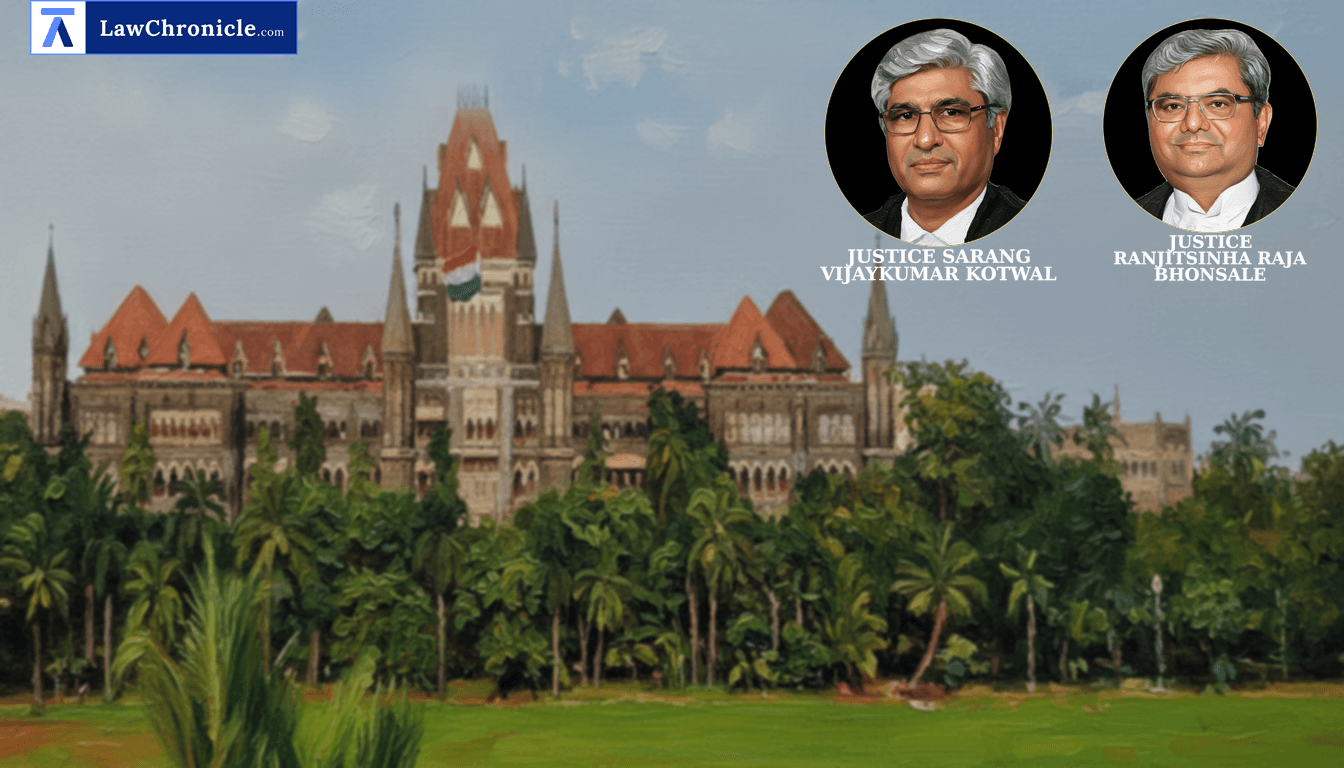
The Bombay High Court has overturned a decision that invalidated a mother's Will, ruling that a daughter providing expensive gifts or taking her parent on a pilgrimage does not amount to 'undue influence' or coercion. In a landmark clarification on testamentary freedom, the Court emphasized that excluding a natural heir is the very purpose of a Will and cannot be deemed 'suspicious' unless accompanied by fraud or mental incapacity.
In a division bench comprising Justice Sarang V. Kotwal and Justice Ranjitsinha Raja Bhonsale, the Court adjudicated an appeal against a Single Judge’s order that had dismissed a probate petition. The central dispute involved two competing Wills propounded by a daughter and a son, respectively, concerning the estate of their late mother.
Key Takeaways
Affection is Not Coercion
Demonstrations of filial love, such as giving gifts or organizing trips, are legally protected under Indian Succession Act, 1925 and do not invalidate a testamentary disposition.
Testator’s Autonomy Upheld
Courts must 'sit in the armchair of the testator' to honor their personal justifications for excluding heirs, rather than substituting the court’s own sense of fairness.
Exclusion is the Essence of a Will
The act of depriving a natural heir of their share is not inherently suspicious as the primary function of a Will is to deviate from the standard line of succession.
Procedural Rigor for Attestation
Failure to examine attesting witnesses as mandated by Section 68 and Section 69 of the Indian Evidence Act, 1872 is fatal to the probate of a Will.
Validity of the Daughter’s Will and Solicitor’s Testimony
The Bombay High Court examined the execution of the Will dated May 24, 1989, propounded by the daughter. The Bench found that the requirements of Section 68 of the Indian Evidence Act, 1872 were fully satisfied through the testimony of the attesting witness, a practicing Solicitor. The Bombay High Court noted that the Solicitor had taken instructions directly from the testatrix, explained the contents in Gujarati, and ensured the daughter remained outside the cabin during the final signature.
Regarding the Single Judge's observation that the daughter 'won over' the mother with gifts, the Bench referred to Indian Succession Act, 1925, noting that persuasion or flattery does not render a Will void if the testator retains free agency. The Bombay High Court concluded that "...it can safely be held that the Will it not rendered invalid by affection, flattering and showering expensive gifts by the Plaintiff on her mother. Neither it would become invalid if there was persuasion; in the present case there is no direct evidence to show that the Plaintiff persuaded her mother to execute this Will."
Exclusion of the Son: A Legitimate Choice
The Bombay High Court rejected the argument that disinheriting the son and his family was an 'unnatural' or 'suspicious' act. It was highlighted that the mother had provided specific reasons for this exclusion, including the son's alleged mismanagement of the family firm and the fact that he had already received sufficient assets from his father's estate. The Court noted that even if these reasons were not externally proven, they represented the testatrix's subjective perception, which the Court must respect.
Citing Uma Devi Nambiar and others Vs. T.C. Sidhan (Dead) ( "(2004) 2 SCC 321": 2003 CaseBase(SC) 292), the Bombay High Court reiterated that the whole idea behind a Will is to interfere with the normal line of succession.
Ratio
The mere exclusion of natural heirs, by itself, cannot be construed as a suspicious circumstance sufficient to invalidate a Will. Furthermore, acts of flattery, the provision of gifts, or the payment of attention by a beneficiary toward the testator do not constitute 'undue influence' under Section 61 of the Indian Succession Act, 1925, provided the testator exercises their own judgment and volition at the time of execution.
Background
The litigation began in 1990 following the death of Shantaben Ambalal Patel. Her daughter filed for probate of a 1989 Will, while her son contested it, propounding a subsequent 1990 Will. The son alleged that the 1989 Will was forged and obtained through fraud. The Single Judge had dismissed both suits, labeling the daughter's Will as 'unnatural' due to her active participation and the exclusion of the son. However, the Bombay High Court observed that the son had failed to examine any attesting witnesses for his 1990 Will, rendering it unproven. Conversely, the daughter successfully proved the 1989 Will's execution. Relying on precedents like Parvathi Nairthi (Dead) & others Vs. Laxmi Nairthy (Dead) through L.Rs. & others ( "2026 SCC OnLine SC 911": 2026 CaseBase(SC) 446) and Naresh Charan Das Gupta Vs. Paresh Charan Das Gupta ( "(1954) 2 SCC 800": 1954 CaseBase(SC) 40), the Bench concluded that the Single Judge had erred by ignoring the statutory illustrations that protect Wills made out of persuasion or gratitude.
Case Details:
Case No.: APPEAL NO.112 OF 2011 IN TESTAMENTARY SUIT NO.48 OF 1990
Neutral Citation: 2026:BHC-OS:23837-DB
Case Title: Meena Vasant Patel Versus Prithviraj Ambalal Patel, since deceased through L.Rs. 1a. Suhasini Prithviraj Patel and others
Appearances:
For the Petitioner(s): Mr. Gaurav Joshi, Senior Advocate a/w. Sharad Bansal, Akash Chandran, Vasim Shaikh, Mihir Boghani, i/b. Pravin Mehta and Mithi Co.
For the Respondent(s): Mr. Bhupesh Dhumatkar, Advocate a/w. Rijul Khandare
Source: 2026 CaseBase(BOM) 7153
Similar Articles

 Breaking News


