


Silence on Reasons to Exclude Child from Will not per se Suspicious in Probate Proceedings: Bombay HC
 Copy Link
 Share
 Save
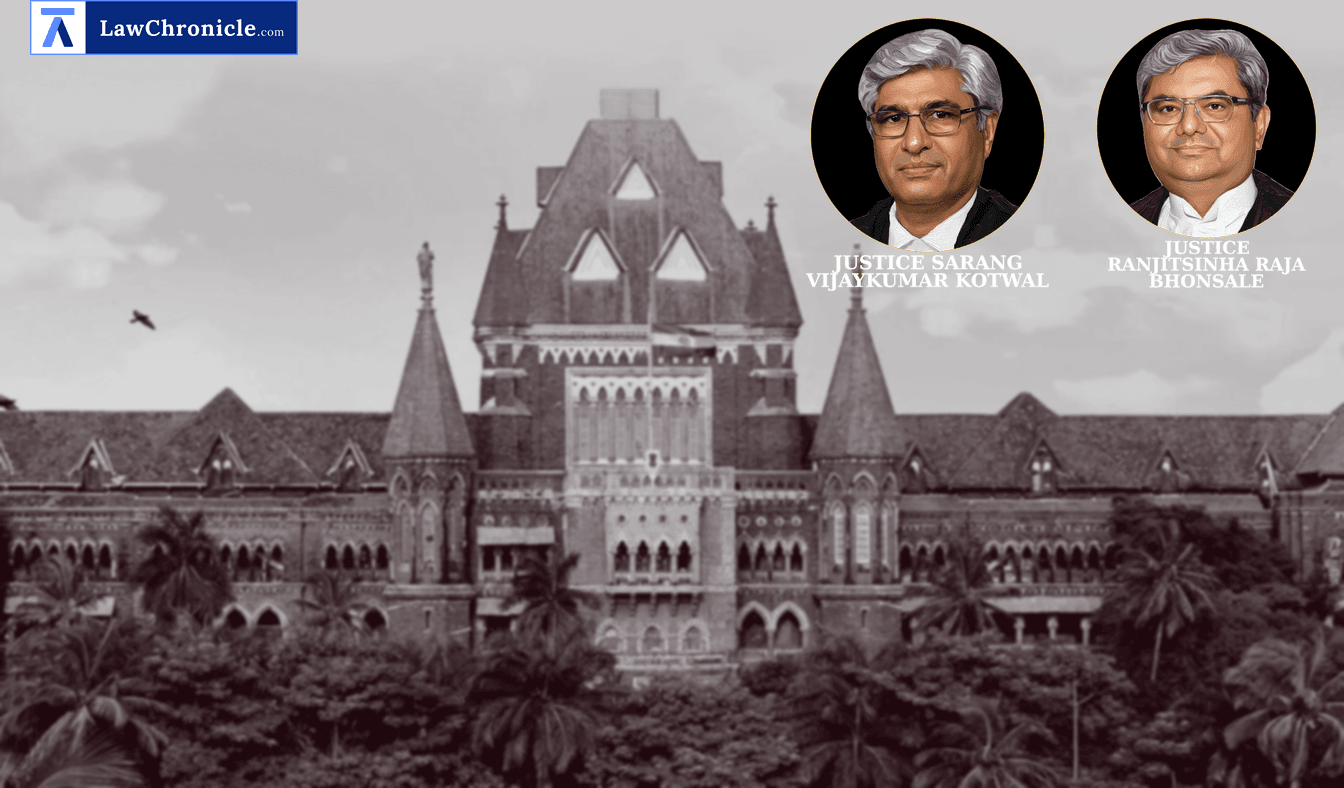
The Bombay High Court has declared that disinheriting a child, with no mention of reasons to exclude child from Will, does not constitute a 'suspicious circumstance' if the propounder demonstrates a strained relationship or a long-standing history of care by the beneficiary.
In a comprehensive appellate review, a division bench comprising Justice Sarang V. Kotwal and Justice Ranjitsinha Raja Bhonsale examined whether the disinheritance of a son by his father was valid under the Indian Succession Act, 1925. The Bench heard an appeal against a Single Judge’s order granting probate to the daughter, who was the sole beneficiary of the estate.
Key Takeaways
Testamentary Freedom Upheld
The Bombay High Court affirmed that the very purpose of a Will is to alter the natural line of succession, and thus the decision to exclude child from Will is not inherently suspicious.
Substantive Evidence Over Expert Opinion
Reiterating settled law, the bench held that the direct testimony of an attesting witness carries greater weight than the opinion of a handwriting expert regarding a shaky signature.
Conscience of the Court
In probate matters, the court acts as a court of conscience, requiring the propounder to remove all genuine suspicions surrounding the document’s execution.
Impact of Strained Relationships
Proof of estrangement and the absence of the heir during the testator's illness or life milestones can effectively explain the testator's choice to disinherit.
Judicial Rationale on Execution and Mental Capacity
The Bombay High Court meticulously analyzed the testimony of the attesting witness, an advocate who was sent by a law firm to witness the execution. Despite challenges to the witness's neutrality due to his mother's professional links to the Plaintiff, the Court his evidence reliable and firm. The bench noted that the Plaintiff, as the only daughter residing with the testator, naturally assisted him, and such assistance does not imply undue influence.
The Bombay High Court explained the essence that “A Will is executed to alter the ordinary mode of succession and by the very nature of things it is bound to result in earlier reducing or depriving the share of natural heirs... the fact that natural heirs have either been excluded or a lesser share has been given to them, by itself without anything more, cannot be held to be a suspicious circumstance especially in a case where the bequest has been made in favour of an offspring.” Addressing the allegation of a shaky signature caused by Parkinson’s disease, the Bombay High Court held that physical tremors do not equate to a lack of sound and disposing mind.
Ratio
In probate proceedings, the exclusion of a natural heir of an equal degree is not a suspicious circumstance per se if the propounder succeeds in proving the valid execution of the Will and provides a factual context, such as a strained relationship, that explains the testator's choice. Furthermore, the direct testimony of a reliable attesting witness under Section 68 of the Indian Evidence Act, 1872 prevails over the weak, opinion-based evidence of a handwriting expert regarding the authenticity of a signature.
Background
The dispute arose regarding the estate of Tarapada Chatterjee, who passed away in 1990. The daughter (Respondent) filed for probate of a 1989 Will that left everything to her. The son (original Defendant) challenged the Will, alleging it was a forgery and a bogus document created to counter his partition suit. He argued that his father died intestate and that the signature was not genuine, especially given his father's Parkinson's disease.
During the trial, the daughter examined an attesting witness and a handwriting expert, while the son produced his own expert and personal correspondence to show a cordial relationship. However, the Bombay High Court found that the son was not even present for his mother's funeral and that his parents did not attend his wedding, indicating a significant rift. The court relied on precedents including Uma Devi Nambiar and others Vs. T.C. Sidhan (Dead) ( "(2004) 2 SCC 321": 2003 CaseBase(SC) 292) and Kavita Kanwar Vs. Pamela Mehta and others ( "AIR 2020 SC 2614": 2020 CaseBase(SC) 1602) to conclude that the Plaintiff had sufficiently discharged the burden of proving the Will’s validity under the Indian Succession Act, 1925. Consequently, the division bench dismissed the appeal, upholding the grant of probate.
Case Details:
Case No.: APPEAL NO.69 OF 2021
Case Title: Ashim Chatterjee and another Versus Shanta Ashok Tolat
Appearances:
For the Petitioner(s): Mr. S.U. Kamdar, Senior Advocate a/w. V.Y. Sanglikar, Archana Gaware
For the Respondent(s): Mr. Virendra J. Tulzapurkar, Senior Advocate a/w. Ms. Shreya Jha, Ms. Mansi Shah, Ms. Bhavana Dubepatil, Mihir Boghani i/b. M/s. Pravin Mehta and Mithi & Co.
Source: 2026 CaseBase(BOM) 6519
Similar Articles

 Breaking News


