Delayed Claims For Compassionate Appointment Frustrate Policy Purpose: Madhya Pradesh High Court
 Copy Link
 Share
 Save
The Madhya Pradesh High Court has reinforced the temporal limits of compassionate appointment schemes, ruling that the survival of a deceased employee's family for two decades post-demise effectively negates the 'immediate relief' objective of such policies. The Court upheld the dismissal of a plea seeking appointment after a 17-year delay, clarifying that the benefit is not a vested right but an emergency provision to tide over sudden financial crises.
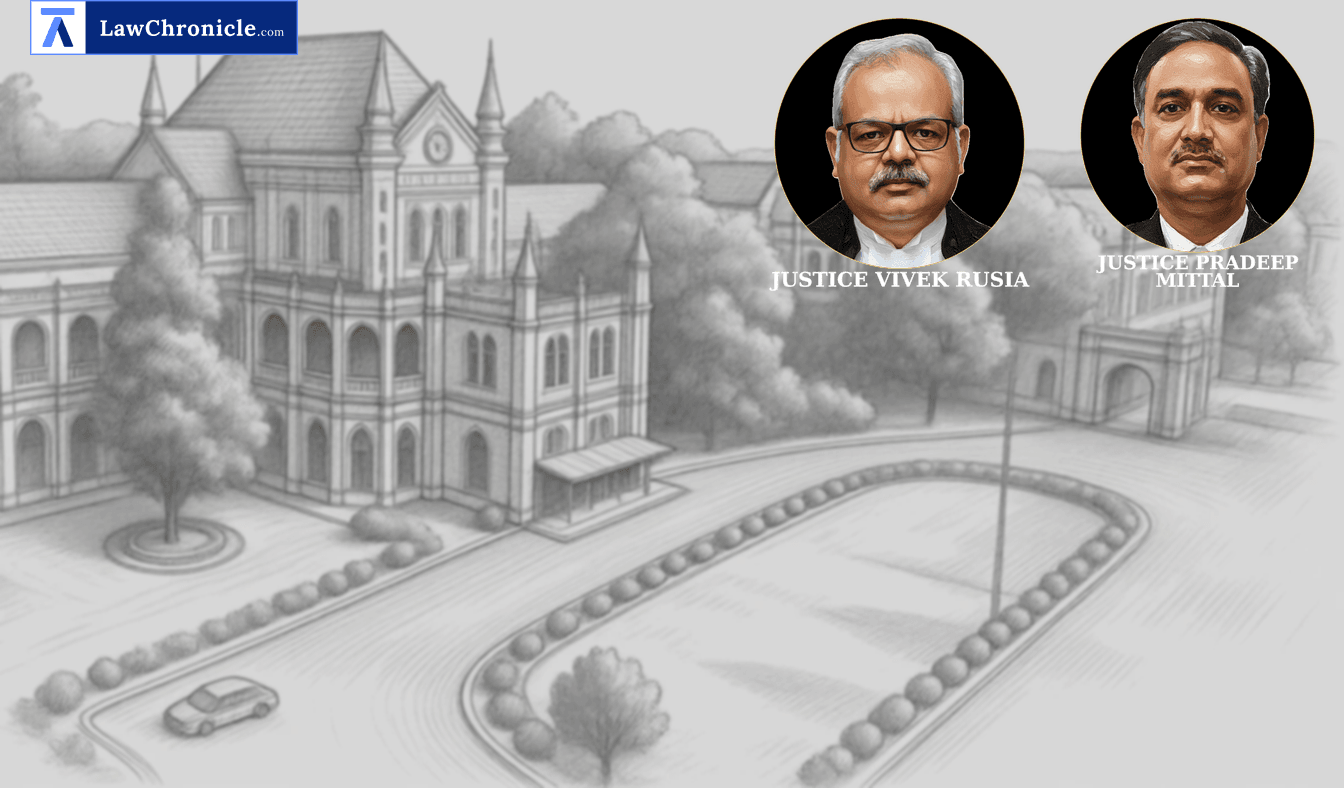
A division bench comprising Justice Vivek Rusia and Justice Pradeep Mittal heard the writ appeal challenging a Single Judge's decision which had dismissed the petitioner's claim on the grounds of delay and laches. The Court scrutinized the eligibility criteria under the state's compassionate appointment policy, specifically focusing on the limitations imposed on minor dependents.
Key Takeaways
Policy Purpose vs. Long Survival
If a family survives for 20 years without the appointment, the core purpose of providing 'immediate relief' to avoid indigence is deemed frustrated.
Seven-Year Limitation Rule
Claims for compassionate appointment must generally be settled within seven years from the date of the employee's death, subject to specific provisos for minors.
Priority to Major Dependents
If a dependent was already a major at the time of the employee's death but failed to apply, younger siblings cannot later claim the benefit beyond the prescribed limitation period.
Interpretation of Clause 3.2 of the Policy
The Court examined the internal regulations governing these appointments. It was noted that while provisions exist for minor children, they are strictly governed by specific timelines. The Court, in its reasoning, observed: "As per policy, the Clause 3.2 in case of death of government employee and his dependents are minor, then the claim would survive for a period of 7 years for first son or daughter of the deceased, provided that he/she apply within a period of 1 year from the date of majority; therefore, one daughter who was 18 years at the time of death was major, who did not apply and the petitioner/appellant became major could not submit the claim beyond the period of 7 years."
The Court further highlighted that the lapse of 20 years since the employee's death in 2006 made the current plea untenable. It observed: "Even otherwise, the government employee died on 02.08.2006, i.e 20 years ago, the dependent have survived for 20 years; therefore, the very purpose of compassionate appointment policy is to give immediate relief to the family has been frustrated."
The Court has following directions:
"Ex gratia, if any, not paid be paid to the dependent. Accordingly, this writ appeal is dismissed."
Ratio
Compassionate appointment is an exception to the general rule of public employment and is intended solely to provide immediate financial assistance to the bereaved family. A claim for such appointment cannot be entertained after an inordinate delay in this case, 17 years as the family's ability to survive for such a period demonstrates that the immediate crisis has passed, thereby frustrating the policy's objective. Furthermore, limitation periods for minor children are restricted to the 'first' eligible child and must be exercised within one year of attaining majority, provided the overall 7-year window from the date of death is considered.
Background
The dispute originated following the death of a government employee on August 2, 2006. The deceased was survived by his widow, three daughters, and two sons. Immediately after the death, the widow applied for a compassionate appointment for her youngest son, who was a minor at the time. A fresh application was filed in 2015 once the son attained majority. The state authorities rejected the claim in 2017 and 2018.
Aggrieved, the widow approached the High Court in 2023. During the pendency of the writ petition, the widow passed away, and her son was substituted as the petitioner. The Single Judge dismissed the petition citing delay and laches. In the appeal, the appellant's counsel argued for the son's eligibility under the proviso for minors. However, the State pointed out that one of the daughters was already a major at the time of the father's death and had not applied. The Division Bench concurred with the Single Judge, holding that the long passage of time and the failure of the eligible major child to apply within the stipulated time barred the current appellant's claim.
Case Details:
Case No.: WRIT APPEAL No. 1272 of 2026
Neutral Citation: MPHC010279052026
Case Title: Smt Subhdra Kumaribhinjhade Lrs Upmannu Versus The State Of Madhya Pradesh And Others
Appearances:
For the Petitioner(s): Shri Surdeep Khampariya - Advocate
For the Respondent(s): Shri Rajesh Tiwari - Government Advocate
Source: 2026 CaseBase(MP) 36558
Similar Articles


 Breaking News