No Inherent Right to Compassionate Appointment Post-Crisis Period: Patna HC
 Copy Link
 Share
 Save
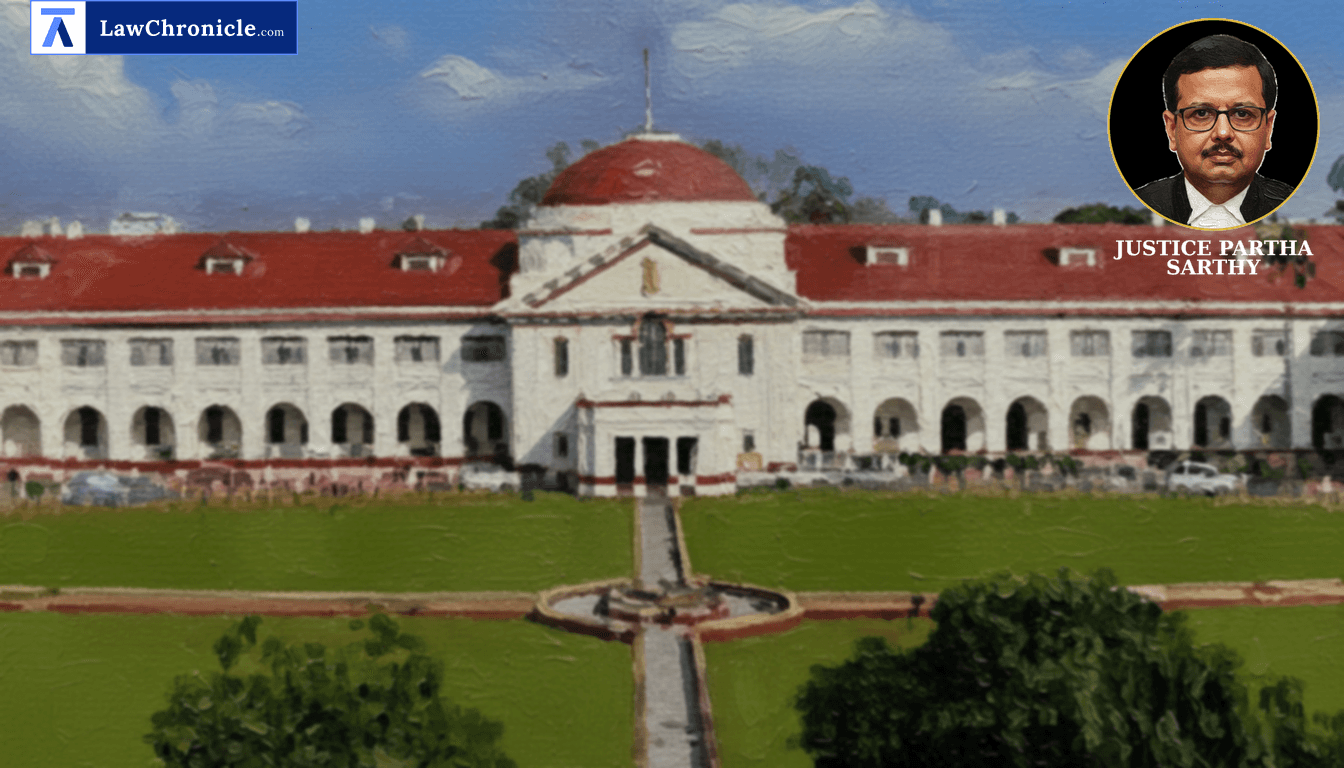
Survival for over a decade after the death of a breadwinner extinguishes the immediate necessity required for compassionate employment, as the primary objective of providing instant relief to a family in penury is lost through the passage of time. The Patna High Court has dismissed a plea for compassionate appointment, ruling that an eleven-year delay in filing an application renders the claim invalid as the family had already navigated the initial period of financial crisis.
A Single Judge bench of Justice Partha Sarthy heard the civil writ jurisdiction case challenging the rejection of a compassionate appointment claim in the Central Reserve Police Force (CRPF). The Court scrutinized whether a claim for employment could be sustained when the application was filed over a decade after the employee's demise.
Key Takeaways
Crisis Relief vs. Vested Right
Compassionate appointment is a humanitarian exception to standard recruitment, intended solely to mitigate immediate financial distress, not to serve as a perpetual right to employment.
Temporal Relevance
Applications filed after an unreasonable lapse of time, such as eleven years, lose their legal sanctity because the family is presumed to have stabilized financially.
Strict Adherence to Standards
Candidates seeking appointment in uniformed services must strictly adhere to prescribed medical and physical standards, including weight requirements, to be considered eligible.
Survival as Disqualification
Successful survival by the family for a long duration without the deceased's income acts as evidence that the urgent need for 'succour' no longer exists.
The Court observed that the petitioner’s father, a constable in the CRPF, died in 2012, while the application for appointment was only formalised in 2023. The Court highlighted that the very purpose of such schemes is to enable a family to tide over a sudden crisis.
The Court, in its reasoning, observed: "The very purpose of compassionate appointment is to enable the family to tide over the sudden crisis which has befallen the family as a result of the employee dying in harness leaving the family in penury and without any means of livelihood. It is not an alternate mode of giving employment and as such in view of the object, the time within which the application for compassionate appointment is made and the appointment given becomes very relevant."
Medical Unfitness and Procedural History
In addition to the delay, the petitioner failed to meet the medical standards required for the post. The Court noted that in the detailed medical examination conducted on January 12, 2024, the petitioner was declared unfit due to being overweight by 13 kgs. Although a proposal for relaxation was sent to the Directorate General of the CRPF, it was rejected. The Court has following directions:
"The application is dismissed."
Ratio
Compassionate appointment cannot be claimed or offered after a significant lapse of time because the underlying objective is to provide immediate relief to a family in financial crisis. If a family survives for a reasonable period (such as 11 years) after the death of the breadwinner, the 'sudden crisis' is deemed to have passed, and the claim for appointment on this ground is no longer sustainable as a matter of law.
Background
The dispute began when the petitioner's father died on March 3, 2012. The petitioner's mother initially applied in 2012 but was told to wait until the petitioner reached majority. Upon attaining age, the petitioner applied in 2023 but was rejected for being medically unfit. The petitioner argued, citing Pankaj Kumar Rai vs. The Union of India and Ors., that physical standards should not strictly apply to compassionate appointments. However, the respondents maintained that the long delay and failure to meet health standards justified the rejection.
The Court relied on Umesh Kumar Nagpal vs. State of Haryana and Ors. ( "(1994) 4 SCC 138": 1994 CaseBase(SC) 1050), which established that compassionate employment cannot be granted after a lapse of a reasonable period. It further referenced Sanjay Kumar vs. State of Bihar and Ors. ( "(2000) 7 SCC 192": 2000 CaseBase(SC) 474) to emphasize that there can be no reservation of vacancies until a minor becomes a major unless specific rules exist. Finally, citing Indian Bank and Ors. vs. Promila and Anr. ( "(2020) 2 SCC 729": 2020 CaseBase(SC) 1845), the Court reiterated that there is no inherent right to seek such appointment. Concluding that the petitioner sustained himself for 11 years, the Court found no grounds for relief and dismissed the petition.
Case Details:
Case No.: Civil Writ Jurisdiction Case No.11970 of 2025
Case Title: Brajesh Kumar vs. The Union of India & Ors.
Appearances:
For the Petitioner(s): Mr. Md. Ataul Haque, Advocate
For the Respondent(s): Mr. Neeraj Nandan, Sr. CGC
Source: 2026 CaseBase(PAT) 3323
Similar Articles

 Breaking News