Employer Cannot Defeat Compassionate Claims Through Delay: Supreme Court
 Copy Link
 Share
 Save
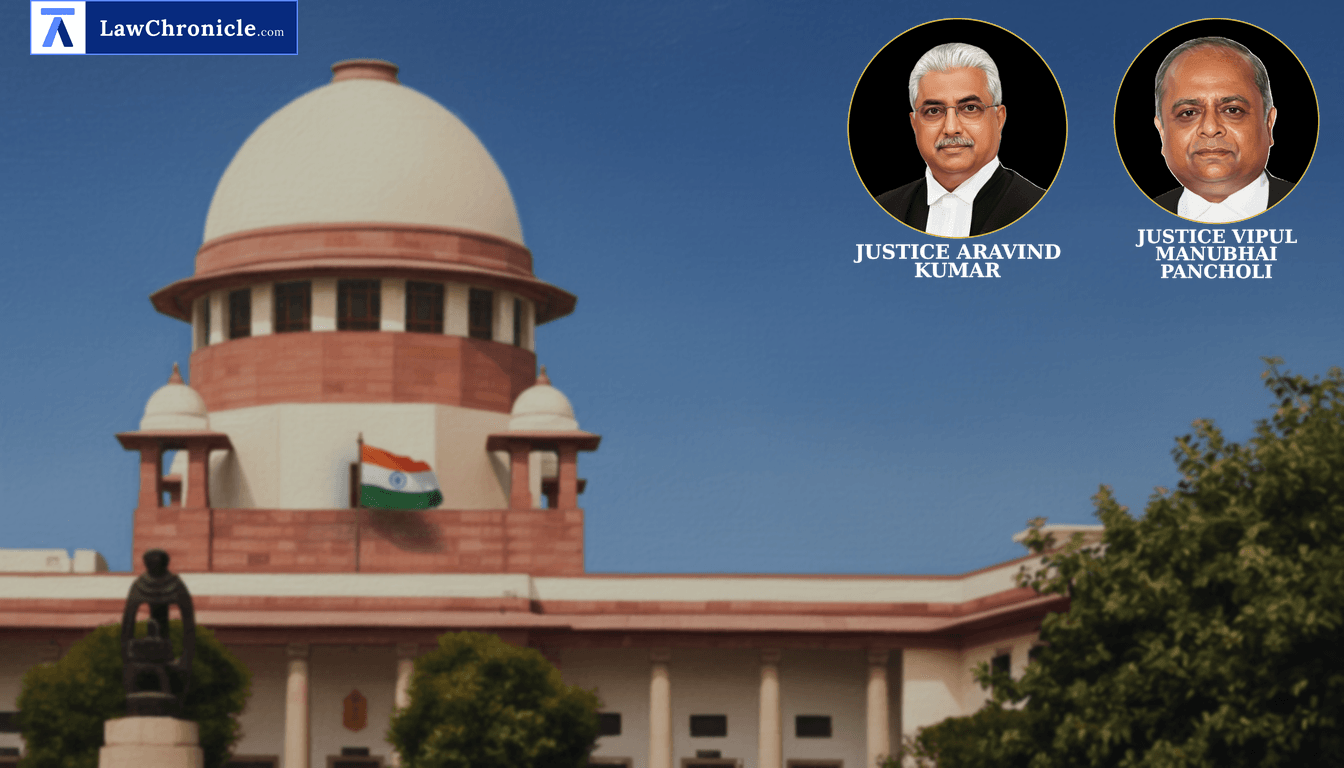
Administrative delays by employers cannot render an otherwise eligible dependent overage for compassionate appointment. The Supreme Court has ruled that eligibility must be reckoned from the initiation of the process or accrual of right, barring authorities from benefiting from their own procedural lethargy.
A Division Bench comprising Justice Aravind Kumar and Justice Vipul M. Pancholi was hearing an appeal against the Bombay High Court's dismissal of a writ petition that challenged the rejection of a compassionate appointment claim under Clause 9.3.4 of the National Coal Wage Agreement - VI.
Key Takeaways
Bar on Benefiting from Delay: Employers cannot turn down compassionate claims on age grounds if the delay in consideration is attributable to internal administrative inertia.
Initiation Marks Eligibility: Initiating preliminary administrative steps like police verification signifies the commencement of the compassionate process.
Protection During Disruptions: Candidates cannot be penalized for procedural delays caused by unprecedented events such as the pandemic.
Court's Rationale on Administrative Inaction
The Supreme Court observed that compassionate appointment, while not a vested right, is a vital welfare measure designed to provide immediate relief to families of deceased employees. Rejecting claims because administrative steps took time would defeat the very object of the policy.
The Court noted that the authorities initiated police verification on January 4, 2021, when the applicant was well within the upper age limit of 35 years. The Court held that a dependent eligible at the time of death and initiating steps within a reasonable period cannot be rendered ineligible merely because procedural formalities extended beyond the age cutoff.
The Court, in its reasoning, observed: "...an otherwise eligible applicant cannot be made to suffer on account of delay/inaction attributable to the employer... If the object and purpose of appointment on compassionate grounds as envisaged under the relevant policies or the rules have to be achieved then it is just and necessary that such applications are considered well in time and not in a tardy way."
The Court issued the following directions:
"The respondent-authorities are directed to reconsider the claim of appellant No. 2 for compassionate appointment by treating him as eligible in age and by examining only the remaining conditions under the applicable scheme. Such exercise shall be completed within 8 weeks from the date of receipt of a copy of this judgment. If appellant No. 2 is otherwise found eligible, appointment shall be offered within 4 weeks thereafter."
Ratio
Where a governing scheme does not specify a cut-off date, age eligibility for compassionate appointment must be determined with reference to the date of initiation of the process or accrual of the right, and the employer cannot deny employment by relying on age disqualification caused by its own administrative delay.
Background
The deceased employee, a Dozer Operator with Western Coalfields Limited, passed away on December 17, 2020. At that time, his son was aged 34 years, 10 months, and 12 days. On January 4, 2021, the authorities directed him to undergo police verification. He turned 35 on February 5, 2021. Due to the second wave of COVID-19, the formal application was submitted in May 2021 and acknowledged in June 2021. However, the authorities rejected the application in February 2023, nearly 19 months later, on the ground that he had crossed 35 years of age under Clause 9.3.4 of the National Coal Wage Agreement - VI.
The High Court of Judicature at Bombay, Nagpur Bench, upheld the rejection, holding that age must be reckoned on the date of consideration of the application. Reversing this finding, the Supreme Court relied on Malaya Nanda Sethy v. State of Orissa & Ors. ( "(2024) 15 SCC 766": 2022 CaseBase(SC) 182) to emphasize that applications for compassionate appointment must be decided expeditiously, preferably within six months, and authorities cannot take advantage of their own delay. The appellants also cited Food Corporation of India v. Kamdhenu Cattle Feed Industries on legitimate expectation and Canara Bank v. Ajithkumar G.K. ( "2025 INSC 184": 2025 CaseBase(SC) 288) on age relaxation when delay is attributable to the employer. Invoking Article 14 and Article 136 of the Constitution of India, the Apex Court set aside the High Court order and allowed the appeal.
Case Details:
Case No.: Civil Appeal No. OF 2026 (Arising out of SLP (C) No. 7244 of 2026)
Neutral Citation: 2026 INSC 841
Case Title: Raspelli Bhagya Kishaiya & Ors. v. General Manager, Western Coalfields Limited & Ors.
Appearances:
For the Petitioner(s): Ms. Anitha Shenoy, Senior Advocate
For the Respondent(s): Mr. Ashwani Bhardwaj, Advocate
Source: 2026 CaseBase(SC) 775
Similar Articles


 Breaking News