


Delhi HC: Amicus Curiae Mandatory for Hearing Criminal Appeals in Appellant's Absence
 Copy Link
 Share
 Save
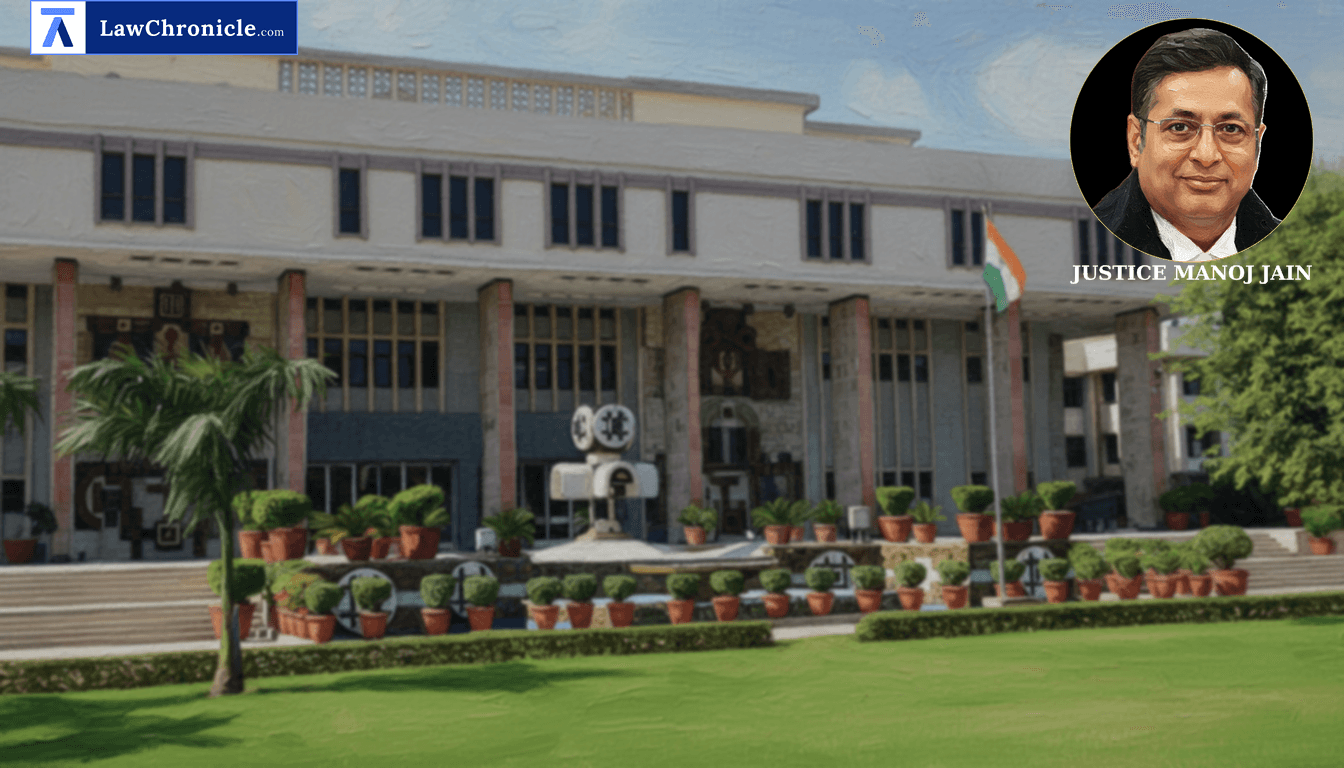
The Delhi High Court emphasized that the right to a statutory appeal in criminal cases cannot be defeated by procedural defaults, holding that appeals must be decided on their merits with the benefit of proper legal assistance, even when the appellants are absconding. Justice Manoj Jain, while deciding a batch of six revision petitions, examined the intersection of personal liberty and procedural lapses in cases where convicted persons had been declared proclaimed offenders.
Appellate Court's Duty in Absence of Counsel
The Court observed that while the conduct of the petitioners who had evaded the law for nearly six years was far from ideal, the manner in which the Appellate Court dismissed their appeals was legally flawed. The Bench noted that the lower court had dismissed the appeals in a summary, one-line order without any substantive discussion on the seventeen grounds raised by the appellants. The Court highlighted that a criminal appeal cannot be dismissed for non-prosecution or default, and if a lawyer is absent, the court is duty-bound to appoint an Amicus Curiae to ensure a fair hearing.
The Court, in its reasoning, observed: "The law clearly expected the appellate court to dispose of appeal on merits, not merely by perusing the reasoning of the trial court in the judgment, but by cross-checking the reasoning with the evidence on record with a view to satisfy itself that the reasonings and findings recorded by the Trial Court were consistent with the material on record."
The Role and Necessity of Amicus Curiae
Justice Jain clarified that the role of an Amicus Curiae is distinct from a privately engaged counsel, as they assist the court as a 'friend' by perusing the record even without direct instructions from the party. The Court found that the mandatory requirement of appointing such assistance was ignored by the Appellate Court. Consequently, the High Court set aside the summary dismissals to preserve the integrity of the judicial process, despite the petitioners' significant delay in filing the revision petitions.
The Court has the following directions:
"i. Both the abovesaid appeals stand revived and the impugned judgments dated 31.01.2020 are, resultantly, set aside.
ii. The accused and complainants would appear before the learned Appellate Court on 03.06.2026 and the appellate Court/successor Court shall hear arguments on merits from both the sides and would dispose of the appeals in accordance with law.
iii. The Appellate Court would make best endeavour to dispose of the appeals on or before 31.08.2026.
iv. As volunteered by the accused, 25% of the fine amount, in each of the complaint case, be deposited with the learned Trial Court within ten days from today.
v. Revisionists are also directed to conjointly pay cost of Rs. five lacs to each of the complainants for causing unnecessary delay and agony to them. Such cost be also cleared within ten 10 days from today.
vi. Re-hearing of appeals shall take place once the abovesaid amount is deposited with the learned Trial Court and cost is paid to the complainants."
Background:
The dispute originated from two complaints filed under Section 138 of the Negotiable Instruments Act, 1881 by Shyam Kishan Saraf and Banwari Lal Saraf regarding a loan of Rs. 1.50 crores given to Universal Buildwell Pvt. Ltd. The Trial Court had convicted the directors in April 2019, sentencing them to imprisonment and heavy fines. Following the conviction, the petitioners failed to surrender and were declared proclaimed offenders. They remained in hiding until their arrest in October 2024.
In their revision petitions, filed with a delay of over 2100 days, the petitioners sought condonation under Section 5 of the Limitation Act, 1963 read with Section 528 of Bharatiya Nagarik Suraksha Sanhita, 2023. While the High Court found the delay largely inexcusable under the principles of P.K. Ramachandran vs. State of Kerala and Another ( "(1997) 7 SCC 556": 1997 CaseBase(SC) 502) and Basawaraj v. Land Acquisition Officer, it intervened due to the "apparent illegality" in the Appellate Court's procedure. Relying on the Supreme Court's mandate in Bani Singh v. State of U.P. and K. Muruganandam and Others vs. State, which overruled Ram Naresh Yadav vs. State of Bihar ( "AIR 1987 SC 1500": 1986 CaseBase(SC) 597), the Court held that appeals must be decided by scrupulously checking evidence rather than just perusing the trial court's reasoning. The High Court also referenced Mohd. Sukur Ali vs. State of Assam and Jyoti Dubey vs. State & Anr. to reinforce that a court must appoint an Amicus Curiae before proceeding in the absence of the accused's counsel. The revision petitions were disposed of with directions for a fresh hearing on the condition of depositing 25% of the fine and paying costs to the respondents.
Case Details:
Case No.: CRL.REV.P.(NI) 89/2026 & others
Case Title: VARUN PURI v. SHYAM KISHAN SARAF
Appearances:
For the Petitioner(s): Mr. Mohit Mathur Senior Advocate with Mr. Saurabh Soni, Mr. Vignesh Ramanathan, Ms Mannat Singh, Mr. Sanjeet Kumar Thakur, Mr. Kratikey Goel and Mr. Abhyudai Mehrotra, Advocates; Mr. Annirudh Sharma, Advocate.
For the Respondent(s): Mr. Subhash Garg with Mr. Zain Haider, Advocates with Mr. Shyam Kishan Saraf in person.
Source: 2026 CaseBase(DEL) 389
Similar Articles
 Breaking News


