


Criminal Appeals Cannot Be Decided Ex-Parte Without Appointing Amicus Curiae: Himachal Pradesh HC
 Copy Link
 Share
 Save
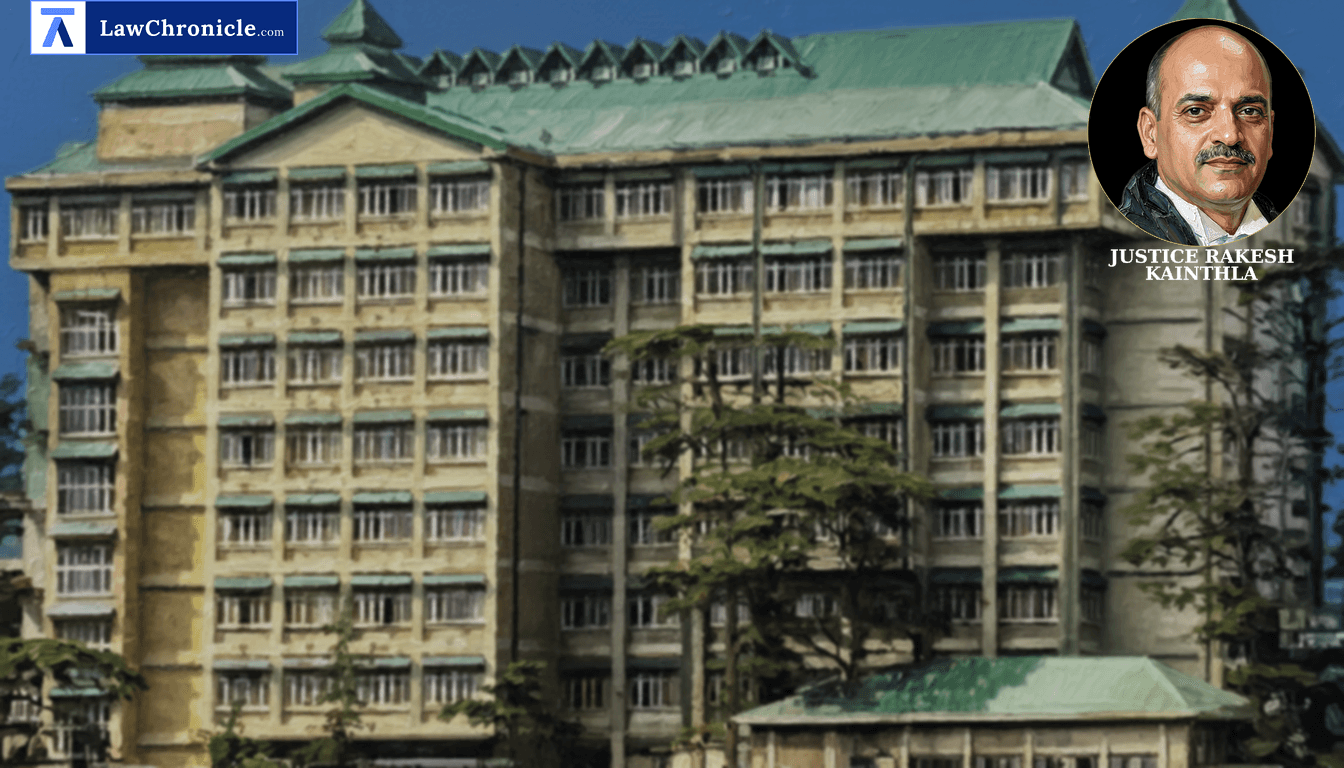
In a decisive reinforcement of the right to legal representation, the High Court of Himachal Pradesh has quashed an appellate judgment decided in the absence of the accused's counsel, ruling that courts are constitutionally mandated to appoint an amicus curiae rather than proceeding ex-parte when liberty is at stake. The court emphasized that the failure of a lawyer to appear should not result in the deprivation of an accused’s fundamental right to a fair hearing under the Constitution of India, 1950.
A Single Judge Bench of Justice Rakesh Kainthla presided over the revision petition challenging a conviction under Section 138 of the Negotiable Instruments Act, 1881. The Court examined whether the Sessions Court was justified in dismissing a criminal appeal solely after hearing the respondent, while the appellant-accused remained unrepresented.
Key Takeaways
Mandatory Legal Aid
Criminal courts must appoint an amicus curiae or legal aid counsel if the accused's lawyer fails to appear, ensuring the defense is never left unrepresented.
Article 21 Supremacy
Deciding a criminal appeal ex-parte violates the 'heart and soul' of the Constitution of India, 1950, as personal liberty cannot be curtailed without a fair and just procedure.
Limited Revisional Scope
Revisional courts should not act as second appellate courts or re-appreciate evidence unless there is a glaring perversity or jurisdictional error.
Procedural Safeguards
Trial and Appellate courts are encouraged to issue second notices or involve Legal Services Committees before proceeding in the absence of the accused.
Constitutional Necessity of Defense Counsel
The Court observed that while an appellate court has the power to examine records and decide on merits, this power must be exercised with caution when a person's liberty is involved. The Bench noted that legal aid counsel is now available in every court, making it inexcusable to proceed without representing the interests of the convicted party.
The Court, in its reasoning, observed: "Even assuming that the counsel for the accused does not appear because of the counsel's negligence or deliberately, even then the court should not decide a criminal case against the accused in the absence of his counsel since an accused in a criminal case should not suffer for the fault of his counsel and in such a situation the court should appoint another counsel as amicus curiae to defend the accused. This is because the liberty of a person is the most important feature of our Constitution."
Referring to Mohd. Sukur Ali v. State of Assam ( "(2011) 4 SCC 729": 2011 CaseBase(SC) 652), the Court reiterated that the right to be heard by counsel is an essential component of due process. It further relied on L. Laxmikanta v. State, Christopher Raj v. K. Vijayakumar ( "(2019) 7 SCC 398": 2019 CaseBase(SC) 1159), K. Muruganandam v. State of T.N., and Ram Swaroop vs State of UP to establish that a judgment delivered without hearing the appellant or their representative deserves to be set aside.
Court Directions
The Court has the following directions:
"The present revision petition is allowed, and the judgment dated 23.02.2026, passed by the learned Sessions Judge, Mandi, District Mandi, is ordered to be set aside, and the matter is remanded back to the learned Appellate Court to hear the petitioner and decide the matter afresh. It is made clear that in case there is no representation on behalf of the petitioner despite service, the learned Appellate Court would be within its right to appoint a legal aid counsel to represent the petitioner. Parties through their learned counsel are directed to appear before the learned Appellate Court on 03.12.2026."
Ratio
A criminal case, whether at the trial, appellate, or revisional stage, cannot be decided against an accused in the absence of counsel. If the chosen counsel fails to appear, the Court is under a constitutional obligation under Article 21 and Article 22(1) of the Constitution of India, 1950 to appoint an amicus curiae to ensure a fair, reasonable, and just procedure before depriving a person of their liberty.
Background
The dispute originated from a complaint under Section 138 of the Negotiable Instruments Act, 1881 regarding a dishonoured cheque of ₹1,00,000. The Trial Court convicted the petitioner, sentencing him to one year of imprisonment and ₹1,50,000 in compensation. During the appeal before the Sessions Judge, Mandi, the petitioner’s counsel failed to appear on two consecutive dates. The Appellate Court heard the respondent and dismissed the appeal on merits.
In the revision before the High Court, the petitioner argued that the lack of representation caused grave prejudice. The High Court analyzed the limits of revisional jurisdiction under Section 397 of the Code Of Criminal Procedure (now Section 438 of BNSS), citing Kuntegowda v. Thurubaiah ( "2026 SCC OnLine SC 1485": 2026 CaseBase(SC) 721) to affirm that while it cannot re-evaluate facts like an appellate court, it must intervene when a procedure is "tenable in law." Finding the ex-parte appellate decision to be a violation of constitutional rights, the High Court set aside the order and remanded the case for fresh consideration.
Case Details:
Case No.: Cr. Revision No. 184 of 2026
Case Title: Dev Kumar v. Durga Prasad
Appearances:
For the Petitioner(s): Mr H.S. Rangra, Advocate.
For the Respondent(s): Mr R.K. Sharma, Senior Advocate with Mr Arun Kumar, Advocate.
Source: 2026 CaseBase(HP) 11179
Similar Articles

 Breaking News


