


Delhi High Court Refuses Independent SIT Probe into 2020 Delhi Riots
 Copy Link
 Share
 Save
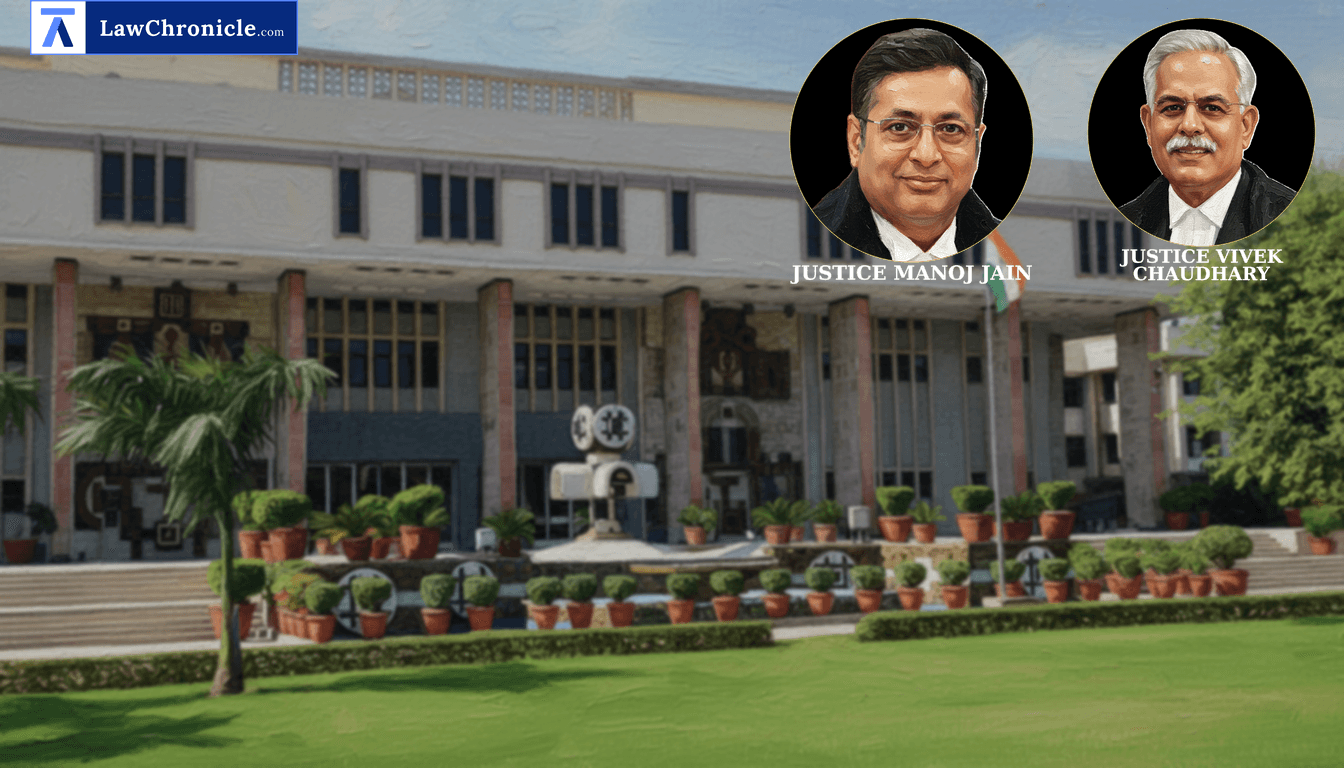
The Delhi High Court slammed the door on pleas for a court-monitored probe and fresh FIRs into the 2020 North-East Delhi violence, ruling that the extraordinary writ jurisdiction cannot be used to bypass established criminal procedures or disrupt ongoing prosecutions that have already reached advanced stages. In a significant affirmation of judicial restraint, the Court held that since the criminal justice machinery is already in motion with hundreds of charge-sheets and dozens of convictions, any wholesale transfer of investigation at this late stage would be legally untenable.
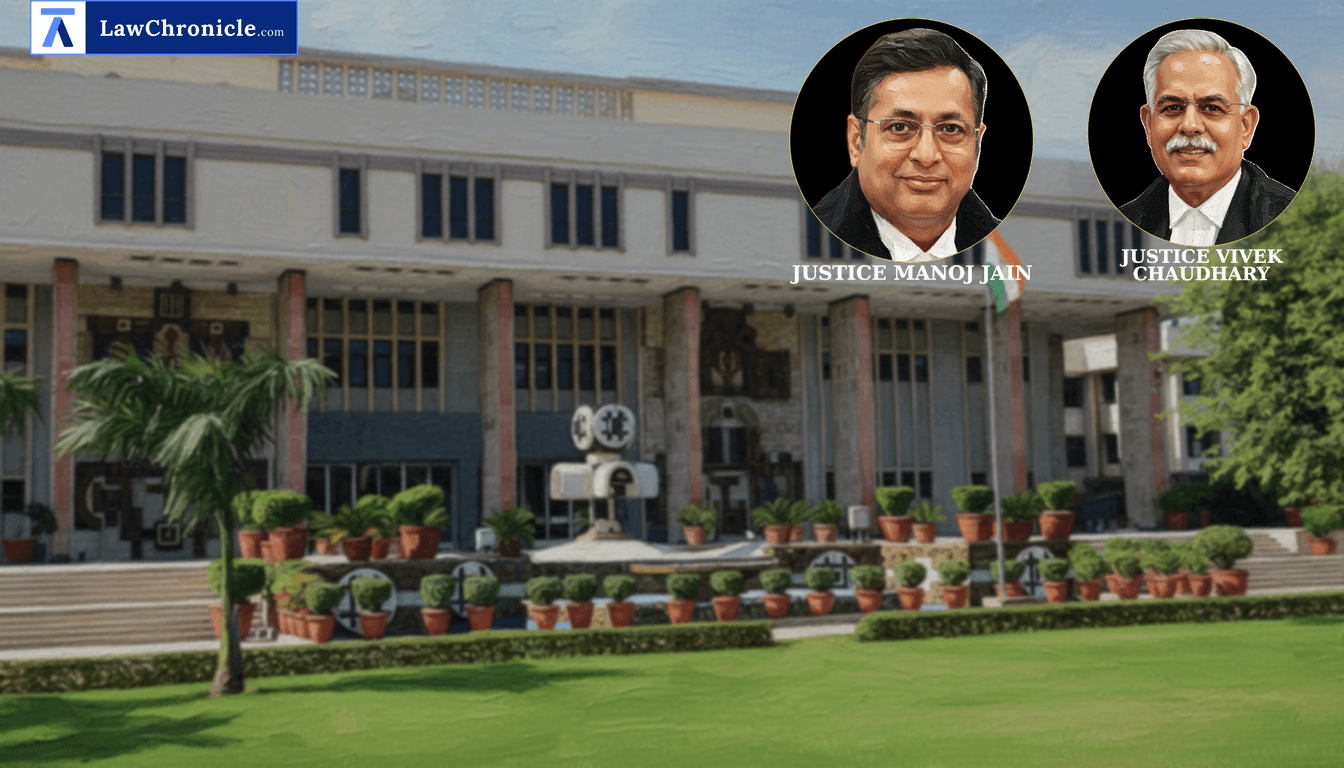
In a comprehensive judgment, a Bench comprising Justice Vivek Chaudhary and Justice Manoj Jain addressed a batch of seven petitions arising from the communal violence triggered by protests against the Citizenship Amendment Act, 2019 and the proposed National Register of Citizens. The Court scrutinized surviving prayers regarding the registration of FIRs for hate speech, the constitution of a Special Investigation Team (SIT), and the award of compensation to victims.
Key Takeaways
Statutory Remedies Over Writ Jurisdiction
High Courts will not entertain writ petitions for registration of FIRs when efficacious alternative remedies under Section 156(3) or Section 200 of the Code Of Criminal Procedure, 1973 remain available.
No Wholesale Transfer of Advanced Probes
Transferring investigations to an independent agency like the CBI or an SIT is an extraordinary power to be used sparingly, not for ongoing trials where charge-sheets have already been filed and judgments delivered.
Political Selectivity Barred
Court-monitored investigations cannot be ordered based on allegations that reflect political selectivity or when the evidence, such as excerpts of speeches, lacks established authenticity.
Finality to Claims Mechanisms
Existing government-appointed mechanisms, like the Claims Commissioner for riot damages, are considered adequate, precluding the need for further general directions on compensation under Article 226 of the Constitution of India, 1950.
Court Observations on Hate Speech and FIRs
The Court noted that the prayer for registering FIRs against political leaders for inflammatory speeches was largely covered by the Supreme Court's findings in Ashwini Kumar Upadhyay v. Union of India & Ors.. It emphasized that the completeness and authenticity of video recordings and transcripts provided by petitioners were disputed and better suited for examination by investigating forums.
The Court, in its reasoning, observed: "The procedural framework under the CrPC (now Bharatiya Nagarik Suraksha Sanhita, 2023) provides a comprehensive and multi-tiered mechanism to address grievances arising from non-registration of FIRs. The remedies available under Sections 154(3), 156(3) and 200 of the CrPC, coupled with the supervisory jurisdiction of the Magistrate, constitute an efficacious statutory scheme... constitutional remedies under Articles 32 and 226 remain available as a safeguard against failure of statutory authorities, such jurisdiction is extraordinary in nature and ought not to be invoked in a routine manner so as to bypass the remedies provided under the statutory framework."
Rejection of SIT and Allegations of Police Complicity
Addressing the demand for an SIT based on alleged police inaction or complicity, the Bench relied on State of West Bengal & Ors. v. Committee for Protection of Democratic Rights, West Bengal & Ors. ( "(2010) 3 SCC 571": 2010 CaseBase(SC) 467) and K.V. Rajendran v. Superintendent of Police, CBCID South Zone, Chennai & Ors., noting that transfer of investigation is only for "rare and exceptional cases." The Court found no specific material implicating senior officers in a manner that would suggest the entire investigative machinery of the Delhi Police was institutionally compromised.
The Court has following directions:
"Accordingly, the writ petitions, together with all pending applications, stand dismissed."
Ratio
Where the legislature provides a comprehensive statutory mechanism for the redressal of grievances relating to the non-registration of FIRs and investigation, constitutional courts must insist upon recourse to those remedies unless exceptional circumstances are demonstrated. The mere existence of power under Article 226 does not warrant its exercise to supervise ordinary criminal processes or to disrupt ongoing trials and investigations that have significantly progressed, as such monitoring would constitute a subversion of criminal law.
Background
The dispute arose from the communal violence in North-East Delhi in February 2020, following the passage of the Citizenship Amendment Act, 2019. Petitioners sought SIT probes, FIRs against individuals like Kapil Mishra and Sonia Gandhi, and preservation of CCTV evidence. The State, represented by the ASG, argued that 757 cases were registered, with 369 charge-sheets already filed, and that the Hinu Mahajan and Anr. Vs. Union of India and Ors. case had already addressed similar grievances. The Court followed the precedents in Janata Dal v. H.S. Chowdhary & Ors. ( "(1992) 4 SCC 305": 1992 CaseBase(SC) 297) and Simranjit Singh Mann v. Union of India & Anr. ( "(1992) 4 SCC 653": 1992 CaseBase(SC) 730) regarding the limitations of Public Interest Litigation in criminal matters. Relying on Rudul Sah v. State of Bihar & Anr. ( "(1983) 4 SCC 141": 1983 CaseBase(SC) 166) and Nilabati Behera (SMT) Alias Lalita Behera (Through the Supreme Court legal & Committee v. State of Orissa & Ors. ( "(1993) 2 SCC 746": 1993 CaseBase(SC) 870), the Court acknowledged the power to grant compensation for fundamental rights violations but found that the existing Claims Commissioner mechanism was sufficient. Ultimately, the Court dismissed the petitions, maintaining that the criminal law must take its own course through ordinary judicial processes.
Case Details:
Case No.: W.P.(CRL) 665/2020
Case Title: Shaikh Mujtaba Farooq & Ors. V. Union Of India & Ors.
Appearances:
For the Petitioner(s): Mr. Ajay Gautam (in-person), Mr. M. Taiyab Khan (Advocate), Mr. Kirti Uppal (Senior Advocate), Mr. Colin Gonsalves (Senior Advocate), Ms. Kirti Singh (Advocate)
For the Respondent(s): Mr. Syed Abdul Haseen (CGSC), Mr. S.V. Raju (ASG), Mr. Rajat Nair (SPP), Mr. K. K. Mishra (ASC), Mr. Vedansh Anand (SPC), Mr. Ajay Burman (Senior Advocate)
Source: 2026 CaseBase(DEL) 6655
Similar Articles
 Breaking News


