


Delhi High Court Rejects Fresh Probe Into Jamia Millia Islamia Violence
 Copy Link
 Share
 Save
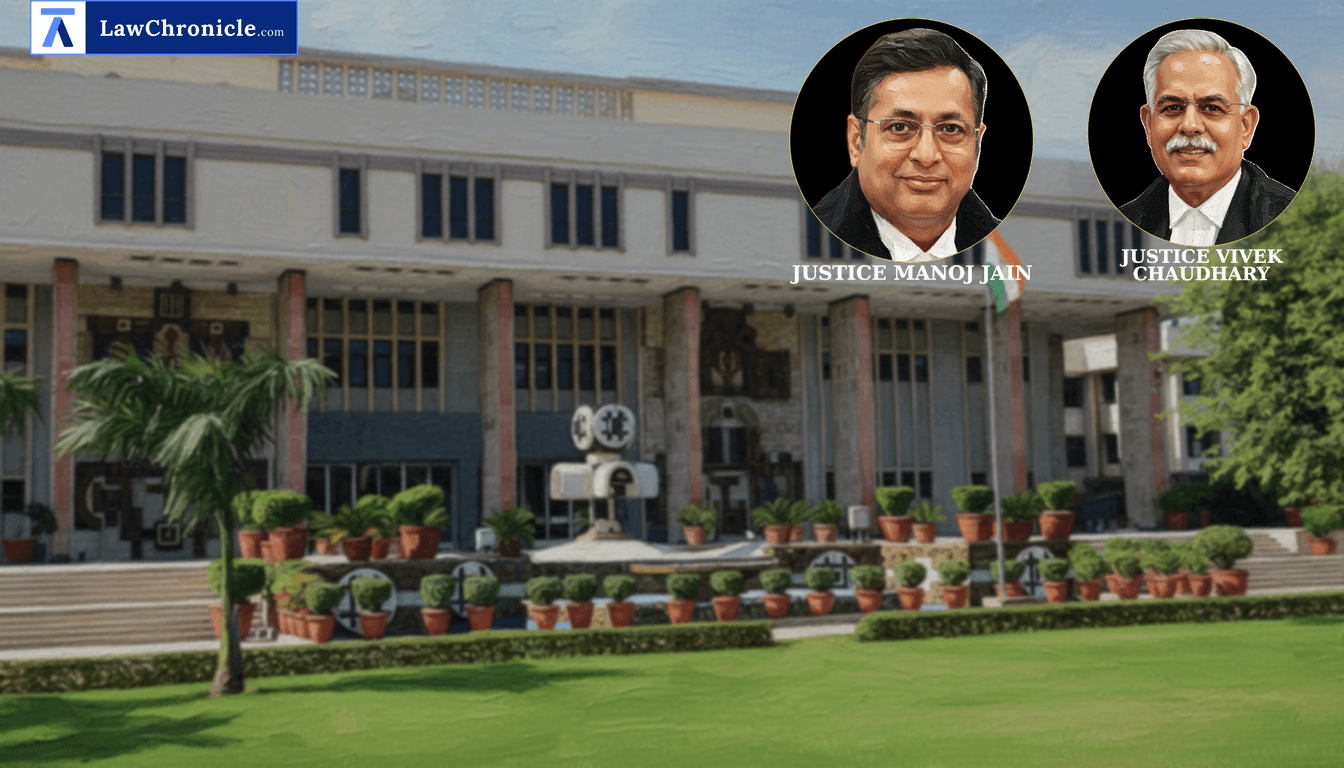
In a decisive affirmation of the existing criminal justice framework, the Delhi High Court has refused to constitute an independent judicial commission to probe the 2019 Jamia Millia Islamia violence, ruling that extraordinary writ jurisdiction cannot be invoked to supplant statutory investigations already pending before competent courts.
A Division Bench comprising Justice Vivek Chaudhary and Justice Manoj Jain delivered the judgment in a batch of petitions arising from the clashes between students and police personnel during protests against the Citizenship Amendment Act, 2019 and the proposed National Register of Citizens. The Court emphasized that while it possesses the power to direct independent probes, such power is reserved for rare and exceptional cases where the state machinery has demonstrably failed.
Key Takeaways
Statutory Primacy Over Writ Jurisdiction
Constitutional courts will not bypass the investigative process contemplated under ordinary criminal law if the statutory machinery is already in motion.
Institutional Bias Requires Proof
Allegations of police excesses do not automatically render an investigation biased; litigants must prove actual institutional failure or mala fides to warrant a transfer of probe.
Public Law Remedy Limitations
Monetary compensation for fundamental rights violations will not be granted in writ jurisdiction when the underlying facts are sharply disputed and require trial-like evidence.
NHRC Scrutiny as a Bar
Independent scrutiny by a statutory body like the NHRC, if left unchallenged, serves as a significant factor against reopening facts through a parallel judicial inquiry.
Judicial Restraint and Investigative Credibility
The Court noted that in the aftermath of the December 2019 incidents, the Code Of Criminal Procedure, 1973 was invoked, FIRs were registered, and a Special Investigation Team of the Crime Branch had already filed charge-sheets. The Bench observed that a fresh inquiry after a passage of six years would unnecessarily re-examine events already forming part of judicial processes.
The Court, in its reasoning, observed: "The power of this Court under Article 226 to direct an investigation by an independent agency is undoubtedly wide. However, such power is extraordinary and is to be exercised sparingly... The fact that the petitioners remain dissatisfied with the outcome or adequacy of those processes cannot justify their displacement. Constitutional courts undoubtedly possess the power to intervene where an investigation is demonstrably tainted... But that power is an exceptional constitutional safeguard and it is not a means of obtaining a second investigation merely because the first investigation or statutory proceeding has not produced the result sought by a party."
Disputed Facts Bar Compensation Claims
Regarding the prayers for compensation, the Court highlighted the "sharply divergent narratives" between the students and the State. While students alleged unprovoked brutality, the State contended that the intervention was necessary to curb large-scale arson and attacks on police personnel.
The Court held: "The compensation is in the nature of 'exemplary damages' awarded against the wrongdoer for the breach of its public law duty... relief in exercise of the power under Article 32 or 226 would be granted only once it is established that there has been an infringement of the fundamental rights of the citizen and no other form of appropriate redressal by the court in the facts and circumstances of the case, is possible."
Ratio
The High Court declared that where a statutory investigative mechanism has been activated, criminal proceedings are pending, and a competent statutory body like the NHRC has already scrutinized the allegations, the High Court will not exercise its extraordinary jurisdiction under Article 226 of the Constitution of India, 1950 to order a fresh fact-finding inquiry or award compensation for disputed injuries, as such matters require the appreciation of evidence in a trial-like proceeding.
Background
The dispute originated from the events of December 13 and 15, 2019, at Jamia Millia Islamia University. Petitioners alleged that police personnel entered the campus without authorization, used excessive force in the library, and detained students unlawfully. The State argued that the assembly had turned violent, necessitating intervention to protect public property and restore order.
The Court relied on precedents like Janata Dal v. H.S. Chowdhary & Ors. ( "(1992) 4 SCC 305": 1992 CaseBase(SC) 297) and Rajiv Ranjan Singh Lalan (VIII) & Anr. v. Union of India & Ors. to underscore that third parties or public interest litigants cannot oversee criminal investigations. It further cited Romila Thapar v. Union of India ( "(2018) 10 SCC 753": 2018 CaseBase(SC) 320) to explain that neither the accused nor the complainant is entitled to choose their own investigating agency. The Bench also noted that the University's own application under Section 156(3) of the Code Of Criminal Procedure, 1973 for an FIR against police officers had been dismissed by a Magistrate in 2021, and that order attained finality.
Ultimately, the Court found that since the National Human Rights Commission report (NHRC) provided a neutral assessment and offered remedial recommendations which the petitioners failed to pursue, no further judicial intervention was warranted. The petitions were dismissed without costs.
Case Details:
Case No.: W.P.(C) 13468/2019
Case Title: MANOJ DHIRYAN v. UNION OF INDIA AND ORS.
Appearances:
For the Petitioner(s): Mr. Salman Khurshid, Sr. Adv.; Ms. Indira Jai Singh, Sr. Adv.; Mr. Colin Gonsalves, Sr. Adv.
For the Respondent(s): Mr. S.V. Raju, ASG; Mr. Rajat Nair (SPP); Mr. K.K. Mishra, ASC
Source: 2026 CaseBase(DEL) 6654
Similar Articles

 Breaking News


