


Exhaust Alternative Remedies Before Seeking Writs For FIR Registration: Delhi HC
 Copy Link
 Share
 Save
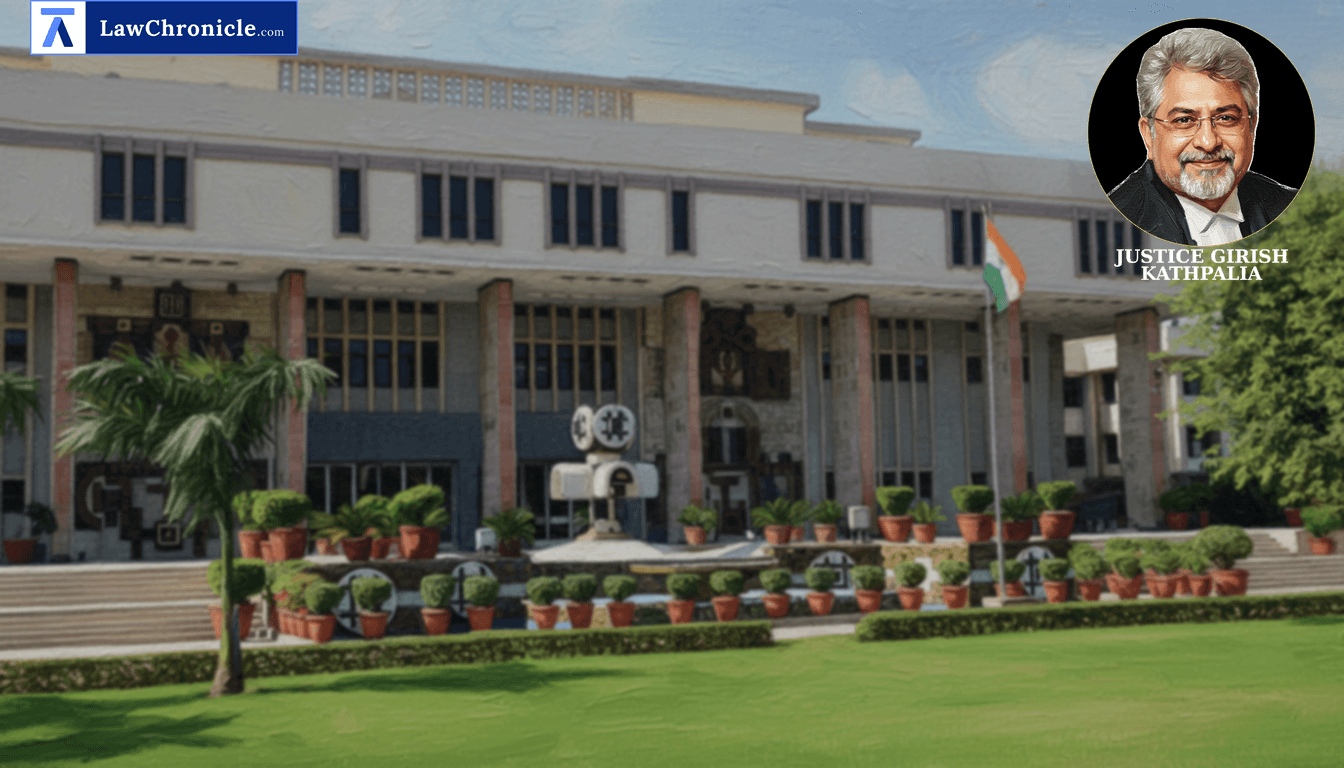
The Delhi High Court has slammed the door on direct writ petitions for registering FIRs, ruling that the extraordinary jurisdiction of constitutional courts cannot be used to bypass the comprehensive statutory machinery established for criminal investigation. In a stern rebuke to 'baseless' allegations against law enforcement, the Court clarified that mere apprehension of bias due to the political standing of an accused does not justify skipping the mandatory sequential remedies provided under the criminal procedural law.
A single-judge bench of Justice Girish Kathpalia heard the matter concerning a petition filed by several practicing advocates seeking a CBI probe into an alleged assault inside the Bar Council of India (BCI) premises. The petitioners had approached the High Court seeking a writ of mandamus for the registration of an FIR and an independent investigation, alleging that the Delhi Police would not act fairly as the Chairman of the BCI is a sitting Member of Parliament.
Key Takeaways
Exhaustion of Statutory Remedies Mandatory
Litigants cannot bypass the sequential remedies of approaching the DCP and the Magistrate before knocking on the High Court's doors under Constitution of India.
No Writ for Non-Cognizable Offenses
Where the allegations only disclose a non-cognizable offense, the police are legally barred from investigating without a Magistrate's order, making a writ for FIR registration legally untenable.
Rejection of Speculative Bias
General and sweeping allegations against state police forces based on the political status of an accused are insufficient grounds to transfer investigations to agencies like the CBI.
Magisterial Oversight is Efficacious
Magistrates possess wide powers to direct investigative steps, including the seizure of CCTV footage, negating the need for extraordinary judicial intervention.
The Primacy of Alternate Efficacious Remedies
The Court emphasized that the power to issue writs under Constitution of India is discretionary and subject to self-imposed restrictions. It reiterated that when a statute creates a right and prescribes a remedial procedure, that procedure must be followed. The Court noted that the petitioners had failed to approach the concerned DCP under Section 173(4) of the Bharatiya Nagarik Suraksha Sanhita, 2023 or the Magistrate under Section 223 of the Bharatiya Nagarik Suraksha Sanhita, 2023.
The Court, in its reasoning, observed: "The logic behind such self-imposed restrictions on writ jurisdiction is to ensure that the procedure established by law is not bypassed and the remedial machinery created by the statute is not made redundant."
Drawing support from the Supreme Court's decisions in Thansingh Nathmal vs Superintendent of Taxes ( "1964 SCC OnLine SC 13": 1964 CaseBase(SC) 405) and Sujal Vishwas Attavar & Anr. vs The State of Maharashtra & Ors. ( "2026 INSC 442": 2026 CaseBase(SC) 378), the Court noted that the Bharatiya Nagarik Suraksha Sanhita, 2023 (formerly CrPC) provides a complete statutory architecture for addressing grievances related to the non-registration of FIRs.
Legal Threshold for FIR Registration
Justice Kathpalia analyzed the nature of the allegations, noting that the petitioners claimed they were beaten and thrashed without weapons. The Court observed that such allegations, at most, fall under Section 114 of the Bharatiya Nyaya Sanhita, which is a non-cognizable offense. Under Section 174 of the Bharatiya Nagarik Suraksha Sanhita, 2023, police officers are prohibited from investigating non-cognizable cases without a Magistrate's order.
Ratio
The writ jurisdiction under Article 226 of the Constitution of India is an extraordinary remedy that should not be exercised when an alternate efficacious statutory remedy exists. In matters of non-registration of FIRs, the sequential procedure provided under the Bharatiya Nagarik Suraksha Sanhita, 2023, constitutes a complete and layered mechanism that must be exhausted. Furthermore, a writ of mandamus for investigation cannot be issued if the complaint fails to disclose a cognizable offense, as investigation into non-cognizable offenses is governed strictly by the Magistrate’s oversight.
Background
The dispute originated from a protest organized by young advocates against a directive issued by the Chairman of the Bar Council of India (Respondent No. 1) regarding NALSAR University students. The petitioners alleged that while they were conducting a peaceful sit-in at the BCI premises on the night of August 20, 2026, they were assaulted by a group of men, some in advocates' attire, in the presence of police officials.
The petitioners argued that the Delhi Police would be biased because Respondent No. 1 is a Member of Parliament from the ruling party. They relied on the precedent of Ashwini Kumar Upadhyay vs Union of India & Others ( "2026 SCC Online SC 741": 2026 CaseBase(SC) 373) to argue for the necessity of an independent probe. However, the Court dismissed these arguments, stating that the apprehension was baseless and that the petitioners had ignored the statutory framework. The Court specifically disapproved of discrediting government organizations through general allegations, noting it generates "counterproductive cynicism and distrust."
Case Details:
Case No.: W.P.(CRL) 2850/2026
CNR No.: DLHC010438192026
Case Title: KUNAL YADAV & ORS. versus MANAN KUMAR MISHRA & ORS.
Appearances:
For the Petitioner(s): Mr. Prashant Bhushan, Mr. Anurag Tiwary and Ms. Anushka Singh, Advocates
For the Respondent(s): Mr. Amol Sinha, ASC for the State with SI Vikram and SI Harsh Kumar; Ms. Simran Kumari, Mr. Virat Raj Mishra and Ms. Pooja, Advocates for R-2; Mr. Shoumendu Mukherji, Senior Panel Counsel with Mr. Abhishek Batra, Mr. Puneet Dhawan, Ms. Megha Sharma, Mr. Aniruddha Ghosh, Ms. Kaberi Sharma, Advocates for R-3 & R-4
Source: 2026 CaseBase(DEL) 6579
Similar Articles
 Breaking News


