


Dishonour of Cheque No Ground for Sale Deed Cancellation: Uttarakhand HC
 Copy Link
 Share
 Save
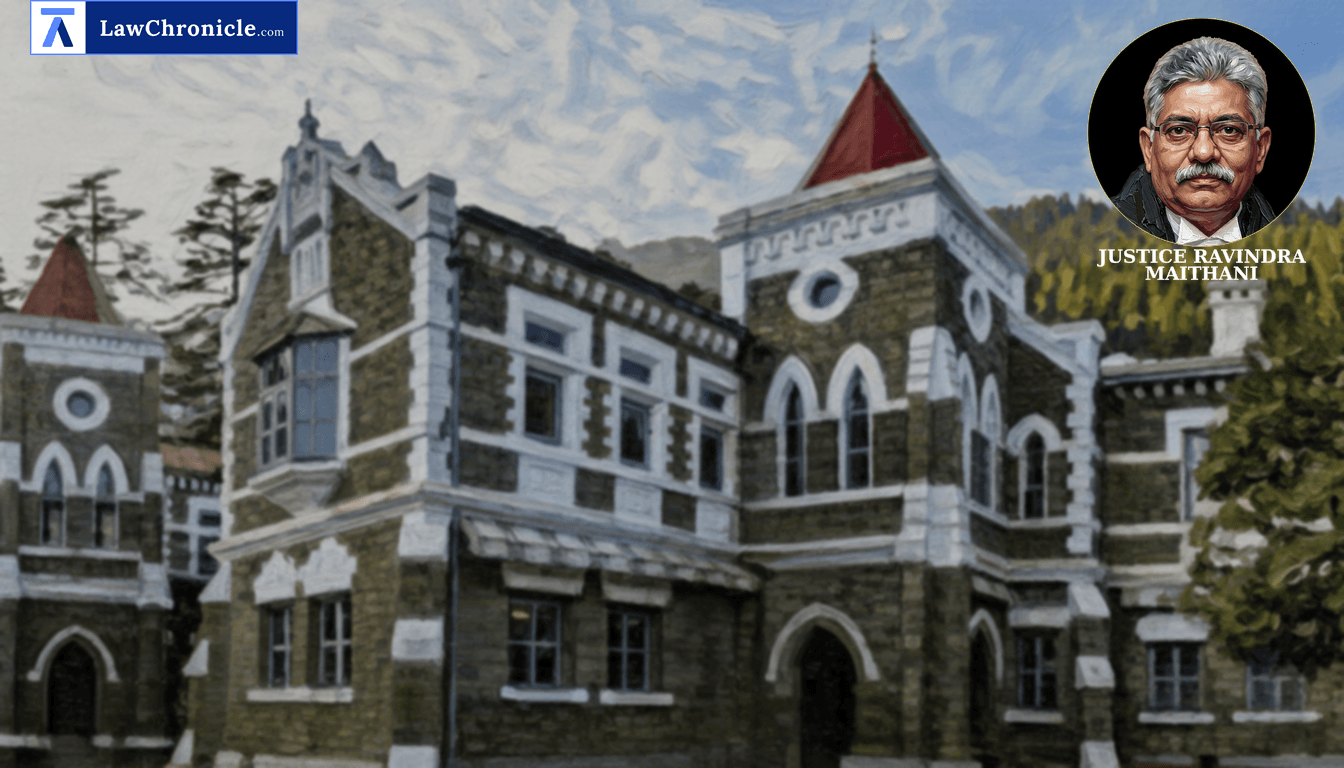
Unpaid sale price does not invalidate a completed property transfer, as ownership passes to the buyer upon execution and registration regardless of whether the consideration was paid in full. The Uttarakhand High Court has affirmed that the vendor's legal remedy lies solely in suing for the balance amount or claiming a statutory charge, rather than seeking the annulment of the registered instrument.
A Single Judge Bench of Hon’ble Justice Ravindra Maithani heard the second appeal challenging the concurrent findings of the lower courts which had dismissed a suit for cancellation of a sale deed. The appellant had contended that the sale was vitiated as the consideration cheques were dishonoured and a promised bank loan repayment was not fulfilled by the respondents.
Non-Payment of Price Does Not Vitiate Sale
The Court examined whether the dishonour of cheques given as sale consideration would entitle the vendor to cancel the sale deed. Drawing upon settled legal principles, the Court noted that under Section 54 of the Transfer of Property Act, 1882, a 'sale' is defined as a transfer of ownership in exchange for a price paid or promised. The Court observed that if the intention of the parties was to pass the title upon execution and registration, the title would indeed pass to the purchaser even if the balance price remained unpaid.
The Mandatory Application of Precedents
The Bench relied heavily on the jurisprudence established by the Supreme Court. Referring to Kaliaperumal Vs. Rajagopal and another ( "(2009) 4 SCC 193": 2009 CaseBase(SC) 652), the Court highlighted that the remedy for non-payment of price is a suit for the balance amount and not the avoidance of the sale itself. This principle was further reinforced by the decision in Vidhyadhar Vs. Manikrao and another ( "(1999) 3 SCC 573": 1999 CaseBase(SC) 205), where the Apex Court held that actual payment of the whole price is not a sine qua non to the completion of a sale.
In its reasoning, the Court observed: "The courts below have rightly held that merely because the cheques were dishonoured, the sale deed may not be cancelled. There is no such question of law, involved in this second appeal. Therefore, it does not merit acceptance."
Court Observations on Fraud and Mortgage
Addressing the appellant's eleventh-hour plea regarding fraud and pre-dated cheques, the Court noted the absence of specific pleadings in the original suit. Since fraud is a question of fact, the Court held it could not be raised for the first time at the second appeal stage. Furthermore, the Court found no mention of the alleged bank mortgage within the registered sale deed itself, weakening the appellant's claim of a conditional sale.
The Court has the following directions:
"The second appeal is dismissed in limine."
Key Takeaways
Title Transfer Finality
Once a sale deed is registered, the title passes to the buyer based on the parties' intent, irrespective of whether the cheques for consideration are subsequently dishonoured.
Redefining Remedies
Vendors cannot seek cancellation of a registered deed for non-payment; their legal recourse is limited to recovery suits for the balance price or enforcing a charge on the property.
Pleading Fraud
Allegations of fraud must be specifically pleaded at the trial stage; appellate courts will not entertain new factual claims of deception during a second appeal.
Ratio
Payment of the entire price is not a condition precedent for the completion of a sale under Section 54 of the Transfer of Property Act, 1882. If the document is executed and registered, the transfer of ownership is complete, and the vendor's only remedy for unpaid consideration is a suit for the balance price under Section 55(4)(b) of the Act.
Background:
The dispute arose after the appellant executed a sale deed in January 2016 for certain land. The appellant claimed the respondents agreed to pay Rs. 10 lakh and settle an existing bank loan. When the cheques provided were dishonoured and the loan remained unpaid, the appellant filed Civil Suit No. 76 of 2015 for cancellation of the sale deed. Both the Trial Court (1st Additional Civil Judge, Kashipur) and the First Appellate Court (2nd Additional Civil Judge, Kashipur) dismissed the appellant's claims, leading to this second appeal. The High Court found no substantial question of law and dismissed the appeal at the admission stage.
Case Details:
Case No.: Second Appeal No. 145 of 2023
NeutralCitation: 2023:UHC:9538
Case Title: Gopal Singh Vs. Lavendra Singh and others
Appearances:
For the Petitioner(s): Mr. Neeraj Garg, Advocate
Source: 2026 CaseBase(UTT) 13
Similar Articles
 Breaking News


