


Unconditional Registered Sale Deed Passes Title Even If Full Price Unpaid: Gujarat HC
 Copy Link
 Share
 Save
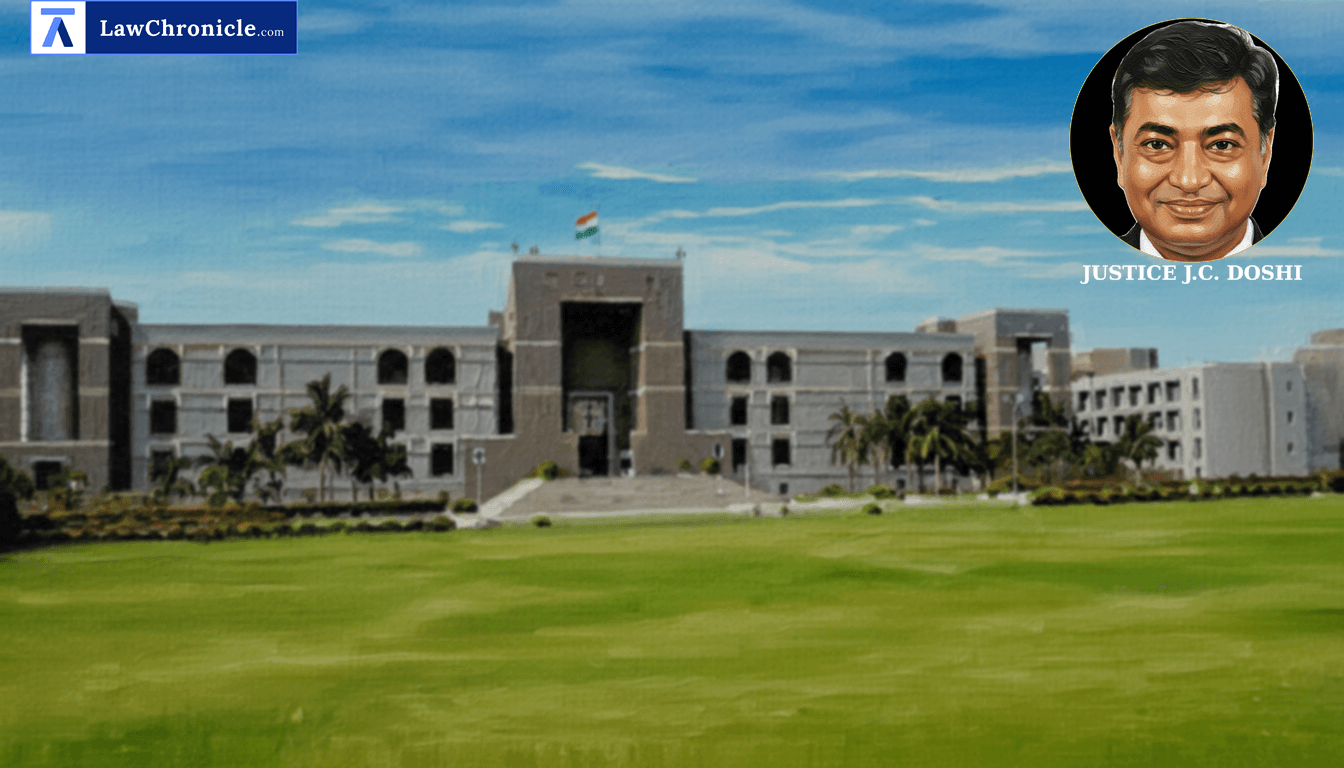
In a decisive blow to frivolous land cancellation suits, the Gujarat High Court held that once a registered sale deed is executed unconditionally, ownership title passes immediately to the purchaser regardless of alleged non-payment of balance consideration.
A single-judge bench of Justice J. C. Doshi dismissed a first appeal challenging a trial court decision that refused to cancel a registered sale deed. The appellants argued that the conveyance document was signed under the mistaken belief that it was a mere agreement to sell, and further asserted that full consideration had not been paid.
Key Takeaways
Presumption of Validity: A registered sale deed carries a strong legal presumption of genuine execution that cannot be dislodged by vague allegations.
Title Transfer Finality: Absence of a conditional recital linking title transfer to full payment ensures ownership passes upon registration under Section 54 of the Transfer of Property Act, 1882.
Pleading Standards for Fraud: Parties alleging fraud or invoking non est factum must provide rigorous, material particulars under Order VI Rule 4 of the Code of Civil Procedure, 1908 rather than general assertions.
The High Court examined the evidence and settled precedent to affirm that unpaid consideration provides a remedy for recovery of money, not automatic cancellation of a registered sale deed.
The Court has following directions:
"Request of learned advocate Mr. Manan Pandya to withdraw the amount deposited by the appellants before the learned Trial Court pursuant to the impugned judgment and decree is allowed, subject to verification of the identity of the appellants. The amount deposited by the appellants shall be refunded to them along with the accrued interest. However, the request of learned advocate for the appellants to suspend the operation of the judgment for a further period of four weeks to enable the appellants to approach the higher forum is refused."
Evaluating the legal framework regarding transfer of property and registered conveyances, the Court, in its reasoning, observed: "Therefore, once a sale deed is executed and registered and it does not contain any conditional recital to the effect that the transfer of title is contingent upon payment of the entire sale consideration, the ownership in the property stands transferred in favour of the purchaser. The mere fact that a part of the sale consideration has not been paid would not, by itself, invalidate the sale or prevent the passing of title, subject to the rights and remedies available to the vendor in accordance with law."
Ratio
Under Section 54 of the Transfer of Property Act, 1882, execution and registration of an unconditional sale deed validly conveys title to the transferee upon registration. Alleged non-payment or partial payment of the agreed sale consideration does not render the registered sale deed void or voidable, nor does it entitle the vendor to seek cancellation of the deed in the absence of a specific conditional clause making title transfer contingent upon full payment.
Background
The dispute pertained to land at Mauje Bil, Vadodara. The plaintiffs alleged that defendant broker negotiated a sale at Rs.1,050 per sq. metre and paid Rs.50 lakhs, securing signatures on blank papers. They claimed that the defendants fraudulently registered a final sale deed on July 7, 2011, instead of an agreement to sell, without paying the alleged full consideration. They further contended that the land was fragmented and thus the transaction violated the Gujarat Prevention of Fragmentation and Consolidation of Holdings Act, 1947.
Conversely, the purchaser argued that the full consideration of Rs.85,34,000/- (including cash payments) was paid and documented via receipts, asserting bona fide title. The trial court dismissed the suit, finding no proof of fraud.
On appeal under Section 96 of the Code of Civil Procedure, 1908, the High Court analyzed precedents including Damodhar Narayan Sawale v. Shri Tezrao Bajirao Mhaske and Dahiben v. Arvindbhai Kalyanji Bhanusali to reiterate that registered deeds enjoy a formidable presumption of validity as held in Hemalatha (D) by Legal Representatives v. Tukaram (D) by Legal Representatives & Ors.. Referring to Raziya Begum & Others v. Nafisa Begum Abdul Hamid & Ors. ( "2026 SCC OnLine SC 1511": 2026 CaseBase(SC) 756), the Court noted that failure to pay full consideration does not invalidate a completed sale. Additionally, relying on Damodhar Narayan Sawale v. Shri Tezrao Bajirao Mhaske, the Court rejected the fragmentation argument, noting no competent authority had declared the transaction void and no concrete evidence of road acquisition was established. Consequently, the High Court confirmed the trial court's dismissal.
Case Details:
Case No.: R/First Appeal No. 2539 of 2024
Neutral Citation: 2026:GUJHC:54835
Case Title: Jyotsnaben Ramanbhai Patel & Ors. v. Brijeshsinh Kishorsinh Chauhan & Ors.
Appearances:
For the Petitioner(s): Mr. Manan B Pandya, Mr. SP Majmudar
For the Respondent(s): Mr. Mehul Shah (Senior Counsel) assisted by Mr. Jigar P Raval
Source: 2026 CaseBase(GUJ) 17494

 Breaking News


