


Non-Payment of Full Consideration Does Not Invalidate Sale Deed: SC
 Copy Link
 Share
 Save
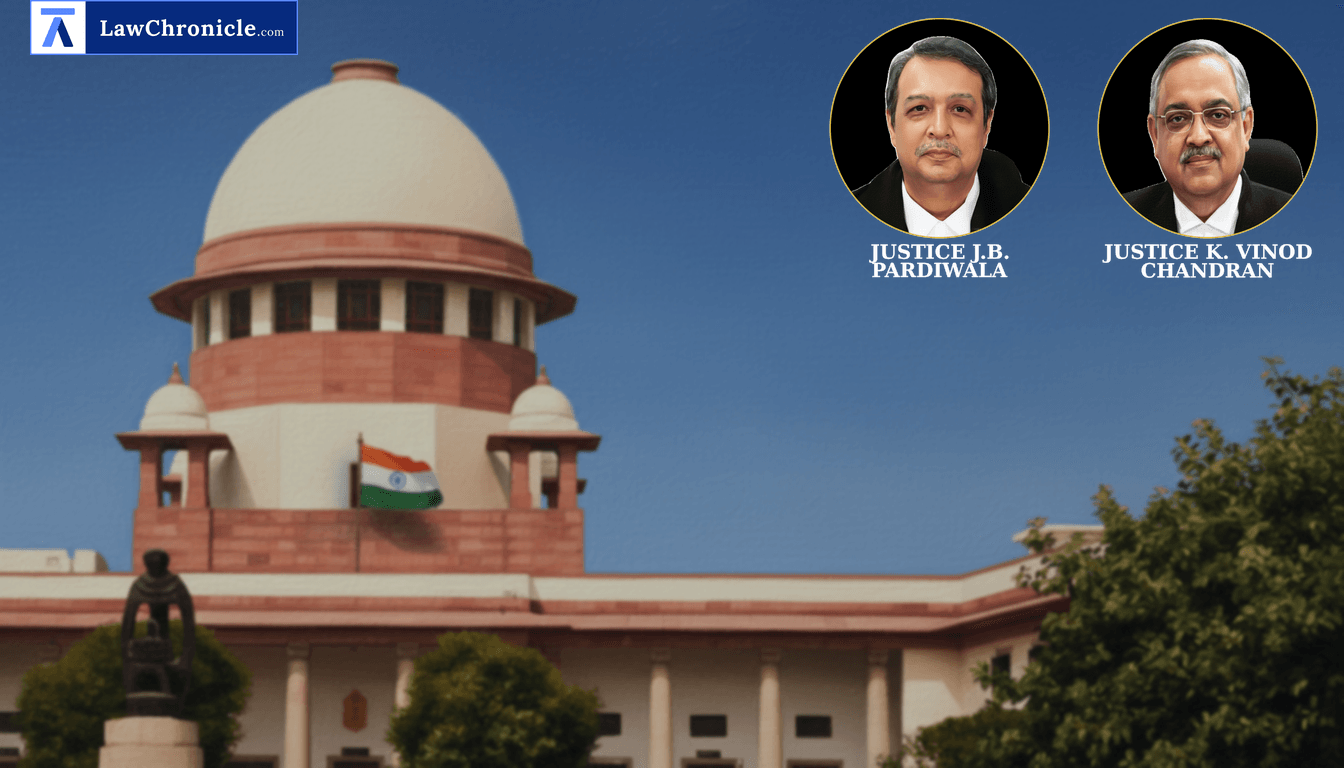
Non-payment of the remaining sale price cannot invalidate a registered sale deed or entitle the seller to cancel the conveyance, as title passes upon registration regardless of unpaid consideration. Overturning a High Court order, the apex court reaffirmed that the vendor's legal remedy lies solely in recovering the balance amount rather than seeking a declaration to void the transfer.
A Bench of Justice J. B. Pardiwala and Justice K. Vinod Chandran set aside the High Court's judgment, restoring the concurrent findings of the Trial Court and the First Appellate Court. The appeal arose out of a second appeal where the High Court had declared two registered sale deeds inoperative due to the purchaser's failure to clear the remaining sale consideration and the underlying debts of the vendors.
Key Takeaways
Title Passes Upon Registration: Execution and registration of a sale deed transfer ownership completely, even if a portion of the sale consideration remains unpaid.
Remedy Restricted to Recovery: Unpaid sellers cannot seek cancellation or declaration of a sale deed as void; their sole legal remedy is to file a suit for recovery of the balance price.
Effect of Unperformed Promises: Failure to perform post-sale contractual promises or clear vendor debts incorporated in the deed does not render the transaction inoperative.
The Court observed that under Section 54 of the Transfer of Property Act, 1882, price paid or promised forms an essential ingredient of a sale, but actual payment of the whole price at execution is not a prerequisite. The Court, in its reasoning, observed: "The sale deed executed with full knowledge of the part consideration alone having been passed, cannot be rendered void or inoperative merely because the balance consideration promised to be paid, which promise was incorporated in the sale deed, had not been complied with. The right of the plaintiffs was to file for recovery of balance sale consideration and not to seek declaration that the sale deeds were null and void; which they are not."
Addressing the outcome and directions, the Court held that the appellants would have to pay the balance consideration along with interest. The Court issued the following directions:
"The Trial Court found that the defendant has to pay the balance consideration with interest from 10.03.1975 to perfect his title... the appellants herein would have to pay the balance sale consideration with interest from 10.03.1975 at the rate of interest charged on the plaintiffs, by their creditors and seek possession of the property, if at all they so desire."
Ratio
Under Section 54 of the Transfer of Property Act, 1882, actual payment of the full sale price at the time of execution is not a condition precedent for the completion of a sale. Once a sale deed is registered, ownership title passes to the transferee, and non-payment of the remaining consideration does not invalidate the sale deed or entitle the transferor to seek its cancellation.
Background
The original plaintiffs executed two sale deeds on March 10, 1975, for a total consideration of Rs. 7,000 each, receiving Rs. 2,500 per deed while the defendant retained Rs. 4,500 each to clear debts owed by the plaintiffs. Subsequently, in 1975 and 1976, agreements were executed where the defendant promised to pay the balance and satisfy government loans. In 1984, the plaintiffs filed a suit seeking cancellation of the sale deeds, declaration of absolute ownership, and permanent injunction, after the defendant failed to clear the debts. Proceedings were also initiated under Section 145 of the Criminal Procedure Code, 1973, leading to possession being handed over to the plaintiffs by the Magistrate.
The Trial Court dismissed the suit for cancellation and injunction, observing that the sale was complete and the remedy lay in recovering the unpaid amount. The First Appellate Court affirmed this judgment. However, in second appeal under Section 100 of the Civil Procedure Code, 1908, the High Court reversed these findings, declaring the sale deeds inoperative. The Supreme Court relied on precedent in Vidhyadhar v. Manikrao & Anr. ( "(1999) 3 SCC 573": 1999 CaseBase(SC) 205) and Dahiben v. Arvindbhai Kalyanji Bhanusali (Gajra) Dead through Legal Representatives & Ors. to hold that title passes upon registration and allowed the appeal, restoring the decision of the Trial Court.
Case Details:
Case No.: Civil Appeal No. 7225 of 2011
Neutral Citation: 2026 INSC 814
Case Title: Raziya Begum & Ors. v. Nafisa Begum Abdul Hamid & Ors.
Source: 2026 CaseBase(SC) 756
Similar Articles

 Breaking News


