


Disputed Debt In Garnishee Proceedings Cannot Be Raised In Appeal If Trial Not Pursued: Bombay HC
 Copy Link
 Share
 Save
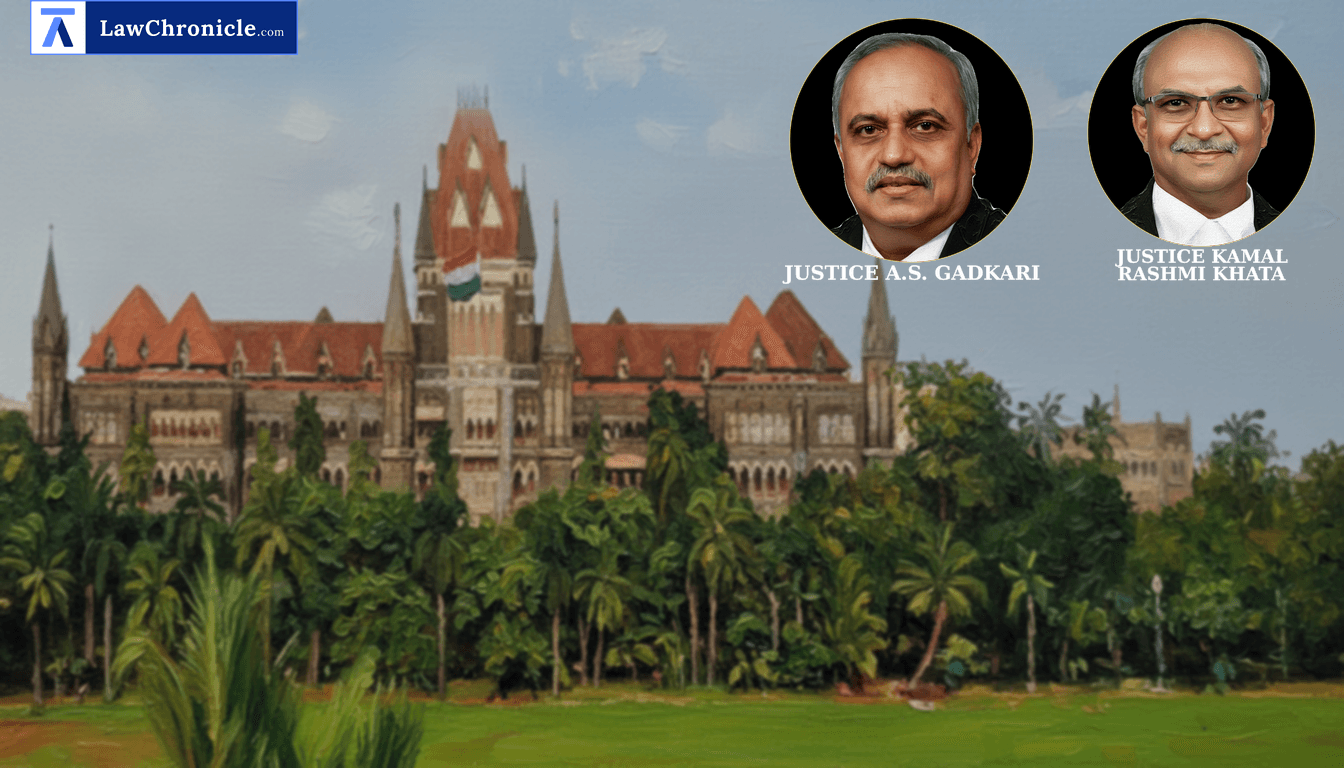
Parties who fail to lead evidence before a trial court in garnishee proceedings are barred from raising disputed questions of fact at the appellate stage, reinforcing the finality of summary adjudications in execution. The Bombay High Court affirmed that a clear contractual obligation to refund money, following a failed land acquisition, constitutes an attachable debt despite claims of forfeiture under a Memorandum of Understanding.
A division bench comprising Justice A. S. Gadkari and Justice Kamal Khata heard an appeal challenging a single judge's order that allowed the attachment of a debt. The appellant, Manjira Properties Pvt. Ltd., contested the attachment of funds payable to a judgment debtor, arguing that the underlying debt was a disputed contractual claim rather than a crystallized liability.
Key Takeaways
- Evidence Waiver Finality
Litigants who forgo the opportunity to lead evidence during trial stage proceedings under Garnishee rules cannot seek a de novo factual inquiry in appeal. - Debt Crystallization
Contractual advances for specific purposes like land acquisition may be treated as attachable debts if the purpose fails and no legal steps are taken to establish a right of forfeiture. - Summary Jurisdiction Efficiency
Courts will prioritize the execution of decrees over technical contractual defenses if those defenses were not substantiated during the initial hearing of the Garnishee application.
Garnishee Jurisdiction and Contractual Defenses
The appellant contended that the scheme of Garnishee jurisdiction under Order XXI Rule 46, 46A, and 46C of the Code of Civil Procedure 1908 requires a clear, admitted debt. They argued that the money received was a mobilization advance for land acquisition and that the respondent's failure to proceed allowed for forfeiture under Clause 1.8 of their MOU. The appellant relied on Food Corporation of India vs. Sukh Deo Prasad ( "(2009) 5 SCC 665": 2009 CaseBase(SC) 40) and NBCC India Ltd. vs. GNC Infra LLP & Anr. to argue that in the absence of a demand or arbitration invocation, there was no crystallized debt.
However, the Bombay High Court noted that the MOU was an unregistered document and that despite Order XXI Rule 46 C of the Code of Civil Procedure 1908 contemplating a trial for disputed questions, the appellant had not offered to lead evidence before the trial court.
Failure to Lead Evidence Bars Appellate Relief
The Bombay High Court emphasized that procedural lapses at the first instance cannot be cured in appeal. The Bench observed that “...a party who had ample opportunity to lead evidence before the First Court but failed to do so or elected not to do so, cannot raise a plea regarding evidence in Appeal.” The bench further noted that since the appellant received money and no land was acquired, the order for attachment did not suffer from perversity. The Court followed the precedent set in Union of India vs. Ibrahim Uddin ( "(2012) 8 SCC 148": 2012 CaseBase(SC) 844) and Sailam B.V.B.A. v/s. Helios Jwelery Pvt.Ltd. regarding the limitations on appellate interference when evidence was not led below.
Ratio
A garnishee cannot challenge the summary adjudication of a debt in appeal on factual grounds if they elected not to lead evidence or invoke a trial of disputed questions under Order XXI Rule 46C of the Code of Civil Procedure 1908 at the first instance. A failure to utilize the opportunity to prove a contractual defense before the execution court precludes the raising of such pleas in an appeal against an attachment order.
Background
The dispute arose from an execution application where the judgment creditor sought to attach a debt payable by the appellant to the judgment debtor. The appellant claimed the funds were a mobilization advance that they were entitled to forfeit. The single judge, however, allowed the attachment, treating the lapse of time under the MOU as resulting in an attachable debt. The Bombay High Court upheld this view, noting the lack of evidence produced by the appellant to support their claim of forfeiture or a genuine dispute requiring a full trial. The appeal was dismissed, and the attachment order was maintained.
Case Details:
Case No.: APPEAL NO.146 OF 2026 IN INTERIM APPLICATION NO.1658 OF 2026
Case Title: Manjira Properties Pvt. Ltd. V/s. Rahul H. Bajaj & Anr.
Appearances:
For the Petitioner(s): Ms. Merlin Sam a/w Mr. Pankaj Jain i/by PDJ Legal
For the Respondent(s): Ms. Sonal a/w Mr. Vivek M. Sharma, Ms. Anushka Parab & Mr. Vaibhav Singh i/by Mr. Vivek M. Sharma
Source: 2026 CaseBase(BOM) 6515
Similar Articles

 Breaking News


