Andhra Pradesh HC: Executing Court Can Order Bank Attachment Despite Garnishee's Plea Of Letter Of Credit
 Copy Link
 Share
 Save
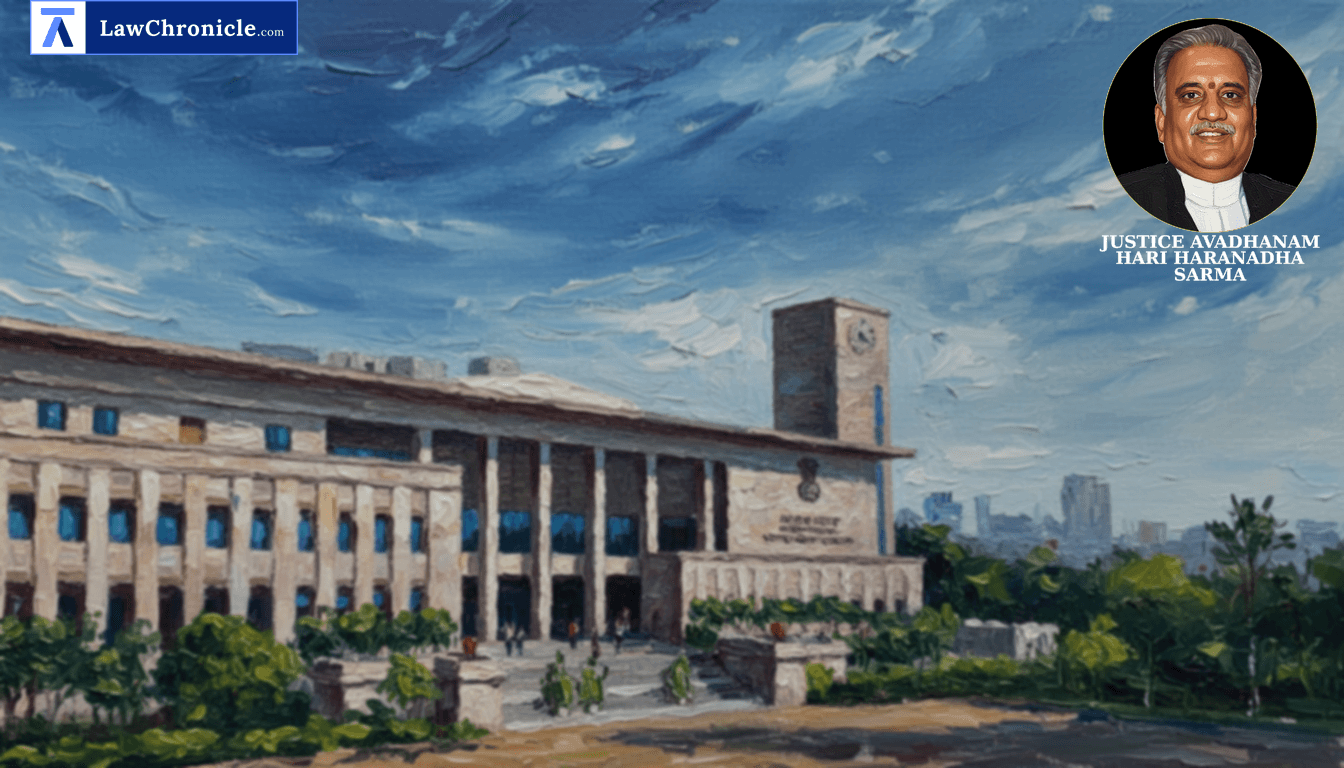
The High Court of Andhra Pradesh has fortified the powers of executing courts to recover land acquisition compensation, ruling that a Garnishee’s vague assertions regarding 'Letter of Credit' transactions cannot stall the attachment of government accounts to satisfy a decree. This decision underscores that statutory authorities must provide concrete documentary evidence to dispute bank balances once a decree-holder identifies specific accounts for recovery.
A Single Judge bench of Justice A. Hari Haranadha Sarma heard the revision petition challenging an execution order passed by the Principal Civil Judge (Senior Division), Rajampet. The Court was dealing with a challenge by the Special Deputy Collector against the attachment of bank accounts intended to satisfy an enhanced compensation award that had attained finality after a dismissal of a Special Leave Petition by the Supreme Court.
Key Takeaways
Documentary Burden on Garnishees
Mere assertions by a bank or a Garnishee regarding the nature of an account (such as a Letter of Credit) are insufficient to prevent attachment without presenting clear balance sheets or transaction records.
Finality of Compensation Awards
State authorities cannot protract execution proceedings by raising calculation disputes at the attachment stage if they failed to provide substantiating evidence during the trial court's verification process.
Recovery via Rule 46A and 46B
Executing courts possess the mandate under the CPC to compel Garnishees to deposit amounts into court to satisfy long-pending land acquisition dues.
Validity of Attachment Order under Order XXI
The Court noted that the decree-holder sought relief under Order XXI Rule 46A and 46B of the CPC, targeting accounts maintained at the State Bank of India. Despite the Judgment Debtor's claim that the accounts only reflected 'Letters of Credit' with nominal balances, the Court found a lack of transparency in the Garnishee's disclosures. The Court, in its reasoning, observed: "There is no specific denial by the 2nd respondent as to its status as a garnishee or of its liability to pay the amount to J.Dr No.1, to the extent of the amount lying to the credit of the accounts. Instead of furnishing the details of the amounts available in the said accounts and indicating the basis on which it claims to be not liable to pay any amount to J.Dr., the 2nd respondent has merely asserted that the transaction pertained to a Letter of Credit and that only a nominal amount was available."
Directions Issued to Executing Court
While upholding the attachment, the Court permitted both parties to re-verify the exact calculations. The Court has the following directions:
"The Executing Court shall thereupon determine the exact amounts due and payable in accordance with the decree and the orders passed by the Hon’ble High Court and the Hon’ble Apex Court... to the extent of amount claimed in the E.P., if any amount is available to the credit of the attached accounts, the garnishee shall be liable to deposit such amount, subject to the entitlement of the D.Hr. The Executing Court shall, after determining the amounts due and payable, upon hearing both sides, proceed in accordance with law with regard to the disbursement of the amount, if any, and further execution of the decree."
Ratio
A Garnishee who fails to produce documentary evidence regarding the specific nature and balance of a Judgment Debtor's account cannot escape an attachment order under Order XXI of the Code of Civil Procedure. Where a decree for compensation has been upheld by the Supreme Court, the Executing Court is empowered to attach bank accounts to the extent of the claim, subject to final arithmetic determination of dues.
Background
The dispute originated from a land acquisition reference in L.A.O.P. No. 217/1999. The award was enhanced by the High Court in Appeal Suit No. 1038/2007. The State's challenge was subsequently dismissed by the Supreme Court in SLP No.1266/2009 on December 15, 2009. When the Special Deputy Collector failed to deposit the decretal amount, the decree-holders moved an Execution Petition (E.P. No. 08/2010) seeking to attach government funds held in the State Bank of India.
The petitioner argued that the trial court erred in the calculation of interest on solatium and additional market value, and further contended that the bank accounts were not liquid cash but credit limits. However, the High Court found that the petitioner (RW1) failed to produce any 'scrap of paper' to prove the calculations were wrong. Consequently, the High Court dismissed the revision petition, maintaining the attachment while allowing for a final hearing on the exact disbursement amount.
Case Details:
Case No.: CIVIL REVISION PETITION NO: 3613 OF 2017
Neutral Citation: 2026:APHC:46474
Case Title: The Special Deputy Collector (L.A), Somasila Project vs. Jonnadula Pedda Subbarayudu and Others
Appearances:
For the Petitioner(s): GP For Arbitration
For the Respondent(s): P Sridhar Reddy
Source: 2026 CaseBase(AP) 19881
 Breaking News