


Divorced Wife Entitled To Maintenance Till Remarriage: Himachal Pradesh HC
 Copy Link
 Share
 Save
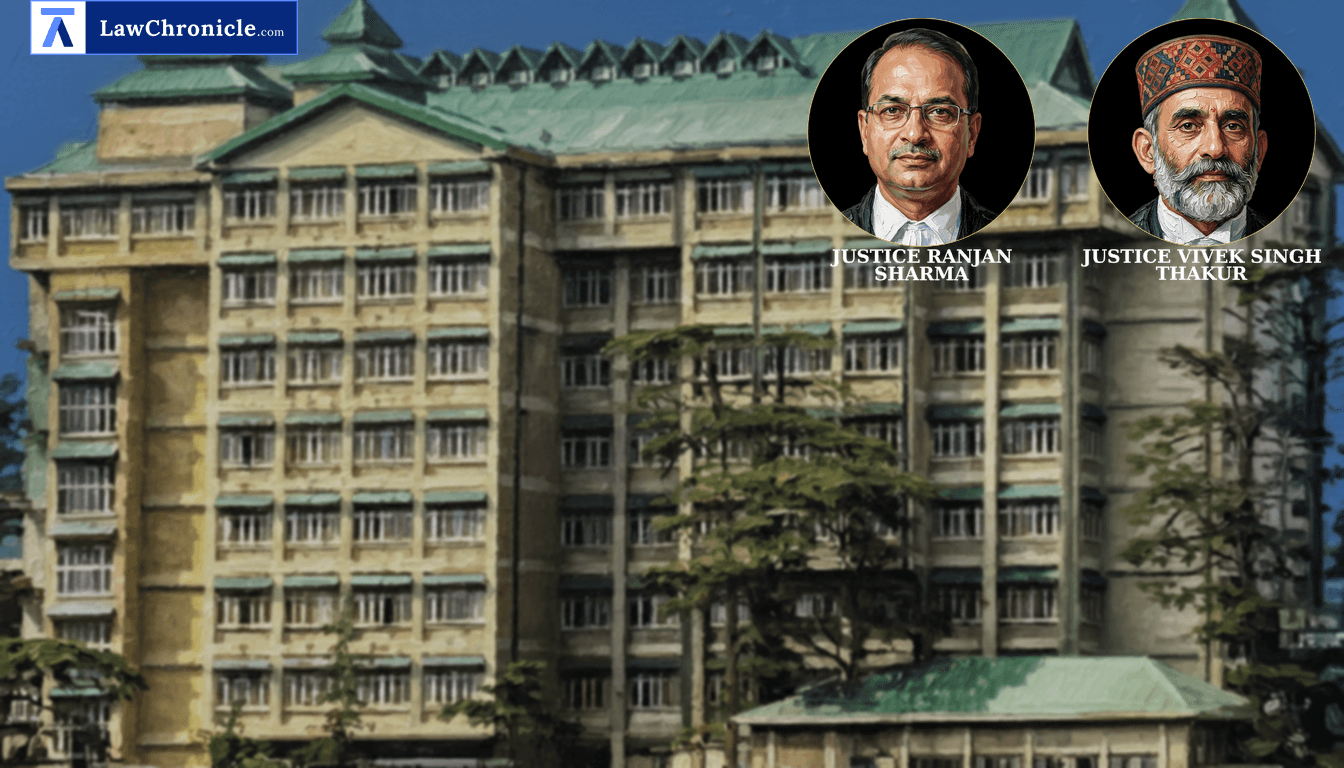
In a decisive affirmation of marital obligations, the High Court of Himachal Pradesh has ruled that an able-bodied husband cannot evade his legal duty to maintain his wife by offering bald excuses of financial constraints, asset loans, or unproven health issues. The Court reaffirmed that a divorced wife retains an absolute right to claim maintenance under Section 125 of the Code Of Criminal Procedure until she remarries, as long as she is unable to maintain herself.
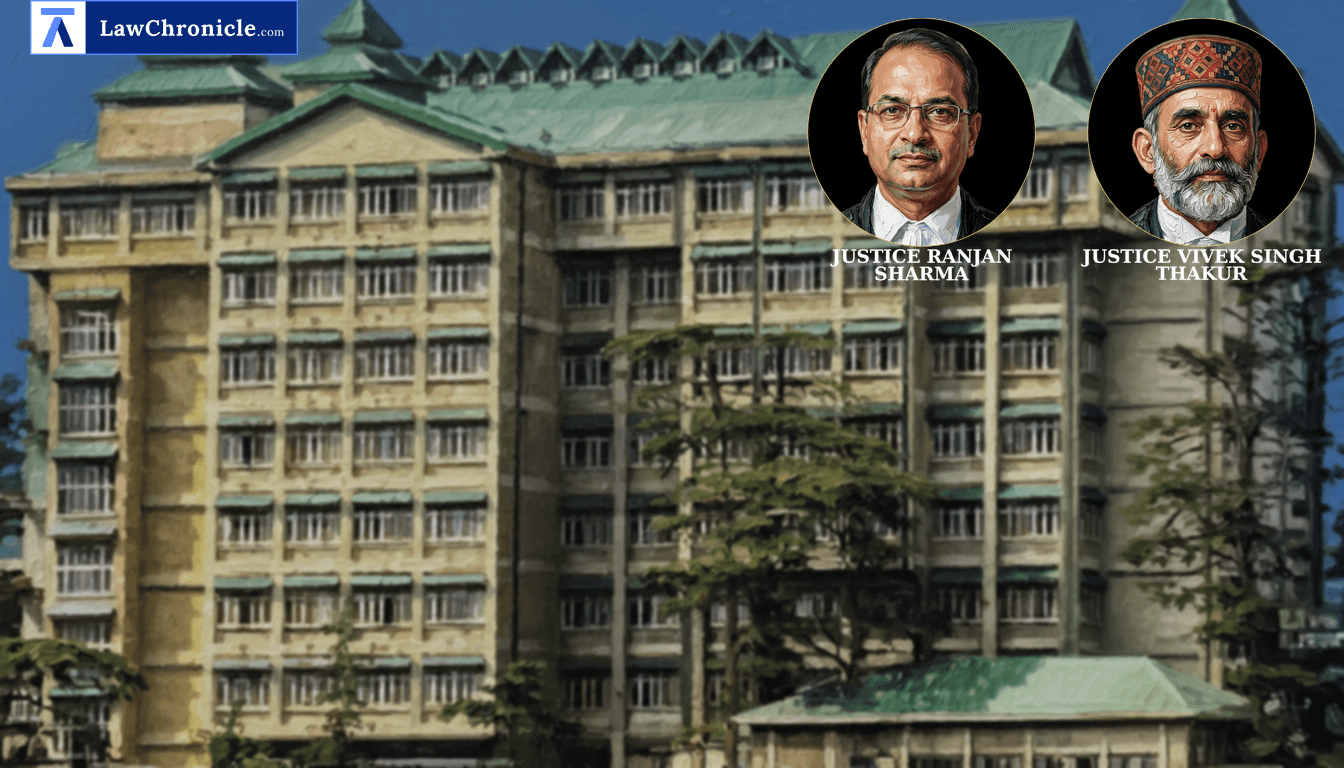
A Division Bench comprising Justice Vivek Singh Thakur and Justice Ranjan Sharma dismissed a criminal revision petition filed by a husband challenging a Family Court order that awarded Rs. 4,000 per month as maintenance to his divorced wife.
Key Takeaways
- Divorced Wife's Subsisting Right: A decree of divorce does not extinguish a woman's statutory right to claim maintenance under Section 125 Code Of Criminal Procedure unless she remarries.
- Able-Bodied Husband's Duty: An able-bodied husband cannot cite business losses, advanced age, or loan repayments as grounds to escape his primary obligation of providing maintenance.
- Procedural Protections: Interim maintenance granted under Section 125 Code Of Criminal Procedure continues to operate and cannot be per se stalled merely due to the pendency of an application filed under Section 125(4) Code Of Criminal Procedure.
- Scope of Revisional Jurisdiction: High Courts exercising revisional powers under Section 19(4) of the Family Courts Act, 1984 will not interfere with Family Court findings unless there is a manifest perversity or material illegality.
Husband Cannot Escape Obligation Without Proof of Incapacity
The High Court rejected the husband's contention that he was a casual labourer unable to pay the maintenance amount due to his health and financial constraints. The Court noted that the husband failed to place any evidence on record demonstrating physical disability or infirmity that rendered him incapable of earning.
The Court, in its reasoning, observed: "If the husband is healthy, able bodied and is in a position to support himself, he is under the legal obligation to support his wife, for wife's right to receive maintenance under Section 125 Cr PC unless disqualified, is an absolute right."
Addressing the husband's argument that he had raised business loans, the Court relied on Chaturbhuj vs Sitabai and Deepa Joshi vs Gaurav Joshi ( "2026 SCC Online 597": 2026 CaseBase(SC) 326) to hold that a husband's primary liability to maintain his wife cannot be subordinated to financial commitments like loan repayments. It further referred to Shamima Farooqui vs Shahid Khan ( "(2015) 5 SCC 705": 2015 CaseBase(SC) 366) to emphasize that maintenance under Section 125 Code Of Criminal Procedure is aimed at preventing vagrancy and enabling the woman to live with dignity commensurate with the status of her matrimonial home.
Divorced Wife's Maintenance Right and Exceptions
Reiterating the settled position of law laid down in Gurmeet Kaur v. Surjit Singh alias Jet Singh, Rohtash Singh vs Ramendri (Smt) and others, Manoj Kumar vs Champa Devi, Dr. Swapan Kumar Banerjee vs State of West Bengal and another ( "(2020) 19 SCC 342": 2019 CaseBase(SC) 2137), and Vanamala (Smt) vs H.M. Ranganatha Bhatta ( "(1995) 5 SCC 299": 1995 CaseBase(SC) 258), the Court explained that the definition of 'wife' under Explanation (b) to Section 125(1) Code Of Criminal Procedure includes a divorced woman who has not remarried.
The Court clarified that the disqualifications specified under Section 125(4) Code Of Criminal Procedure such as living in adultery, refusing to live together without sufficient reason, or living separately by mutual consen do not apply to a divorced wife, as the marital tie no longer exists. Furthermore, referring to the principles in Rajnesh v. Neha and Another ( "(2021) 2 SCC 324": 2020 CaseBase(SC) 717), the Bench observed that non-compliance with filing asset and liability affidavits as directed in Rajnesh v. Neha and Another ( "(2021) 2 SCC 324": 2020 CaseBase(SC) 717) does not invalidate a final maintenance order passed after full appreciation of oral and documentary evidence.
The Court stated following directions:
"(i) Instant petition, Cr. Revision [FC] No 19 of 2024, is dismissed;
(ii) Impugned Order dated 23.01.2024 passed by Learned Additional Principal Judge, Family Court Hamirpur (HP) in case Registration No. 109 of 2019, titled as Savitri Devi v. Surjeet, is upheld ;
(iii) Petitioner is directed to release the amount of maintenance awarded in terms of the Impugned Order dated 23.01.2024 to the respondent-wife [Savitri Devi] after adjusting/set-off, the amount of maintenance granted under other statutes during divorce proceedings or any other proceedings if any, within four weeks from today ; and
(iv) Parties to bear respective costs."
Ratio
Section 125 of the Code Of Criminal Procedure imposes a social and legal obligation on an able-bodied husband to maintain his wife, including a divorced wife who remains unmarried. The absolute statutory right to maintenance cannot be defeated by general pleas of financial hardship or debt repayments, and disqualifications under Section 125(4) Code Of Criminal Procedure do not automatically disentitle a divorced wife unless remarriage or explicit statutory bars are proven.
Background
The marriage between the petitioner (husband) and the respondent (wife) was solemnized on December 21, 1997, and three children were born out of the wedlock. Due to alleged physical and mental cruelty, the wife was forced to leave the matrimonial home in 2009. She subsequently instituted divorce proceedings under Section 13(1)(ia) of the Hindu Marriage Act, 1955, and a decree of divorce was granted on November 22, 2021, on grounds of cruelty.
In 2019, the wife also filed an application for maintenance under Section 125 Code Of Criminal Procedure before the Family Court, Hamirpur. On January 23, 2024, the Family Court ordered the husband to pay a monthly maintenance of Rs. 4,000 from the date of petition. The husband assailed this order in revision before the High Court under Section 19(4) of the Family Courts Act, 1984, contending that the wife was earning from tailoring, that he was merely a labourer unable to pay, and that she left him without reasonable cause.
The High Court found that the husband failed to adduce any proof regarding the wife's alleged income, while evidence showed he had taken a business loan of Rs. 93,000, contradicting his claim of being a destitute casual labourer. The Court held that persistent cruelty constituted sufficient cause for the wife to live separately prior to divorce, and since she had not remarried post-divorce, she was legally entitled to maintenance. The revision petition was accordingly dismissed.
Case Details:
Case No.: Cr. Revision [FC] No.19 of 2024
Neutral Citation: 2026:HHC:33217
Case Title: Surjeet v. Savitri Devi
Appearances:
For the Petitioner(s): Mr. Aasheesh Patial, Advocate
For the Respondent(s): Ms. Tim Saran, Advocate
Source: 2026 CaseBase(HP) 4573
Similar Articles
 Breaking News


