


Himachal Pradesh HC: Husband cannot shirk maintenance duties by suppressing income or filing suspicious ITRs
 Copy Link
 Share
 Save
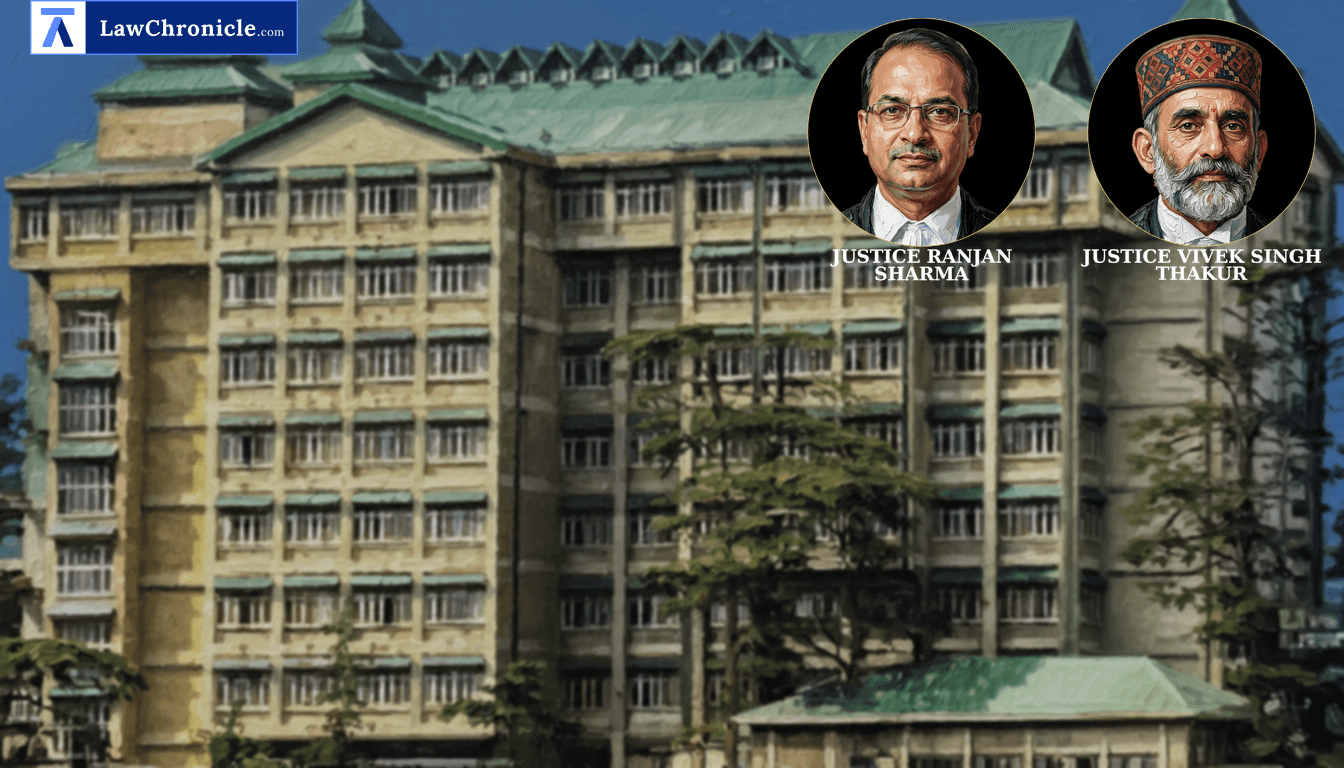
In a stern rebuke to spouses attempting to evade financial responsibilities, the Himachal Pradesh High Court has ruled that a husband cannot shirk his duty to maintain his wife and child by filing suspicious Income Tax Returns with reduced income after the initiation of legal proceedings.
A Division Bench of Justice Vivek Singh Thakur and Justice Ranjan Sharma heard the revision petition challenging a maintenance order issued by the Family Court. The Court scrutinized whether the husband's claims of limited financial capacity were genuine or a calculated attempt to avoid his legal obligations under the Code of Criminal Procedure.
High Court Upholds Maintenance Despite Allegations of Hidden Income
The Court dismissed the petitioner's challenge against the order passed by the Principal Judge (Family Court) Shimla, which had awarded maintenance to the wife and child. The petitioner argued that the Family Court failed to appreciate his Income Tax Returns and the fact that the wife was allegedly running a garment shop. However, the High Court observed that the petitioner failed to prove sufficient income to sustain his claims of inability to pay.
The Court has the following directions:
"...monthly maintenance @ ₹2,000/- per month each to the respondents, payable by the petitioner/husband from the date of filing of the petition."
Judicial Scrutiny of Income Tax Returns and Lifestyle
The Court, in its reasoning, observed: "In return for the assessment year 2020-21, total income of petitioner was claimed as ₹1,31,560/-, i.e. about ₹11,000/- per month and on subsequent assessment years income has been shown as ₹22,560/- and ₹28,000/- only. Petitioner has not placed on record Income Tax Returns, pertaining to the previous assessment years. He has placed on record Income Tax Returns filed by him after filing of application by respondents under Section 125 Code of Criminal Procedure on 1.9.2018. Therefore, it can easily be construed that these Income Tax Returns were filed by showing lessor income of the petitioner, in order to avoid liability of maintenance."
The Court further emphasized that the husband's admission of owning a ten-room concrete house contradicted his claims of penury. The bench noted that even if the wife had some minor earnings from stitching clothes, it did not absolve the husband of his duty, especially when the maintenance amount awarded was "meager."
Key Takeaways:
Post-Litigation ITRs Viewed with Suspicion
Tax returns filed immediately after a maintenance claim is instituted, showing a sudden drop in income, will be viewed by courts as an attempt to evade liability.
Ownership of Assets as Proxy for Income
Physical assets like large residential properties serve as circumstantial evidence of financial capacity, overriding claims of low monthly earnings.
Overlap of Maintenance Statutes
Awards under the Protection of Women from Domestic Violence Act, 2005 do not bar subsequent claims under Section 125 of Code of Criminal Procedure; they are supplementary to ensure basic needs are met.
Justification for Separate Living
Prior uncontested findings of domestic violence or dismissed divorce petitions under Hindu Marriage Act, 1955 provide sufficient legal justification for a wife to live separately and claim maintenance.
Ratio Decidendi:
A husband cannot shirk the legal obligation to maintain his wife and child by suppressing material facts or presenting self-serving financial documents created post-litigation. The Court maintains that when a spouse possesses substantial immovable property and has a history of domestic violence, they are legally bound to provide maintenance that meets basic living standards, regardless of manufactured claims of low income.
Background:
The marriage took place in 2006, but the parties had been living separately since 2007. The wife had previously secured a protection order and maintenance of ₹3,000/- under the Protection of Women from Domestic Violence Act, 2005 in 2013, which the husband never challenged. Additionally, the husband's petition for divorce under Section 13 of the Hindu Marriage Act, 1955 was dismissed and remained unchallenged. In 2018, the wife filed for further maintenance under Section 125 of Code of Criminal Procedure. The Family Court awarded an additional ₹2,000/- each for the wife and the son. The husband challenged this in revision, citing his ITRs and the wife's alleged tailoring income. The High Court, following the principles in Rajnish Vs. Neha and another, found no illegality in the Family Court's order and dismissed the revision petition.
Case Details:
Case No.: Cr. Revision (FC) No. 37 of 2024
NeutralCitation: 2026:HHC:28386
Case Title: Dinesh Kumar v. Madhu Devi and Another
Appearances:
For the Petitioner(s): Mr. Dheeraj Kumar Verma, Advocate
For the Respondent(s): Mr. Amit Sharma, Advocate
Source: 2026 CaseBase(HP) 38
Similar Articles

 Breaking News


