


DMRC Not Liable to Reimburse DVAT on Interstate or Imported Goods: Delhi High Court
 Copy Link
 Share
 Save
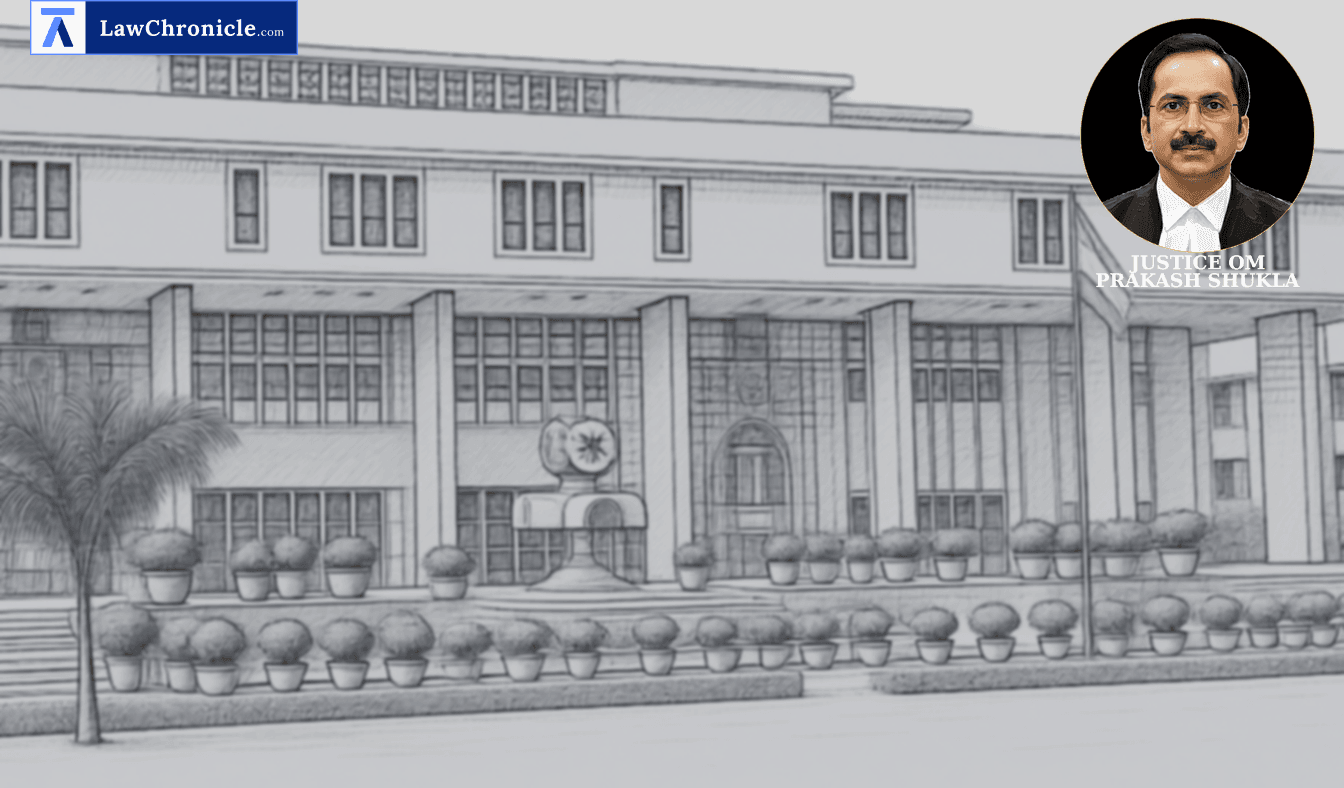
The Delhi High Court has fortified the 'inextricable link' test for tax exemptions, ruling that contractors cannot claim reimbursement for Delhi Value Added Tax on goods specifically imported or procured through interstate trade for metro projects. The decision effectively shields statutory bodies from bearing the burden of taxes erroneously paid by contractors on transactions that fall under the constitutional umbrella of Central Sales Tax exemptions.
Justice Om Prakash Shukla presided over the matter, evaluating whether a contractor could demand reimbursement for tax payments made to the Delhi government for specialized equipment that had crossed state or national borders. The Court scrutinized the interplay between contractual reimbursement clauses and the statutory exemptions provided under the Delhi Value Added Tax Act, 2004 and the Central Sales Tax Act, 1956.
Key Takeaways
Primacy of Statutory Exemptions
Contractual clauses for tax reimbursement are contingent upon the legal 'applicability' of the tax, and voluntary payment of exempt taxes does not create a liability for the employer.
The 'Inextricable Link' Doctrine
If goods are custom-made, pre-inspected, and movement is occasioned by the project's specific requirements, the transaction is deemed an interstate sale or import, regardless of the involvement of intermediaries.
Arbitrability of Tax Reimbursement
Disputes regarding inter se tax liability and contractual reimbursement obligations are arbitrable, as they do not encroach upon the sovereign domain of tax assessment.
Mistake Rectification is Not Admission
An employer’s initial reimbursement of a tax invoice followed by a recovery does not constitute an admission of tax liability; parties are permitted to rectify bona fide errors.
Court Scrutinizes Tax Applicability in Works Contracts
The Court examined the nature of the transaction under Arbitration and Conciliation Act of 1996, noting that while Section 2(zo) defines works contracts, the levy is restricted by Section 7, which exempts sales in the course of import or interstate trade. The Petitioner argued that by integrating HV and LV panels into 'Sectioning Posts,' a new commercial product was created in Delhi, attracting local tax. However, the Court, relying on ABB Ltd. v. Commissioner Delhi Value Added Tax and CVAT v. ABB Ltd., found that the specific quality and description prescribed by the contract created a 'conceivable link' between the movement of goods and the buyer's contract.
The Court, in its reasoning, observed: "In the present case, there exists a link because the order was placed by the Petitioner and the invoice bore the name of DMRC as the consignee. The learned Division Bench in ABB Ltd. v. Commissioner Delhi Value Added Tax clarified that to ascertain if a sale was in the course of import, a court must examine whether the movement of goods was 'integrally connected with the contract for their supply.' In the present case, in light of the foregoing discussion, this Court is of the considered view that such integral connection does exist."
Directives Issued by the Court
The Court has the following directions:
"73. The petition is, accordingly, dismissed in the above terms.
74. Pending applications, if any, stand disposed of.
75. No order as to costs."
Ratio
A transaction constitutes a sale in the course of import or interstate trade under Sections 3 and 5 of the Central Sales Tax Act, 1956 if there is a conceivable link between the movement of goods and the buyer's contract. Where technical specifications, approved suppliers, and pre-inspections are mandated by the employer, the movement of goods is considered incidental to the contract, thereby exempting it from local Value Added Tax under Delhi Value Added Tax Act, 2004. Consequently, an employer is not liable to reimburse tax amounts that were not legally exigible.
Background
The dispute originated from a 2008 contract for the design and installation of a 25kV Rigid Overhead Contact System for the Delhi Metro Phase-II project. The Petitioner, Larsen & Toubro Ltd. v. State of Karnataka, procured high-voltage and low-voltage panels from suppliers in Allahabad and Kolkata (M/s Areva), who in turn imported components from Germany. Although the Petitioner paid DVAT and initially received reimbursement for one invoice, the Respondent (DMRC) later recovered the amount, asserting that the transactions were interstate/import sales and thus exempt from local tax.
An Arbitral Tribunal delivered a 'Nil' award on 31.03.2014, siding with DMRC. The Petitioner challenged this under Section 34 of the Arbitration and Conciliation Act of 1996, alleging patent illegality and claiming the Tribunal lacked jurisdiction over sovereign tax functions. The High Court rejected these arguments, citing U.P. Public Works Deptt. v. Vriddhi Infratech India (P) Ltd. to distinguish between statutory tax assessment and contractual tax liability. The Court ultimately upheld the award, finding no reason to interfere with the Tribunal's plausible interpretation that followed the precedent set in ABB Ltd. v. Commissioner Delhi Value Added Tax and English Electric Company of India Ltd. v. Deputy Commercial Tax Officer.
Case Details:
Case No.: O.M.P. (COMM) 257/2016
CNR No. DLHC011445042016
Case Title: Larsen & Toubro Limited V. Delhi Metro Rail Corporation Ltd
Appearances:
For the Petitioner(s): Mr. Ramesh Singh, Senior Advocate, Mr. Arpan Behl, Ms. Rohini Roy, Ms. Hage Nanya, Advs along with Mr. Yogesh Gupta, AR.
For the Respondent(s): Mr. Tarun Johri, Mr. Ankur Gupta, Mr. Vishwajeet Tyagi, Advs.
Source: 2026 CaseBase(DEL) 7532
Similar Articles


 Breaking News


