


Doctor Choosing One Treatment Over Another Not Medical Negligence: Bombay HC
 Copy Link
 Share
 Save
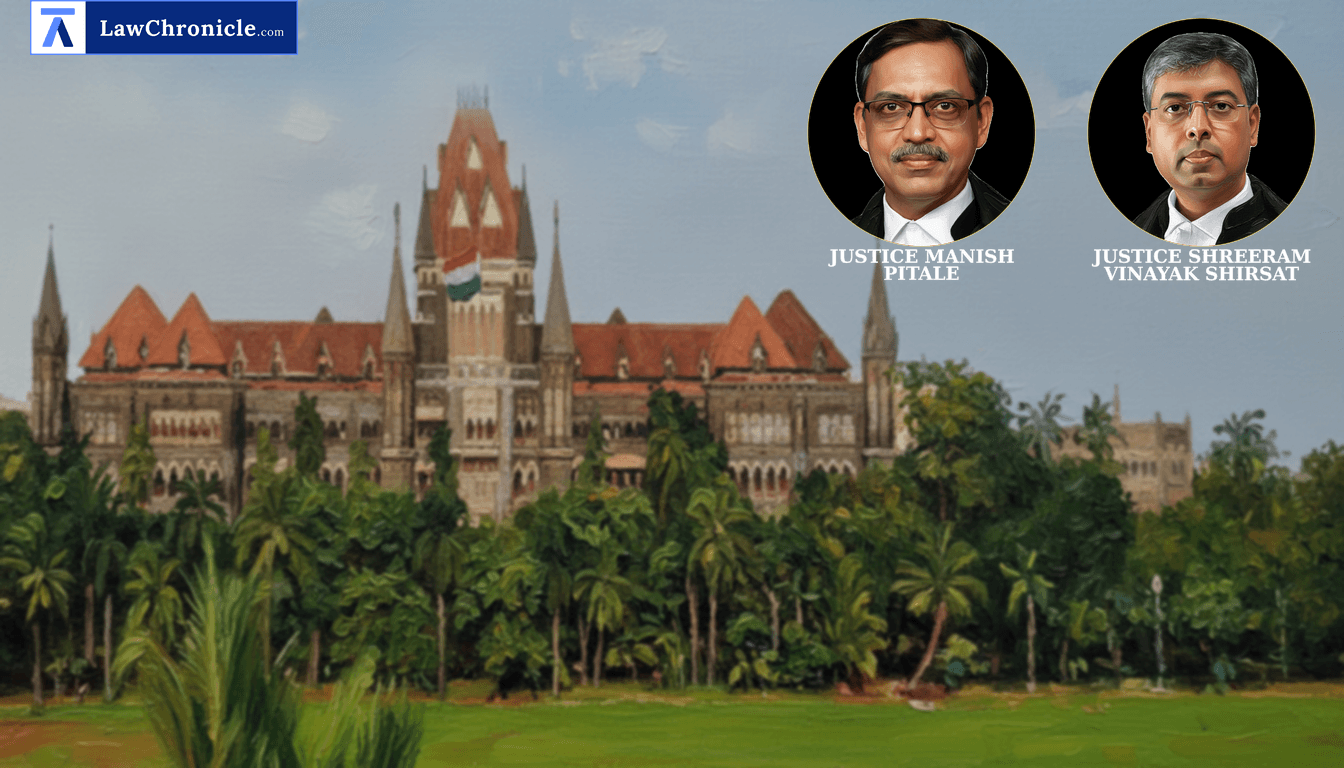
The Bombay High Court has shielded medical professionals from punitive actions by quashing a Medical Council of India order that penalised surgeons for their choice of surgical techniques, reinforcing the principle that professional discretion is not professional misconduct. The Bench ruled that choosing one recognized line of treatment over another does not constitute negligence, even if complications arise or if other experts prefer a different approach.
A Division Bench comprising Justice Manish Pitale and Justice Shreeram V. Shirsat adjudicated two writ petitions filed by a general surgeon and a urologist challenging an order of the Medical Council of India (MCI). The petitioners were aggrieved by a 2013 directive that reversed their exoneration by the Maharashtra Medical Council and ordered the removal of their names from the medical register for varying periods following a patient's complaint of recurring urethral strictures.
Key Takeaways
Professional Discretion Protected
Medical practitioners cannot be held liable for negligence simply because they chose one reasonable course of treatment over another, provided the chosen method is scientifically recognized.
Specialist Presence in Ethics Committees
When analyzing complex medical procedures, the inclusion of a specialist from the relevant field in the Ethics Committee is vital for a fair and informed adjudication process.
Recurrence is Not Negligence
In conditions with high known recurrence rates, such as urethral strictures, the reappearance of symptoms does not automatically imply surgical failure or professional misconduct.
Compliance with Natural Justice
Disciplinary bodies must provide copies of appeal memorandums to respondents and record detailed reasons when reversing findings of subordinate councils.
Criteria for Medical Negligence and Judicial Review
The Bombay High Court observed that the Medical Council of India Ethics Committee acted in a "cryptic and perfunctory" manner, failing to provide specific reasons for reversing the State Medical Council's findings. The Bench emphasized that for a professional to be held liable, they must either lack the requisite skill or fail to exercise it with reasonable competence. Citing the 'Bolam Test' as applied in Bolam Vs. Friern Hospital Management Committee, the Court noted that a doctor is not negligent if they act in accordance with a practice accepted as proper by a responsible body of medical men.
The Bombay High Court pondered upon Doctor's choice of treatment for a patient to express that "A medical practitioner is not liable to be held negligent simply because things went wrong from mischance or misadventure or through an error of judgment in choosing one reasonable course of treatment in preference to another... so long as it can be found that the procedure which was in fact adopted was one which was acceptable to medical science as on that date, the medical practitioner cannot be held negligent merely because he chose to follow one procedure and not another and the result was a failure."
Ratio
Adverse findings of medical negligence cannot be rendered against a doctor solely on the basis of choosing one recognized course of action in preference to another. The standard of care required is that of an ordinary competent person exercising ordinary skill in that profession, and an error of judgment or choice between recognized surgical procedures does not, by itself, constitute professional misconduct.
Background
The dispute began when a complainant, suffering from chronic urethral narrowing since 1997, filed a complaint alleging negligence against Dr. Munir Sufi Mhaskar and Dr. Jaydeep Date. Dr. Mhaskar, a general surgeon, had performed a cystoscopy and a bladder neck incision. The complainant alleged this was unauthorized and outside his specialty. Dr. Date later performed surgeries using a scrotal skin flap and then a mucosal graft, which the complainant argued was a reversal of the proper order of procedures.
While the Maharashtra Medical Council exonerated the doctors, the Medical Council of India, on appeal, found them guilty of misconduct. The Medical Council of India Ethics Committee held that Dr. Mhaskar lacked the necessary skill and that Dr. Date should have used mucosal graft as his first choice.
The petitioners argued that the Medical Council of India proceedings violated principles of natural justice as they were not served with the appeal copies and the Ethics Committee lacked a urology specialist. They relied on Jacob Mathew vs. State of Punjab and another ( "(2005) 6 SCC 1": 2005 CaseBase(SC) 417), Bolam Vs. Friern Hospital Management Committee, Martin F. D’souza vs. Mohd. Ishfaq ( "(2009) 3 SCC 1": 2009 CaseBase(SC) 218), and Kusum Sharma and others vs. Batra Hospital and Medical Research Centre and others ( "(2010) 3 SCC 480": 2010 CaseBase(SC) 560) to argue that their actions were within the bounds of professional standards. The Bombay High Court, while acknowledging the repeal of the Indian Medical Council Act, 1956 by the National Medical Commission Act, 2019, decided the matter on merits due to the long pendency, ultimately finding the Medical Council of India order unsustainable in light of established precedents.
Case Details:
Case No.: WRIT PETITION NO. 8830 OF 2013 with WRIT PETITION NO. 87 OF 2014
Case Title: Dr. Jaydeep Arun Date vs. Medical Council of India and others
Appearances:
For the Petitioner(s): Mr. Girish Godbole, Senior Advocate; Mr. Mihir Desai, Senior Advocate
For the Respondent(s): Mr. Ganesh Gole; Ms. Amruta Nerlekar; Mr. Mayuresh Modgi
Source: 2026 CaseBase(BOM) 6482
Similar Articles

 Breaking News


