


Election Petition Cannot Be Rejected At Threshold Over Non-Seeking Of Recount During Counting: CGHC
 Copy Link
 Share
 Save
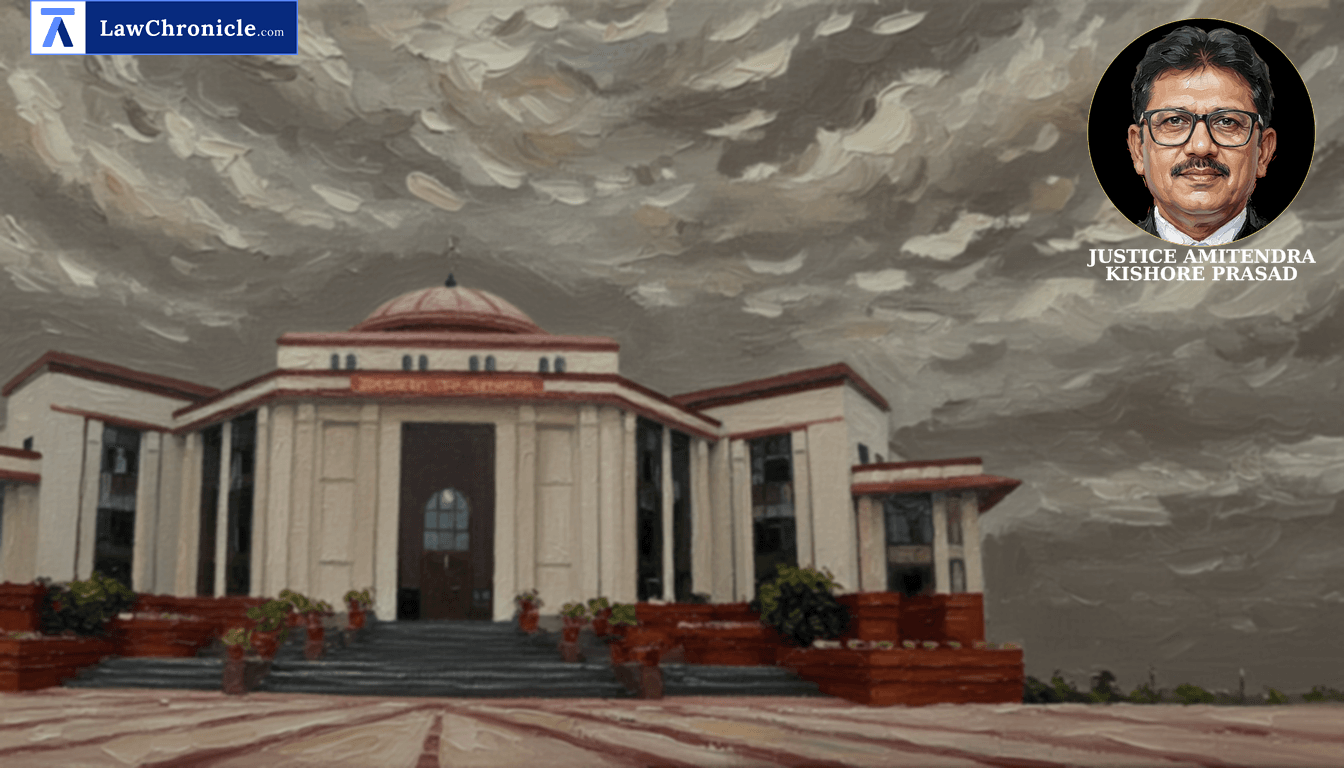
he Chhattisgarh High Court has affirmed that an election petition must be read as a whole to determine the existence of a cause of action, rather than being dissected for procedural technicalities at the preliminary stage. It emphasized that Allegations of discrepancies in vote tabulation and manipulation of election records constitute triable issues that cannot be summarily dismissed under Order VII Rule 11 of the Code of Civil Procedure, 1908. T
A Single Bench of Justice Amitendra Kishore Prasad heard a challenge against an order passed by the Director of Panchayat, which had refused to reject an election petition at the threshold. The petitioner, a returned candidate for the post of District Development Councilor, argued that the election petition was not maintainable as the respondent had failed to apply for a recount at the polling booth during the counting process as per the Chhattisgarh Panchayat Nirvachan Niyam, 1995.
Key Takeaways
Holistic Reading of Pleadings
Courts must examine the entire election petition and accompanying documents to identify a cause of action rather than isolating specific sentences to justify rejection.
Triable Issues Over Procedural Bars
Allegations regarding the alteration of vote figures in Proforma documents and computer display discrepancies are factual matters that require a full trial and cannot be dismissed on preliminary grounds.
Order VII Rule 11 Scope
At the preliminary stage, the court's inquiry is limited to whether the facts as pleaded disclose a legally cognizable basis for relief, not whether those facts have been proven.
Impact of Subsequent Discovery
If discrepancies in election records are discovered during the tabulation process rather than the counting process, the failure to seek an immediate recount at the booth may not be a fatal bar to a subsequent petition.
Court Rationale on Plaint Rejection
The Chhattisgarh High Court emphasized that while considering an application under Order VII Rule 11 of the Code of Civil Procedure, 1908, the defense raised by the opposite party or disputed questions requiring evidence cannot be considered. The bench relied on the principles established in Saleem Bhai and Others v. State of Maharashtra and Others ( "(2003) 1 SCC 557": 2002 CaseBase(SC) 394) and Karam Singh v. Amarjit Singh and Others ( "2025 SCC OnLine SC 2240": 2025 CaseBase(SC) 1137) to reiterate that only the averments in the plaint are material at this stage. The Court, in its reasoning, observed that "The question at this stage is not whether respondent No. 7 has conclusively established the allegations concerning discrepancies in the counting and tabulation of votes or whether he is ultimately entitled to an order of recounting. The limited inquiry is whether the averments contained in the election petition, taken as a whole and assumed to be true for the purpose of deciding the application under Order VII Rule 11 CPC, disclose a cause of action or whether the election petition is ex facie barred by law."
Accordingly, the Chhattisgarh High Court directed the Electrion Tribunal to consider all such questions independently as per the applicable law, without being influenced by any observation made.
Ratio
An election petition disclosing specific allegations of manipulation in election records and discrepancies in tabulation figures presents a triable issue. Such a petition cannot be rejected at the threshold under Order VII Rule 11 of the Code of Civil Procedure, 1908 solely on the ground that the petitioner did not seek a recount at the time of counting under the Chhattisgarh Panchayat Nirvachan Niyam, 1995, as the discovery of such discrepancies during the tabulation phase constitutes a distinct cause of action that must be adjudicated on merits through evidence.
Background
The dispute arose from the election for the post of District Development Councilor (DDC) in Mahasamund, held in February 2025. The petitioner was declared elected by a margin of 31 votes. The respondent (the losing candidate) alleged that during the tabulation process, computer screens showed him leading, but the final result favored the petitioner. Upon inspection, he alleged that figures in Proforma-19 at Booth No. 80 were altered from 161 to 261, and similar manipulations occurred at other booths.
The respondent initially approached the Collector under the Chhattisgarh Panchayat Raj Adhiniyam, 1993 for correction of clerical errors, but the Collector declined for want of jurisdiction to open ballot papers. Subsequently, an election petition was filed. The petitioner sought rejection of this petition, citing Dharmin Bai Kashyap v. Babli Sahu and Others ( "(2023) 10 SCC 461": 2023 CaseBase(SC) 1028) and Kanimozhi Karunanidhi v. A. Santhana Kumar and Others ( "2023 SCC OnLine SC 573": 2023 CaseBase(SC) 385) to argue that the failure to demand a recount at the booth level per Rule 80 of the Chhattisgarh Panchayat Nirvachan Niyam, 1995 rendered the petition non-maintainable. However, the Chhattisgarh High Court found that the specific allegations of record tampering necessitated a trial, affirming the Tribunal's decision to proceed with the case.
Case Details:
Case No.: WPC No. 2578 of 2026
Neutral Citation: 2026:CGHC:46384
Case Title: Jageshwar Juganu Chandrakar v. State of Chhattisgarh and Others
Appearances:
For the Petitioner(s): Mr. Vivek Bhakta, Advocate
For the Respondent(s): Mr. Akhilesh Kumar, G.A. for State; Mr. Raghvendra Pradhan, Advocate for Respondent No.7
Source: 2026 CaseBase(CTH) 21287
Similar Articles

 Breaking News


