


Election Tribunal Lacks Jurisdiction to Scrutinize Caste Certificate Genuineness: Allahabad HC
 Copy Link
 Share
 Save
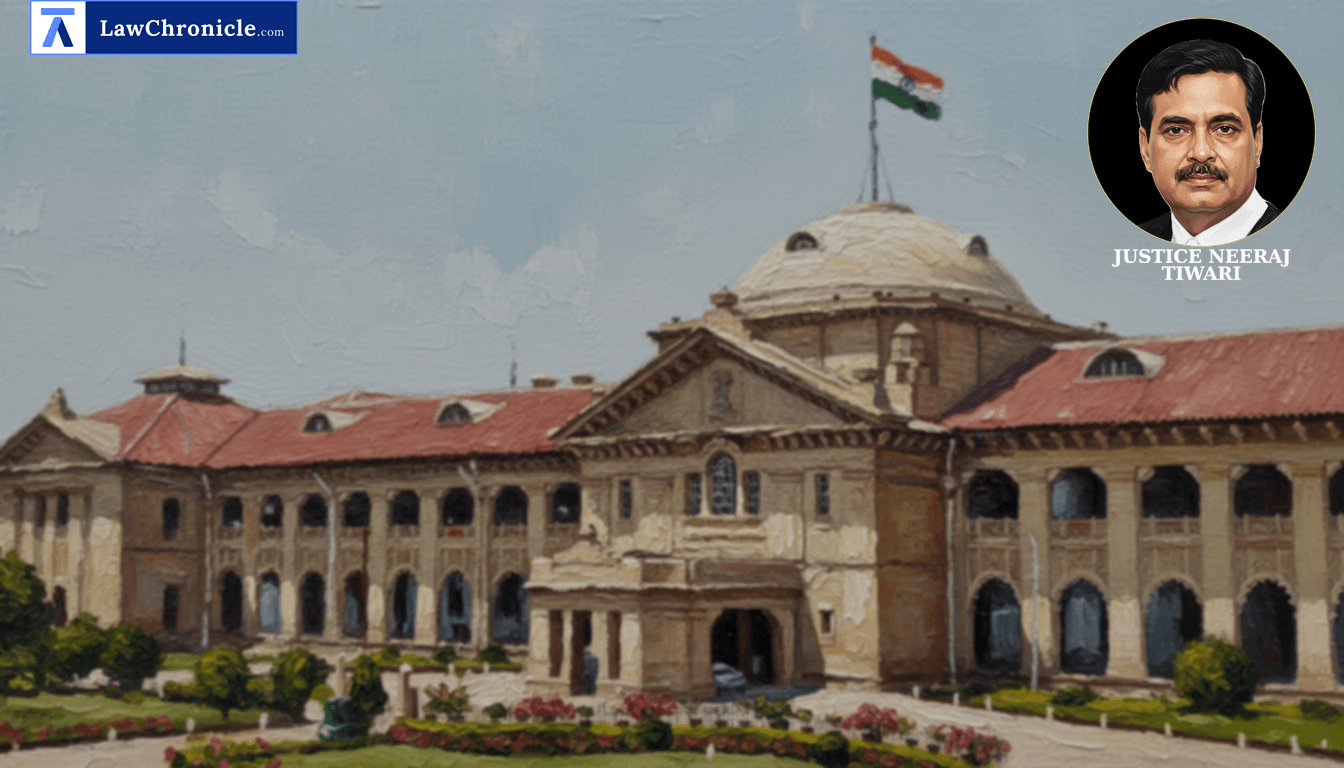
The Allahabad High Court has slammed the brakes on the interference of Election Tribunals in matters of social status verification, ruling that the validity of a caste certificate issued by a competent authority can only be challenged through statutory committees and not within an election petition. This judgment reinforces the exclusive domain of expert scrutiny committees, preventing election disputes from becoming a forum for complex anthropological inquiries into a candidate's heritage.
A single-judge bench of Justice Neeraj Tiwari presided over the matter, determining the critical jurisdictional question of whether a Tribunal possesses the power to declare a caste certificate as forged or fake during election proceedings. The court was hearing an election petition challenging the victory of a returned candidate from the 335 Ram Kola Assembly Constituency, which was reserved for Scheduled Caste candidates.
Tribunal Restricted From Verifying Caste Validity
The High Court clarified that a self-contained mechanism exists for the issuance and verification of caste certificates. It noted that the State Government has established a hierarchical structure comprising District, Divisional, and State Level Committees to handle such grievances. The Court held that unless a certificate is annulled by these specific authorities, it must be treated as valid by the Returning Officer and the Election Tribunal.
The Court, in its reasoning, observed: "A duly issued Caste/Community Certificate would be amenable to challenge only under the provisions of the statute concerned, and not in an Election Petition... the only committee so constituted by the State Government shall have authority to issue or cancel the caste certificate and it is beyond the competence of Court except under Article 226 of Constitution of India, 1950 after final decisional taken by the State Level Scrutiny Committee."
The Court has the following directions:
"Therefore, in the light of such facts as well as law discussed herein-above, this Court is of the firm view that election petition lacks merit and is hereby dismissed."
Background:
The dispute arose following the U.P. Legislative Assembly elections in 2022, conducted under the Representation of Peoples Act, 1951. The petitioner, Radha Charan, challenged the election of respondent no. 2, Vinay Prakash Gond, alleging that the latter obtained a Scheduled Caste certificate fraudulently despite belonging to an Other Backward Class (OBC). While the petitioner had raised objections before the Returning Officer and a complaint was pending before the District Level Committee, the election petition sought to have the High Court declare the certificate null and void.
The petitioner placed heavy reliance on Ramlal Kol vs. Moti Kashyap @ Motilal and Anandra Vithoba Adsul; Raju Shamrao Mankar; Navneet Kaur Harbhajansingh Kundles @ Navneet Kaur Ravi Rana vs. State of Maharashtra; District Caste Scrutiny Committee to argue that the Tribunal has ample power to examine the genuineness of documents submitted with nomination papers under Section 100 of the Representation of People Act, 1950. However, the respondent countered this by citing Dayaram vs. Sudhir Batham & Ors and Navneet Kaur Harbhajansingh Kundles @ Navneet Kaur Ravi Rana vs. State of Maharastra and others, arguing that the Kumari Madhuri Patil vs. Addl. Commissioner guidelines mandate that only Scrutiny Committees can adjudicate on caste status.
The Court observed that the decision in Anandra Vithoba Adsul; Raju Shamrao Mankar; Navneet Kaur Harbhajansingh Kundles @ Navneet Kaur Ravi Rana vs. State of Maharashtra; District Caste Scrutiny Committee had been overruled by the Supreme Court in Navneet Kaur Harbhajansingh Kundles @ Navneet Kaur Ravi Rana vs. State of Maharastra and others. Furthermore, it applied the principles from Vishwanath S/O. Mahadeo Alte and others vs. Dr. Kalge Shivaji Bandappa and other ( "2024:BHC-AUG:21373": 2024 CaseBase(BOM) 3569) and Hizwana Bano vs. State of U.P. Thru’ Collector and others, which emphasize that Scrutiny Committees are expert forums and their findings of fact cannot be lightly interfered with by High Courts in election petitions. Following the recent Supreme Court clarification in A. Raja vs. D. Kumar ( "2025 INSC 62 G": 2025 CaseBase(SC) 895), the court concluded that the Election Tribunal has no authority to deal with such matters.
Key Takeaways:
Statutory Committees Hold Exclusive Power
Only the specialized District, Divisional, or State Level Committees have the legal mandate to validate or invalidate caste certificates, not Election Tribunals.
Overruled Precedents Not Binding
Lower court decisions allowing Tribunals to investigate caste fraud are no longer valid if they have been overruled by the Supreme Court, as seen with the Anandra Vithoba Adsul; Raju Shamrao Mankar; Navneet Kaur Harbhajansingh Kundles @ Navneet Kaur Ravi Rana vs. State of Maharashtra; District Caste Scrutiny Committee judgment.
Election Petitions Are Not For Genuineness Inquiry
If a caste certificate is duly issued and not yet cancelled by the competent committee, an election petition cannot be used as a shortcut to bypass the administrative verification process.
Ratio Decidendi:
A Caste or Community Certificate issued by a competent authority is amenable to challenge only under the specific statutory provisions or guidelines governing the field, and its validity or genuineness cannot be scrutinized or declared void within the scope of an Election Petition.
Case Details:
Case No.: ELECTION PETITION No. - 6 of 2022
Case Title: Radha Charan v. State Of U.P. And 2 Others
Appearances:
For the Petitioner(s): Sri Ram Kumar Gautam, Advocate
For the Respondent(s): Sri P.K. Kashyap, Advocate; Learned Standing Counsel for Respondent No. 1
Source: 2026 CaseBase(ALL) 230
Similar Articles
 Breaking News


