


Caste Scrutiny Committee Has No Power to Review Its Own Final Orders: Bombay HC
 Copy Link
 Share
 Save
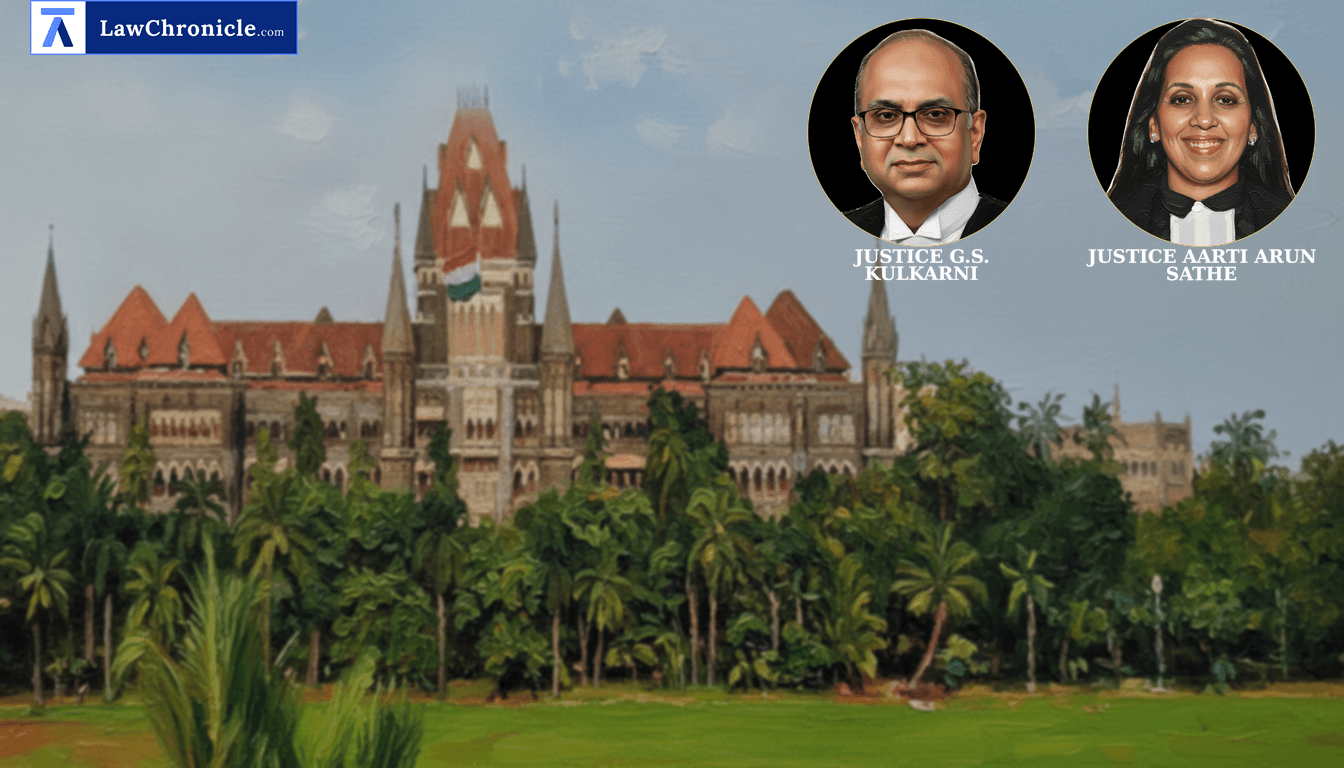
The Bombay High Court has reaffirmed that a Caste Scrutiny Committee, as a statutory body, has no inherent or express power to review or reopen its final decisions after issuing a caste validity certificate.
A division bench comprising Justice G. S. Kulkarni and Justice Aarti Sathe adjudicated upon a cluster of petitions challenging orders passed by the Caste Scrutiny Committee, Pune. The bench examined whether the Committee, after granting validity to the caste certificates of the petitioners, could subsequently exercise powers of review to set aside those very certificates based on complaints by private respondents. The Court noted that the Committee is a creature of statute and must function strictly within the boundaries of its parent legislation.
Legal Finality and Statutory Constraints
The Court emphasized that the Maharashtra Scheduled Castes, Scheduled Tribes, De-notified Tribes (Vimukta Jatis), Nomadic Tribes, Other Backward Classes and Special Backward Category (Regulation of Issuance and Verification of) Caste Certificate Act, 2000 does not confer any specific power of review on the Scrutiny Committee. Relying on settled precedents, the bench observed that once the Committee performs its quasi-judicial function of verifying a certificate and issuing a validity order, it becomes 'functus officio'. Any grievance against such an order can only be addressed by the High Court under its writ jurisdiction.
The Court has the following directions:
"Accordingly, the impugned orders passed by Caste Scrutiny Committee, subject matter of assail in the present proceedings, are quashed and set aside. Each of these Writ Petitions is made absolute in terms of prayer clause (a)."
The Myth of Inherent Review Power
Addressing the State's contention regarding the Committee's 'inherent jurisdiction' to review orders in cases of alleged fraud, the bench categorically rejected this proposition. The Court, in its reasoning, observed: "If an inherent power of review is to be read in the provisions of the 2000 Act, it would lead to a monumental uncertainty and absurdity in the functioning of the Caste Scrutiny Committee, as it can be at the ipse dixit of the Caste Scrutiny Committee to reopen concluded cases. This would lead to patent arbitrariness."
The bench further clarified that while Section 7 of the Maharashtra Scheduled Castes, Scheduled Tribes, De-notified Tribes (Vimukta Jatis), Nomadic Tribes, Other Backward Classes and Special Backward Category (Regulation of Issuance and Verification of) Caste Certificate Act, 2000 allows for the cancellation of a 'caste certificate', it does not extend to the 'validity certificate' which is an independent quasi-judicial determination. The Court also noted that while the Committee has certain powers of a Civil Court under the Code of Civil Procedure, 1908 for conducting inquiries, the legislature consciously omitted the power of review under Section 114 or Order 47 of the Code.
Precedents and Consequential Impacts
The bench relied heavily on its previous rulings in Rakesh Bhimashankar Umbarje & Ors. vs. State of Maharashtra through its Secretary, Tribal Development Department & Another and Bharat Nagu Garud vs. State of Maharashtra & Others. These cases established that allowing the Committee a free hand to reopen cases after long intervals sometimes 15 to 20 years would result in devastating consequences and legal instability. The High Court maintained that allegations of fraud or illegality must be scrutinized by the High Court under Article 226 of the Constitution of India, 1950 rather than by the Committee itself.
Background:
The dispute arose when the petitioners were granted caste certificates which were subsequently validated by the Caste Scrutiny Committee. Following complaints from private respondents, the Committee passed impugned orders in 2007 (dated April 5 and May 22) purportedly reviewing and setting aside the earlier validity. The petitioners challenged these orders on the grounds of lack of jurisdiction. The High Court, admitting the petitions in 2007, finally concluded that the Committee overreached its statutory authority. The petitions were allowed, and the impugned orders were declared a nullity.
Case Details:
Case No.: WRIT PETITION NO. 4178 OF 2007 (with 4180/2007, 4181/2007, and 2662/2007)
Case Title: Shri Murlidhar Kisan Mohol vs. The State of Maharashtra & Ors.
Appearances:
For the Petitioner(s): Mr. P. B. Shah with Mr. Avinash Avhad, Mr. Kayval Shah and Mr. Sandeep Patade
For the Respondent(s): Ms. P. J. Gavhane, AGP; Mr. A. A. Alaspurkar, AGP; Mr. P. P. Kakade, Addl. G.P. with Ms. M. P. Thakur, AGP; Ms. Savita Prabhune, AGP
Source: 2026 CaseBase(BOM) 243
Similar Articles

 Breaking News


