


Calcutta HC: SDOs Cannot Cancel Caste Certificates; Power Rests With State Scrutiny Committee
 Copy Link
 Share
 Save
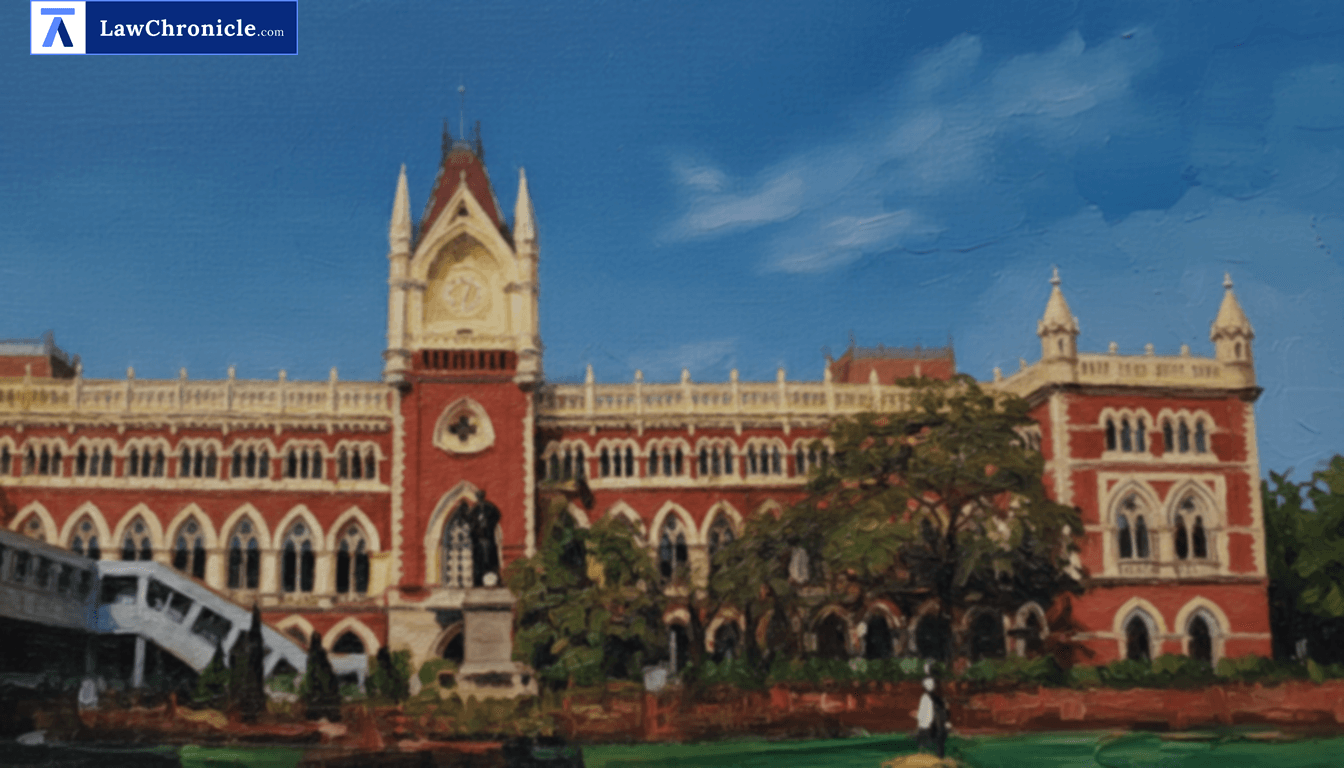
Sub-Divisional Officers cannot unilaterally strip citizens of their tribal status, as the Calcutta High Court has quashed a series of cancellation orders while affirming that only a high-powered State Scrutiny Committee possesses the expert jurisdiction to adjudicate the validity of caste identities.
A Single-Judge Bench of Justice Krishna Rao presided over the matter, addressing the critical question of whether an issuing authority can independently revoke Scheduled Tribe (ST) certificates without referring the matter to the specialized expert body mandated by the Supreme Court.
Key Takeaways
Curbing Executive Overreach
Administrative officers cannot bypass the mandatory scrutiny process established to protect genuine tribal candidates from arbitrary revocation of their constitutional status.Primacy of the Scrutiny Committee
Only the high-powered State Scrutiny Committee, equipped with anthropological expertise, is competent to decide complex questions regarding tribal lineage and social status.Procedural Fairness in Caste Verification
Cancellation proceedings initiated without serving complaints or inquiry reports to the affected parties constitute a fatal violation of the principles of natural justice.Mandatory Expert Mapping
Determining tribal identity requires specialized 'expert identification mapping' which cannot be substituted by preliminary field reports from local development officers.Procedural Lapses and Jurisdictional Errors
The Court observed that while the Sub-Divisional Officer (SDO) initiated proceedings under Section 9(1) of the West Bengal Scheduled Castes and Scheduled Tribes (Identification) Act, 1994, the final decision was rendered without forwarding the inquiry reports to the Scrutiny Committee. The Bench noted that the SDO had initially sought an expert anthropological finding from the Cultural Research Institute but proceeded to cancel the certificates even before receiving such a report. Furthermore, the Court highlighted that the petitioners were never served with the initial complaint or the field verification reports, depriving them of a fair opportunity to contest the findings.
Mandatory Role of the State Scrutiny Committee
The High Court emphasized that the legal framework, evolved through judicial precedents like Kumari Madhuri Patil and Another vs. Addl. Commissioner, Tribal Development and Others ( "(1994) 6 SCC 241": 1994 CaseBase(SC) 333), requires a plenary expert body to oversee the issuance and verification of social status certificates. The Court, in its reasoning, observed: "The State Scrutiny Committee is a high power expert body comprising of the most experienced personnel who have the requisite expertise, experience and machinery at their disposal to make proper enquiry into the social status of an individual whose Caste Certificate has been illegally cancelled by the Certificate Issuing Authority in contravention of the procedure provided under the Act and the Rules framed there under."
The Court has following directions:
"The Sub-Divisional Officer is directed to refer the proceeding initiated by him against the petitioners to the State Scrutiny Committee forthwith and the Committee is directed to take appropriate decision after giving an opportunity of hearing to the petitioners with respect to cancellation/ impounding or revocation of the Scheduled Tribe Certificates issued to the petitioners within a period of three (3) months from the date of receipt of the records of the proceedings from the Sub-Divisional Officer, Jangipur, Murshidabad."
Ratio
Any order for the cancellation, impounding, or revocation of a Scheduled Caste or Scheduled Tribe certificate issued under Section 5 of the West Bengal Scheduled Castes and Scheduled Tribes (Identification) Act, 1994 is amenable to the supervisory and plenary jurisdiction of the State Scrutiny Committee under Section 8A of the Act. An issuing authority cannot finalise a cancellation proceeding solely on the basis of a field inquiry report without referring the matter to the expert committee for verification of social status.
Background
Seven siblings, the children of Ainul Hoque, challenged an order passed by the SDO, Jangipur, dated July 29, 2026, which cancelled their ST certificates classifying them as 'Bedia.' The petitioners had held these certificates since as early as 2005 and 2007, using them for government service and educational credentials. The SDO initiated the probe following a complaint alleging that the petitioners actually belonged to the 'Shershabadia' community, which is classified as OBC, not ST.
The petitioners argued that according to the Scheduled Castes and Scheduled Tribes Orders (Amendment) Act, 1976, 'Bedia' is a recognized tribe in West Bengal. They further contended that under the 1994 Act as amended by the West Bengal Act 4 of 2007, the SDO exceeded his jurisdiction by not referring the case to the Scrutiny Committee. Relying on Darvell Investment and Leasing (I) Pvt. Ltd. & Ors. Vs. State of West Bengal and Others, the Court agreed that the intention of the legislature was to create a high-powered body to prevent the unjust deprivation of constitutional privileges. Consequently, the Court quashed the SDO's orders and remanded the matter for a fresh determination by the State Scrutiny Committee.
Case Details:
Case No.: W.P.A. No. 21394 of 2026
Case Title: Md. Mehedi Hossain & Ors. Vs. The State of West Bengal & Ors.
Appearances:
For the Petitioner(s): Mr. Bikash Ranjan Bhattacharyya, Sr. Adv., Mr. Uday Sankar Chattopadhyay, Mr. Pronay Basak, Ms. Trisha Rakshit, Ms. Rajashree Tah, Ms. Aishwarya Datta, Ms. Shreya Das
For the Respondent(s): Mr. M.S. Tiwari
Source: 2026 CaseBase(CAL) 2562
Similar Articles
 Breaking News


