Employers Cannot Deduct Overpayment From Gratuity Post-Retirement: Calcutta High Court
 Copy Link
 Share
 Save
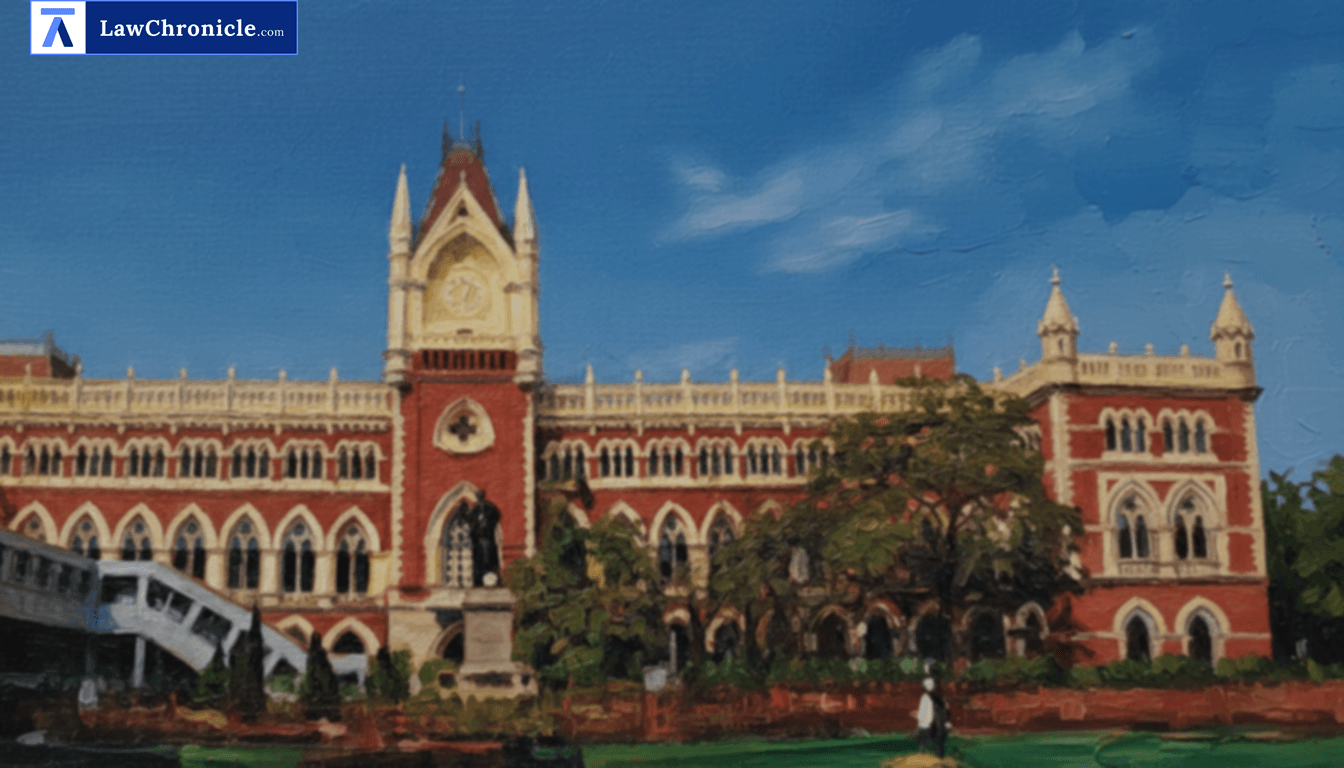
The Calcutta High Court has fortified the financial security of retired employees by ruling that the state cannot unilaterally recover alleged overpayments from terminal benefits once an individual has superannuated. This judgment underscores that such recoveries are legally impermissible and 'iniquitous' when they disrupt the equitable balance between an employer's rights and an employee's post-retirement survival.
Justice Sudip Deb heard the writ petition filed by the legal heir of a deceased employee of the Calcutta State Transport Corporation, challenging a 2017 order that rejected the refund of Rs.1,51,373/- deducted from his gratuity. The Court examined whether the Corporation had the authority to withhold statutory dues on the grounds of excess payments made during the employee's unblemished 42-year service career.
Key Takeaways
Post-Retirement Recovery Barred
Any order of recovery issued after an employee's retirement, or within one year of their retirement, is legally impermissible as it causes undue hardship.
Gratuity Protection Under Statute
Gratuity cannot be withheld or deducted for alleged overpayments unless the employee falls strictly within the misconduct categories defined under Section 4(6) of the Payment of Gratuity Act, 1972.
Judicial Shield Against Arbitrariness
Courts possess the power to overturn recoveries that are deemed harsh or arbitrary, prioritizing the financial dependence of the employee’s family over the employer's right to correct past administrative errors.
Court’s Rationale on Statutory Protection of Gratuity
The Court observed that the right to receive gratuity is a statutory right and not a bounty. Analyzing the Payment of Gratuity Act, 1972, the Bench noted that Section 4(6) only allows for forfeiture in cases of termination due to willful omission, negligence, or acts of violence. Since the original petitioner had an unblemished career and was never terminated for such causes, the Corporation had no legal basis to touch the gratuity amount.
The Court, in its reasoning, observed: "Admittedly, in the instant case, the original petitioner did not come within the four corners of section 4(6) of the Payment of Gratuity Act, 1972 as there was no evidence that the original petitioner had been terminated for any act, willful omission or negligence causing any damage or loss or destruction of property belonging to his employer. Therefore, the bar under Section 4(6) of the said Act does not apply here."
Application of the Rafiq Masih Precedent
The Bench relied heavily on the landmark Supreme Court decision in State of Punjab and Others vs. Rafiq Masih (White Washer) and Others ( "(2015) 4 SCC 334": 2014 CaseBase(SC) 477). The Court found that 'Condition No. 2' of the said judgment which prohibits recovery from retired employees was squarely applicable as the recovery order was made months after the petitioner's superannuation. Furthermore, the Court invoked 'Condition No. 5', noting the petitioner’s family’s dependence and a sibling's terminal illness made the deduction 'iniquitous'.
The Court has the following directions:
"The respondent no. 2/Calcutta State Transport Corporation shall pay the said sum of Rs.1,51,373/- along with interest @ six per cent per annum to the substituted petitioner from 1st October, 2016 (being the date subsequent to the date of retirement) till such payment is actually made to the substituted petitioner. Such exercise shall be completed within four weeks from the date of communication of this order."
Ratio
In the absence of a termination order based on specific grounds mentioned under Section 4(6) of the Payment of Gratuity Act, 1972, an employer cannot adjust or recover alleged salary overpayments from the gratuity of a retired employee. Any recovery initiated after retirement is inherently arbitrary and violates the protective principles established in State of Punjab and Others vs. Rafiq Masih (White Washer) and Others ( "(2015) 4 SCC 334": 2014 CaseBase(SC) 477).
Background
The original petitioner, Sri Sunit Kumar Ghosh, served as a Lower Division Clerk and later as an Administrative & Personnel Officer at the Calcutta State Transport Corporation from 1974 until his retirement in 2016. Upon retirement, the Corporation sanctioned a total gratuity of Rs.9,82,073/-, but withheld Rs.1,51,373/- claiming it was 'overpayment' made between 1997 and 2016.
Despite a prior High Court direction to consider his representation, the Corporation rejected his claim in December 2017. Following the original petitioner's death in 2022, his wife, Smt. Aparna Ghosh, was substituted as the petitioner. The Court followed the principles in State of Punjab and Others vs. Rafiq Masih (White Washer) and Others ( "(2015) 4 SCC 334": 2014 CaseBase(SC) 477) and a Co-ordinate Bench decision in Sri Amit Kumar Ghosh vs. State of West Bengal & Ors. to set aside the impugned order, directing the Corporation to release the withheld amount with interest.
Case Details:
Case No.: WPA No. 4028 of 2018
Case Title: Smt. Aparna Ghosh -Vs- State of West Bengal & Ors.
Appearances:
For the Petitioner(s): Ms. Susmita Dey (Basu), Mr. Kaustav Ghosh, Mr. Antarik Dawn
Source: 2026 CaseBase(CAL) 3819
Similar Articles
 Breaking News