


Withholding Retiral Dues Without Justification Is Highly Reprehensible: Calcutta HC
 Copy Link
 Share
 Save
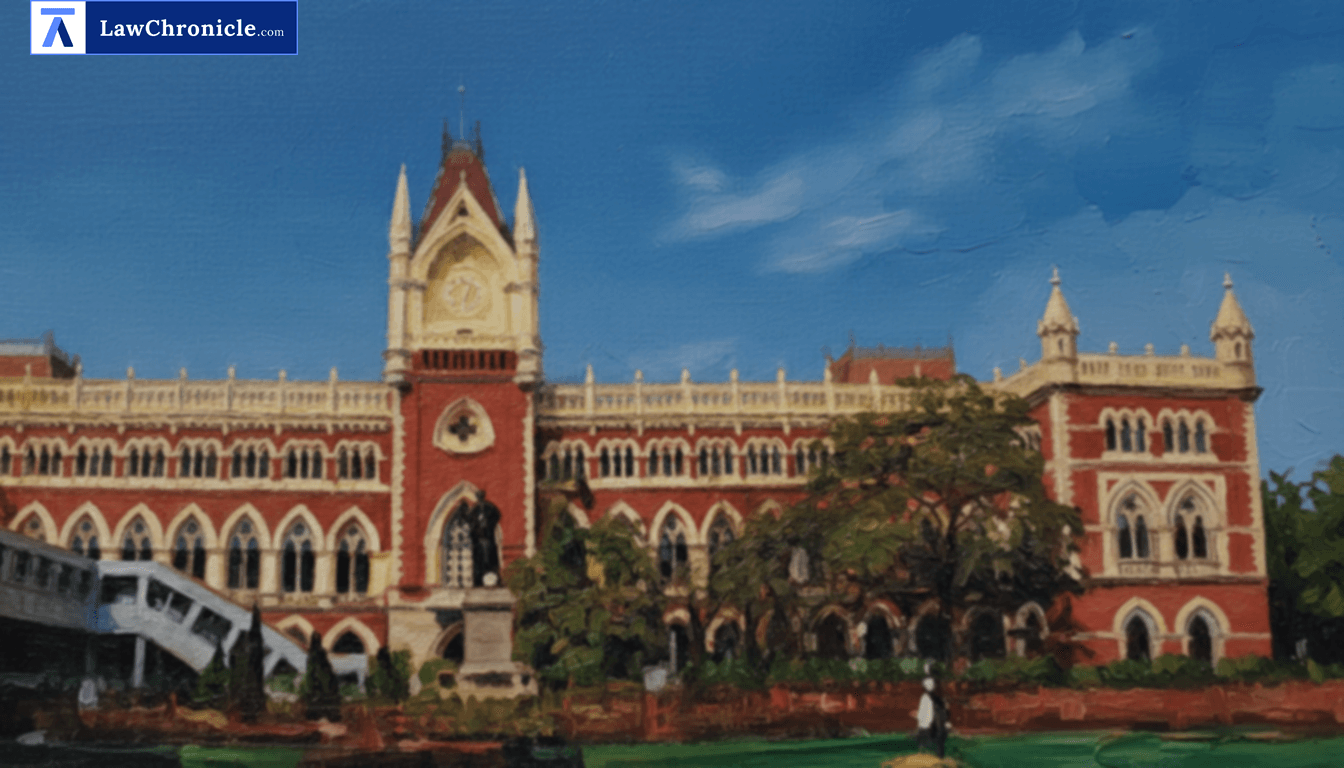
In a stern rebuke of arbitrary employer action, the Calcutta High Court has ruled that withholding retiral dues without legal authorization for over a decade is an act of unlawful enrichment and malice. The Court firmly established that statutory interest on delayed gratuity is a strict legal right rather than a compassionate favor, which cannot be denied under the guise of organizational financial autonomy.
A Division Bench comprising Justice Shampa Sarkar and Justice Arjun Ray Mukherjee allowed an appeal challenging a Single Judge order that had permitted a co-operative bank to withhold an employee's gratuity pending a criminal case. The Bench declared that unless service rules explicitly authorize withholding gratuity during a post-retirement criminal proceeding, retiral benefits cannot be arbitrarily seized by an employer.
Key Takeaways
- Central Act Supremacy
The Payment of Gratuity Act, 1972 overrides state enactments and internal statutory provisions, compelling mandatory interest payments on delayed gratuity.
- Limits of Administrative Autonomy
Financial or administrative autonomy granted to co-operative credit structure entities under the West Bengal Cooperative Societies Act, 2006 cannot be weaponized to strip retired employees of statutory retiral rights.
- No Interest Denial During Delays
Employers cannot evade liability for interest on delayed retiral dues when post-superannuation proceedings lack explicit backing from governing service rules.
Court's Rationale on Delayed Gratuity and Retiral Dues
The High Court severely criticized the employer's conduct, noting that withholding legitimate service benefits at the fag end of a worker's life inflicts severe financial distress.
The Court, in its reasoning, observed: "An employee, who is entitled to receive his service benefits within the time frame prescribed by law [in normal cases immediately after his retirement], if deprived of such benefits by the employer on some arbitrary grounds, and thereafter if the payment is made by the employer pursuant to a direction of a Court at a belated stage, the employer, by making such payment, does not do any favour to the employee. It is neither an act of grace nor a compassion on the part of the employer, but it is an employee’s right under the law. The act of withholding the retiral dues by the employer for more than 13 years without any valid justification, is highly reprehensible."
Addressing the fundamental concept of interest, the Court relied on the legal precedent set in Alok Shanker Pandey v. Union of India ( "(2007) 3 SCC 545": 2007 CaseBase(SC) 1264) to affirm that interest represents normal accretion on capital rather than a penalty. Furthermore, the Court rejected the bank's reliance on Birbhum District Co-operative Bank Ltd. And others vs. Paresh Kumar Mukherjee and others, pointing out that the employee superannuated prior to the effective date of the amendments made to the West Bengal Cooperative Societies Rules, 2011.
The Court has following directions:
"We direct the respondent bank to pay interest at “… the rate notified by the Central Government for repayment of long-term deposits”. We further direct that in case no such notification has been issued, the appellant would be entitled to interest @ 8% per annum from the date of entitlement of gratuity till the date of disbursement thereof. We also impose costs of Rs. 50,000/- to be payable to the appellant by the respondent bank. The respondent bank shall positively pay the interest amount and the amount of cost within a period of three weeks from the date of the order. The respondent bank shall furnish a copy of the notification of the Central Government and a calculation of the interest amount to the appellant while making the payment on the direction hereinabove."
Ratio
Section 14 of the exerts an overriding effect over inconsistent State laws or administrative rules. An employer has no statutory entitlement to withhold retiral dues or deny interest on delayed Payment of Gratuity Act, 1972 gratuity in the absence of explicit service rules authorizing such withholding during post-retirement criminal proceedings.
Background
The appellant retired from the Birbhum District Central Cooperative Bank Limited on January 31, 2013. His retiral benefits were withheld for years, and in October 2023, the bank issued an order alleging siphoning of public money and kept his benefits in a suspense account. The appellant subsequently filed a writ petition seeking the release of his Provident Fund, Leave Encashment, and Gratuity under Section 4 of the Payment of Gratuity Act, 1972.
A Single Judge refused to order the release of gratuity pending the outcome of a criminal case, leading to the present appeal. During the pendency of the appeal, the principal gratuity amount was disbursed under court orders, leaving the right to receive interest on delayed payment as the sole surviving issue. The Division Bench held that the criminal proceedings were initiated four years post-superannuation without statutory backing in the service rules to withhold gratuity, thereby setting aside the Single Judge's order and allowing the appeal with costs.
Case Details:
Case No.: MAT 698 of 2025 with CAN 2 of 2025 In W.P.A. 2325 of 2024
Neutral Citation: 2026:CHC-AS:1285-DB
Case Title: MD. ASHADUL HAQUE VS THE STATE OF WEST BENGAL AND ORS.
Appearances:
For the Petitioner(s): Mr. Dhiman Kumar Sengupta, Adv., Ms. Farhin Mustaque, Adv.
For the Respondent(s): Mr. D.N. Ray, Ld. G.P., Ms. Susmita Saha Dutta, A.G.P., Ms. Tanusree Ghosh, Adv., Mr. Saikat Banerjee, Sr. Adv., Mr. Arnab Ray, Adv., Ms. Shrabanti Chatterjee, Adv., Mr. Shirsho Banerjee, Adv.
Source: 2026 CaseBase(CAL) 1645
Similar Articles

 Breaking News


