


Executing Court Need Not Decide Section 47 CPC Objections Separately: Himachal Pradesh HC
 Copy Link
 Share
 Save
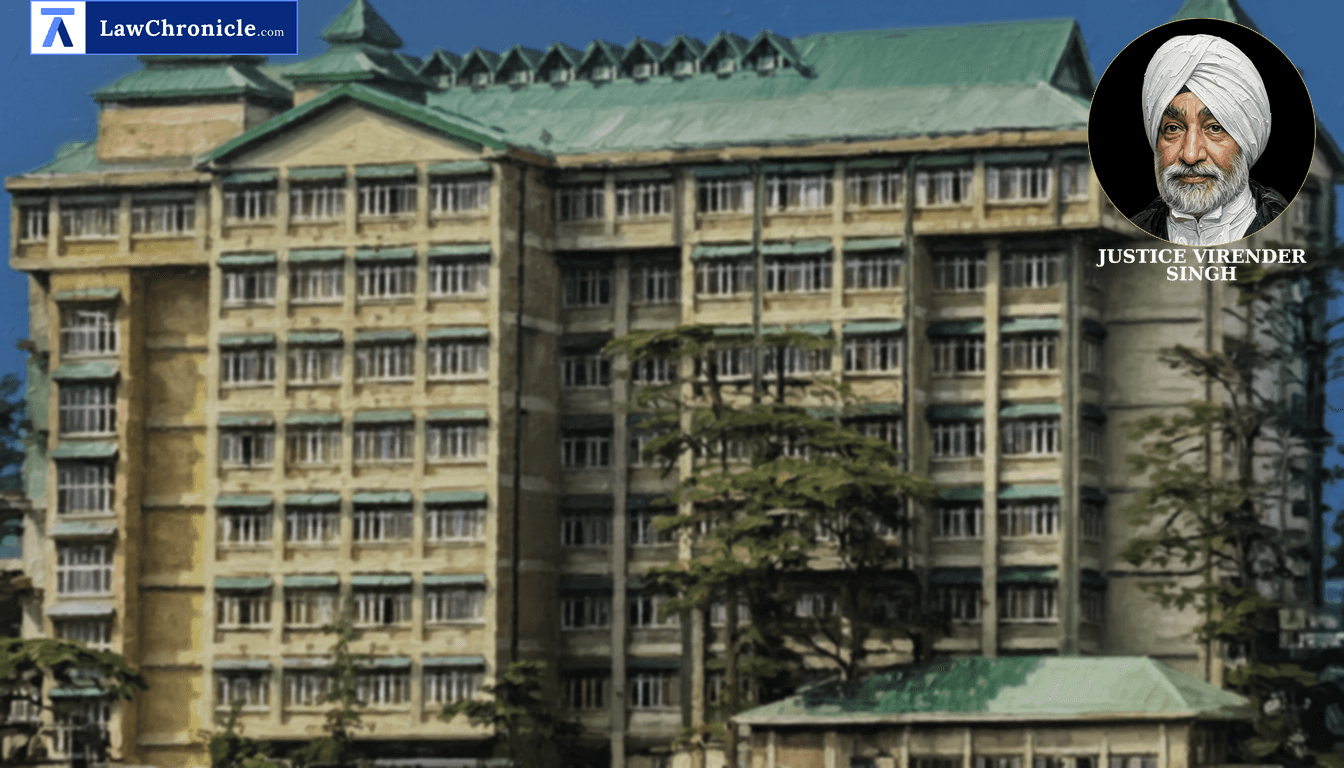
Executing courts are under no legal obligation to separately adjudicate Section 47 Code of Civil Procedure, 1908 objections once an execution petition stands dismissed as fully satisfied following the unconditional deposit of the decretal amount. The High Court clarified that objections filed under Section 47 do not stand at par with a counter-claim that requires independent adjudication after the main execution proceedings come to an end.
Justice Virender Singh delivered the ruling while dismissing a supervisory petition challenging an executing court's order that closed execution proceedings upon full satisfaction of an arbitral award.
Key Takeaways
No Independent Adjudication Required: Objections under Section 47 Code of Civil Procedure, 1908 automatically lapse when the underlying execution petition is dismissed as fully satisfied.
Not At Par With Counter-Claims: Section 47 objections cannot survive independently of the main execution proceedings, unlike counter-claims in civil suits.
Unconditional Payment Ends Dispute: Depositing decretal amounts without explicit, on-record protest precludes judgment debtors from insisting on prolonged litigation.
Court's Rationale on Execution and Objections
Addressing the petitioner's primary contention that its procedural objections remained unaddressed, the High Court observed that the full satisfaction of the decree naturally renders pending objections infructuous.
The Court, in its reasoning, observed: "It is pertinent to note that the objections were filed in execution petition and when, the execution petition has been dismissed, on the ground, that the same has been satisfied, then, there was no legal requirement for the learned Executing Court to pass a separate order, on objections. Moreover, objections under Section 47 of CPC are not at par with a counter claim, which, even upon dismissal of the main suit, is liable to be adjudicated independently."
Ratio
Dismissal of an execution petition upon full and unconditional satisfaction of the decretal amount legally obviates the necessity for separate adjudication of pending objections under Section 47 of the Code of Civil Procedure, 1908, as such objections do not constitute independent counter-claims.
Background
The dispute stemmed from an arbitral award passed in Claim Petition No. 52 of 2016 in favor of decree holder Sagar Ispat Pvt. Ltd. against judgment debtor M/s Live Well Healthcare. To execute the award, the decree holder initiated Execution Petition No. 412 of 2021 before the Executing Court (District Judge, Solan).
When attachment warrants were issued against the property, Santosh Kumar stepped in, claiming to be a subsequent purchaser and partner of M/s Live Well Healthcare. Objections were filed under Section 47 of the Code of Civil Procedure, 1908, contending that as a bona fide subsequent purchaser and stranger to the decree, he had the right to object under Order 21 Code of Civil Procedure, 1908. An application under Section 151 Code of Civil Procedure, 1908 was also submitted along with a demand draft for Rs. 1,51,35,069/- to deposit the complete decretal amount, leading the Executing Court to recall the attachment warrants.
Subsequent applications to stay proceedings and recall attachment orders were disposed of as infructuous since the decretal amount was deposited. On January 3, 2026, upon the statement of the counsel for the decree holder confirming receipt of full payment, the Executing Court dismissed the execution petition as withdrawn/satisfied.
The petitioner approached the High Court under Article 227 of the Constitution of India, asserting that the deposit was made under protest and that the Executing Court acted perversely by dismissing the main execution petition without deciding the Section 47 Code of Civil Procedure, 1908 objections.
Upon perusal of the record, the High Court noted that the alleged application claiming the deposit was made "under protest" was never placed on the record of the Executing Court. Finding that the decretal amount was unconditionally deposited, the High Court held there was no procedural illegality in closing the execution petition without a separate order on the objections, and accordingly dismissed the petition under Article 227 of the Constitution of India.
Case Details:
Case No.: CMPMO No. 18 of 2026
Neutral Citation: 2026:HHC:36555
Case Title: M/s Live Well Healthcare v. Sagar Ispat Pvt. Ltd.
Appearances:
For the Petitioner(s): Mr. Anand Sharma, Senior Advocate, with Mr. Karan Sharma, Advocate.
For the Respondent(s): Rana Gurtej Singh and Mr. Sahil Thakur, Advocates.
Source: 2026 CaseBase(HP) 6936
Similar Articles


 Breaking News


